RateGain SoHo Wins Eight 2026 HSMAI Adrian Awards for Performance-Driven Social Media Campaigns

1 min read     Updated on 02 Mar 2026, 12:27 PM
scanx
Reviewed by
Ashish TScanX News Team
Overview

RateGain Travel Technologies announced that SoHo, its AI-powered social media solution, won eight 2026 HSMAI Adrian Awards for performance-driven hospitality campaigns. The award-winning campaigns generated 200+ incremental bookings, $224K+ in direct revenue, and achieved up to 235:1 return on ad spend while working with premium brands like Grand Hyatt Baha Mar and Four Seasons Resort Bora Bora. SoHo's approach focuses on making social media accountable to commercial outcomes rather than just engagement metrics.

33980226

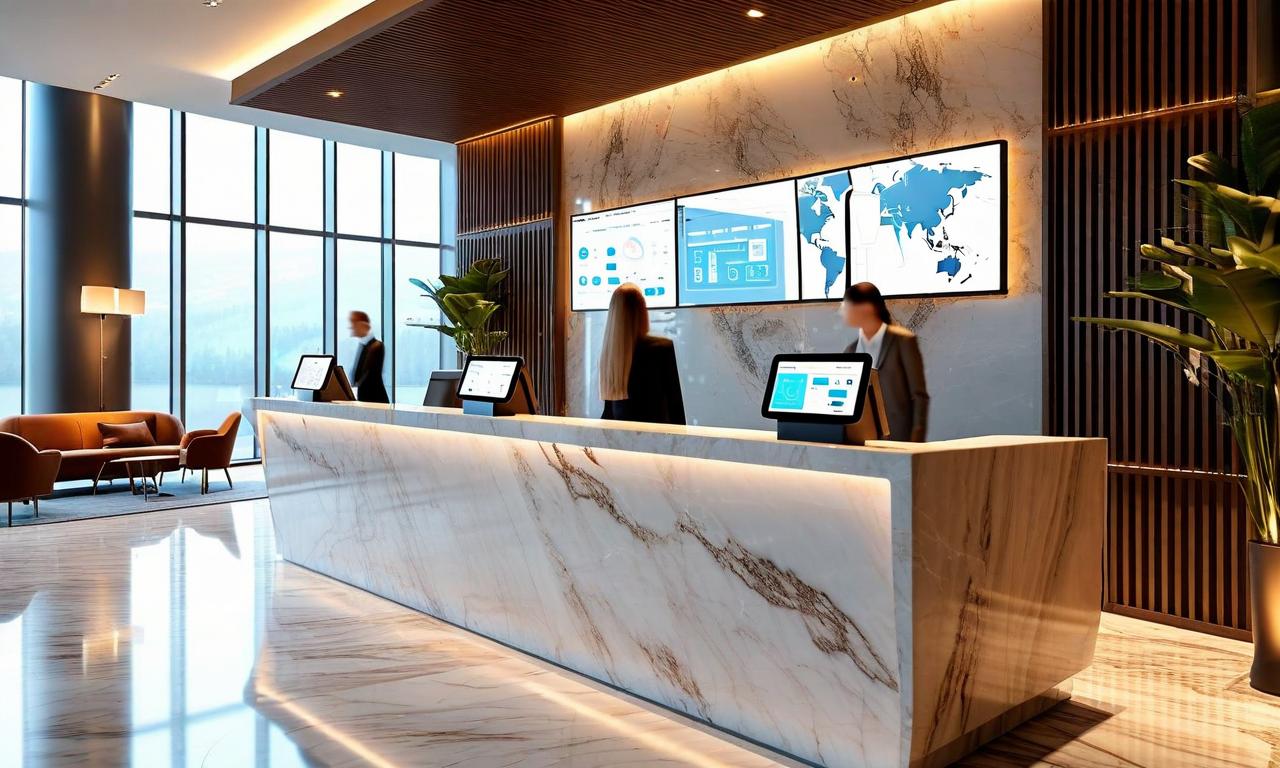
*this image is generated using AI for illustrative purposes only.

Rategain travel Technologies Limited announced that SoHo, its hospitality-focused AI-powered social media solution, has won eight 2026 HSMAI Adrian Awards, one of the hospitality industry's highest marketing honors. The recognition highlights SoHo's ability to transform social media from a visibility channel into a measurable revenue driver for hotel brands.

Award-Winning Performance Strategy

SoHo has built its social media philosophy around performance accountability, designing campaigns that tie social engagement directly to bookings, revenue, and long-term brand equity. This approach addresses the industry's challenge of rising acquisition costs and increasing margin pressure by making social media accountable to commercial outcomes.

In 2025, SoHo focused on aligning paid and organic social strategies with performance benchmarks traditionally reserved for direct acquisition channels. The agency deployed AI-enabled optimization, high-intent audience segmentation, platform-native creative, and advanced conversion tracking across campaigns for premium hotel brands.

Campaign Results and Impact

The award-winning campaigns delivered significant measurable business impact across multiple metrics:

Performance Metric: Achievement
Incremental Bookings: 200+ directly influenced by social campaigns
Attributable Revenue: $224K+ in direct revenue
Return on Ad Spend: Up to 235:1
Conversion Rate Improvement: 615% versus prior benchmarks
Organic Campaign Reach: Exceeding 150K views
Guest Interactions: 8K+ meaningful engagements
Audience Interaction Growth: 2x year-over-year increase

Premium Hotel Brand Partnerships

SoHo's recognized campaigns included work with leading hospitality brands:

  • Grand Hyatt Baha Mar
  • Four Seasons Resort Bora Bora
  • Oberoi Hotels & Resorts
  • The Peninsula Beverly Hills
  • Royal Sonesta
  • Margaritaville Beach Resort South Padre Island

Industry Recognition and Market Position

"Performance cannot survive without branding. When brand equity disappears, so does conversion," said Carla Shaw, General Manager, RateGain SoHo. "SoHo is solving the industry's biggest gap—making social media accountable to commercial outcomes. The campaigns recognized this year prove that authentic storytelling and trust are what ultimately power measurable revenue."

The HSMAI Adrian Awards recognize excellence in hospitality advertising, digital marketing, and integrated campaign strategy worldwide. SoHo's recognition reflects a broader industry shift where social media is measured by its contribution to revenue growth and sustainable brand equity rather than engagement metrics alone.

With these wins, RateGain SoHo reinforces its position at the forefront of performance-driven hospitality marketing, combining creative storytelling, AI-powered optimization, and commercial accountability to deliver measurable results for hotel brands navigating competitive market conditions.

Historical Stock Returns for RateGain Travel

1 Day5 Days1 Month6 Months1 Year5 Years
-7.15%-10.29%-19.34%-4.12%-2.26%+44.54%

RateGain's Sojern Releases 2026 State of Destination Marketing Report Highlighting Economic Impact as Top DMO Priority

3 min read     Updated on 18 Feb 2026, 04:13 PM
scanx
Reviewed by
Ashish TScanX News Team
Overview

RateGain Travel Technologies announced that Sojern released its 2026 State of Destination Marketing Report on February 18, 2026, based on insights from 350+ global DMOs. The report reveals economic impact measurement as the top strategic priority, with 72% of DMOs focusing on conversion and ROI metrics. AI adoption has accelerated significantly, with 66% using AI for content creation and 51% for data analysis. Regional variations show North America prioritizing performance metrics, while Europe balances brand building with ROI concerns amid funding risks.

32957025

*this image is generated using AI for illustrative purposes only.

RateGain travel Technologies Limited announced on February 18, 2026, that Sojern, its recently acquired digital marketing platform, has released the comprehensive State of Destination Marketing 2026 Report. The report examines how destination marketing organizations (DMOs) worldwide are adapting to economic pressures, rising performance expectations, and accelerating AI-driven transformation across the travel industry.

Economic Impact Measurement Takes Priority

Based on insights from more than 350 DMOs globally, the report reveals a fundamental shift in strategic priorities. The ability to measure economic impact now ranks as the top concern for destination marketers, overtaking traditional metrics such as visitation and engagement as organizations face mounting pressure to demonstrate tangible return on investment.

Priority Metric Global Adoption Regional Variations
Conversion and ROI metrics 72% North America leads focus
Economic impact data 72% Universal priority
Customer engagement data 41% Supporting metric

Mark Rabe, CEO of Sojern, commented on the findings: "Destination marketers are under more pressure than ever to show measurable impact. This year's report shows how DMOs are rising to that challenge—rethinking success metrics, investing more intentionally, and adapting their strategies to stay visible as AI reshapes discovery."

Regional Strategy Variations Emerge

The report identifies distinct regional approaches to destination marketing strategy. In North America, 79% of DMOs prioritize hotel room nights and direct revenue over brand awareness, with 51% focusing primarily on mid-and lower-funnel activities. European DMOs face particular challenges, with 31% reporting their funding is at risk, though 51% still maintain focus on longer-term brand building. The Middle East, Asia, and Africa region shows the strongest performance orientation, with 88% of DMOs citing conversion as their most important metric.

Globally, DMOs are evenly split between stage-specific campaigns (47%) and full-funnel strategies (47%). However, there has been a dramatic shift away from awareness-focused campaigns, dropping from 59% in 2025 to just 25% in 2026.

AI Adoption Accelerates Across DMO Operations

Artificial intelligence has moved from future consideration to present reality for destination marketers. More than half of DMOs (51%) express concern about AI-driven search disruption, with 31% expecting their websites to become primary sources for AI-generated travel recommendations.

AI Application Current Adoption Year-over-Year Change
Content creation 66% Significant growth
Data analysis and insights 51% Up from 28% in 2025
No AI usage 16% Declining minority

Despite growing AI adoption, implementation maturity varies significantly across organizations, with many DMOs still in early-stage deployment phases.

Personalization Progress Faces Resource Constraints

While data utilization has expanded, personalization capabilities remain limited by resource constraints. Only 9% of DMOs describe their advertising personalization as "advanced," while basic personalization approaches increased from 14% to 22% year-over-year.

DMOs report that data delivers maximum value during campaign planning (45%) and post-campaign reporting (44%), but only 7% leverage data effectively during live campaign execution. Demographic data remains the dominant targeting approach at 74% globally, though regional preferences vary significantly.

Digital Channel Strategies Become More Selective

Paid social media maintains its position as the most widely adopted digital channel, with 88% of DMOs investing globally. Instagram (97%) and Facebook (90%) continue anchoring social strategies, while YouTube usage has grown to 55%, reflecting its cross-funnel effectiveness.

Channel Type 2025 Usage 2026 Usage Change
Display advertising 75% 45% -30%
TikTok 49% 28% -21%
Connected TV Maintained 58% consider important Stable

The data indicates DMOs are prioritizing channels that more clearly support measurable performance outcomes, leading to reduced investment in less trackable advertising formats.

Collaborative Marketing Remains Strategic Priority

Co-operative marketing continues as a critical strategy, with 80% of DMOs running collaborative campaigns. The primary motivations include reaching wider audiences (70%), increasing total investment capacity (64%), and sharing operational costs (63%). However, 27% of DMOs cite partner management complexity as a significant barrier for resource-constrained teams.

The report was developed in partnership with Dynata and supported by multiple industry organizations including Brand USA, U.S. Travel Association, Destinations International, Destination Canada, European Travel Commission, City DNA, Caribbean Tourism Organization, and Pacific Asia Travel Association.

Historical Stock Returns for RateGain Travel

1 Day5 Days1 Month6 Months1 Year5 Years
-7.15%-10.29%-19.34%-4.12%-2.26%+44.54%

More News on RateGain Travel

1 Year Returns:-2.26%