

Indian Markets Post Worst Weekly Loss in 3 Months as Small-Cap Index Drops 4%


Indian equity markets recorded their worst weekly performance in over three months, with the BSE Sensex declining 2.54% to 83,576.24 and Nifty50 falling 2.45% to 25,683.30. The small-cap index significantly underperformed with a nearly 4% drop, while FIIs sold ₹9,209.90 crore worth of equities. Energy and infrastructure sectors declined 4-5%, though Defence and Consumer Durables showed resilience with gains.



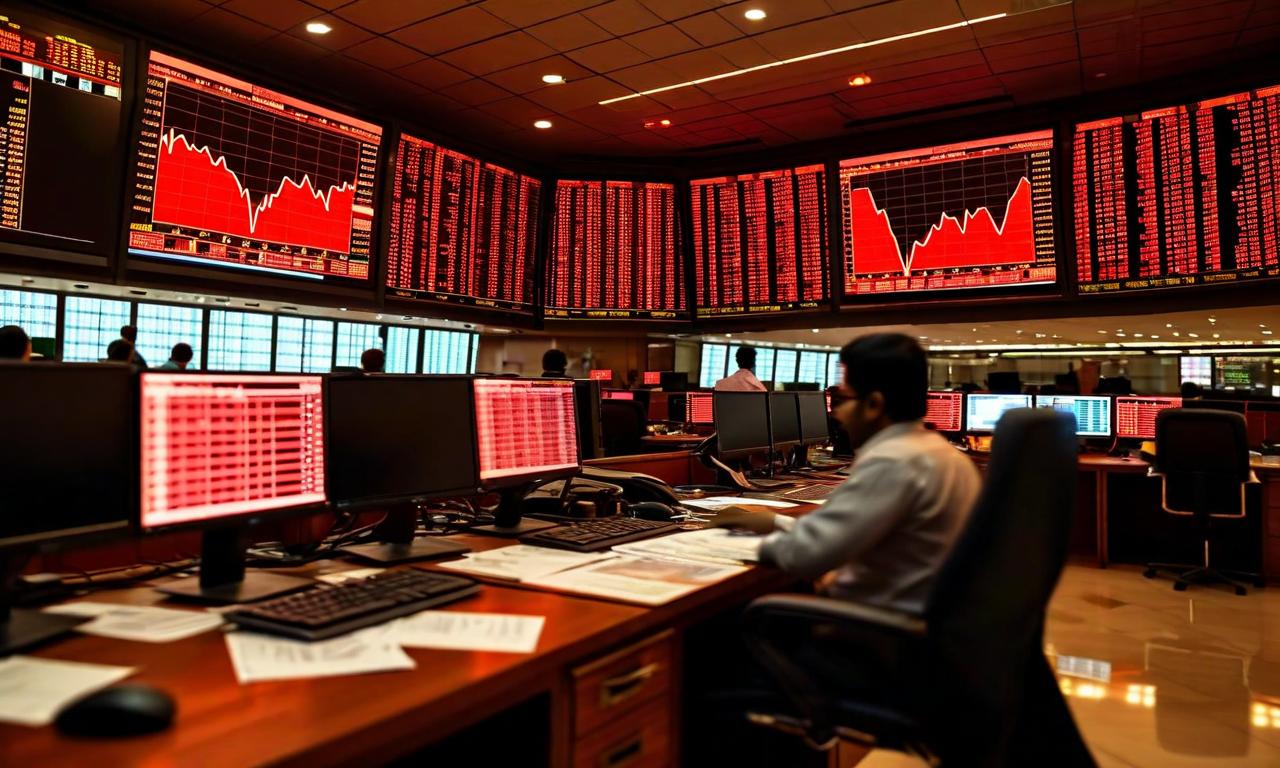
*this image is generated using AI for illustrative purposes only.
Indian equity markets endured their worst weekly performance in over three months, with broader market indices facing significant pressure amid rising geopolitical tensions, persistent foreign institutional investor (FII) selling, and concerns over potential US tariffs. The small-cap segment bore the brunt of the selloff, declining nearly 4% and significantly underperforming benchmark indices.
Market Performance Overview
The benchmark indices posted substantial declines during the week, reflecting widespread investor caution and risk-off sentiment.
| Index | Weekly Decline | Closing Level |
|---|---|---|
| BSE Sensex | 2,185.77 points (2.54%) | 83,576.24 |
| Nifty50 | 193.55 points (2.45%) | 25,683.30 |
| Small-cap Index | Nearly 4% | - |
| Mid-cap Index | Around 2.5% | - |
| Large-cap Index | Around 2.5% | - |
The small-cap index's 4% decline highlighted the vulnerability of smaller companies to market volatility, with broader market indices remaining under sustained pressure throughout the week.
Sectoral Performance Analysis
Sectoral performance revealed a mixed picture, with energy-related sectors facing the steepest declines while defensive sectors showed resilience.
| Sector | Weekly Performance |
|---|---|
| Oil & Gas | Declined 4-5% |
| Energy | Declined 4-5% |
| Infrastructure | Declined 4-5% |
| Metal | Declined 2%+ |
| Realty | Declined 2%+ |
| Media | Declined 2%+ |
| Auto | Declined 2%+ |
| Defence | Gained 1.3% |
| Consumer Durables | Rose 1% |
The Nifty Defence index emerged as a notable outperformer with a 1.3% gain, while the Consumer Durables index rose 1% on hopes of demand revival.
Institutional Investment Flows
Institutional investment patterns continued to reflect the divergent approaches of foreign and domestic investors.
| Investor Category | Weekly Flow | Impact |
|---|---|---|
| Foreign Institutional Investors (FIIs) | Sold ₹9,209.90 crore | Net sellers |
| Domestic Institutional Investors (DIIs) | Bought ₹17,594.58 crore | Market support |
Foreign Institutional Investors maintained their selling pressure, offloading equities worth ₹9,209.90 crore during the week. In contrast, Domestic Institutional Investors provided crucial market support by purchasing equities worth ₹17,594.58 crore.
Small-Cap Sector Impact
The BSE Small-cap index's nearly 4% decline was accompanied by severe selling pressure across individual stocks. Several small-cap companies experienced double-digit declines, with shares of multiple companies including Systematix Corporate Services, Balu Forge Industries, Worth Investment & Trading, VTM, Kiri Industries, and others tumbling between 15% and 23% during the week.
Technical Outlook
Market analysts suggest the Nifty's technical structure indicates continued weakness, with the index moving lower from the 50 EMA. The formation of a long bear candle on both daily and weekly charts signals potential further downside. Key support levels are identified around 25,700, with a break below this level potentially opening declines toward 25,400-25,500. Immediate resistance is placed at 25,850-25,900.
Market Drivers and Outlook
The week's performance was influenced by multiple global and domestic factors, including rising geopolitical tensions, concerns over potential US tariffs, and continued FII outflows. Despite these challenges, strong domestic fundamentals, including healthy GST collections and robust bank credit growth, provided some underlying support to market sentiment. Looking ahead, market direction will likely be shaped by clarity on global trade dynamics and upcoming quarterly earnings results.
 17
17










 Access Market Heat-map & Insights
  Create, Save & Share your Screener
  Use 200+ Screening Filters





