

Indian Markets Post Worst Weekly Decline in Four Months as ₹15 Lakh Crore Wiped Off


Indian equity markets posted their worst weekly performance in four months, with the Nifty declining 2.50% and BSE-listed companies losing over ₹15 lakh crore in market capitalisation. Mutual fund equity inflows dropped 6% to ₹28,035 crore in December, reflecting investor caution. Trade tensions between India and the US intensified over energy policies and stalled negotiations, while mixed US jobs data added to global uncertainty.

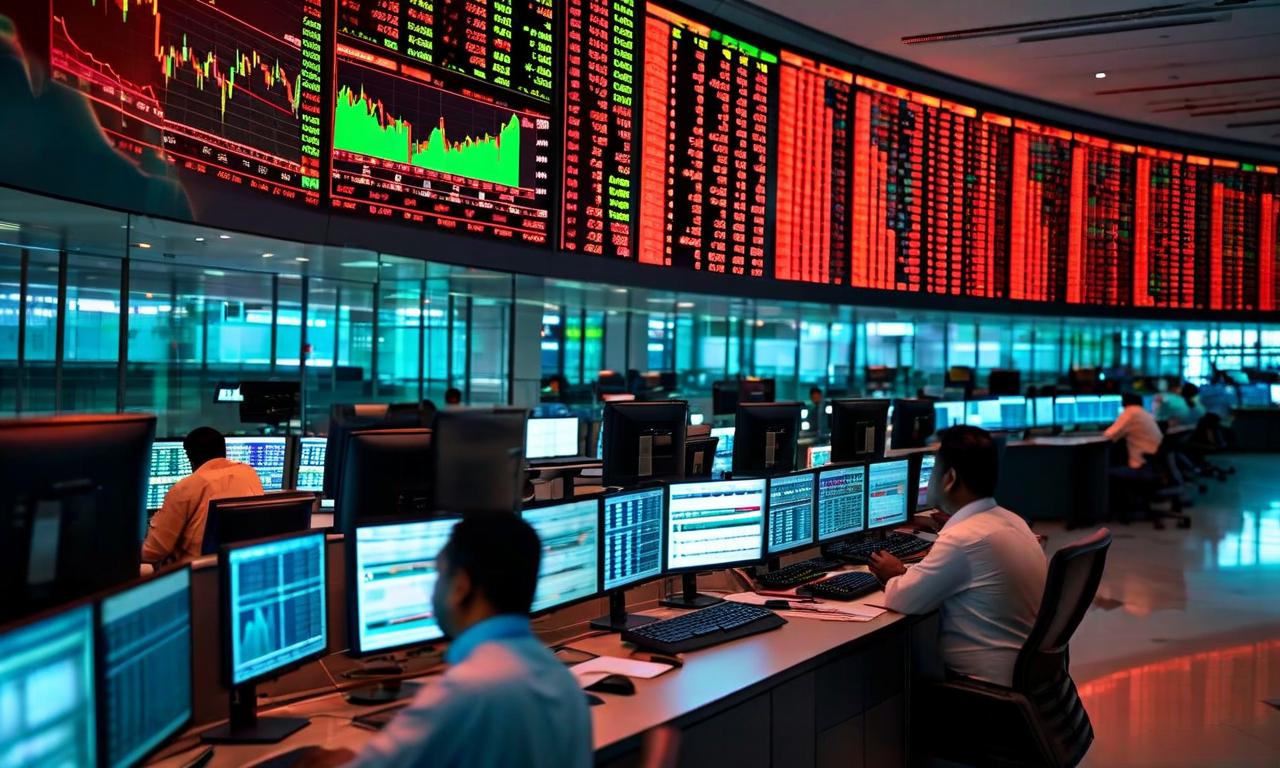

*this image is generated using AI for illustrative purposes only.
Indian equity markets concluded a challenging week with their sharpest decline in four months, as widespread selling pressure swept across sectors and erased significant market value. The downturn marked an end to a two-week winning streak, reflecting growing investor caution amid domestic and global uncertainties.
Market Performance and Sectoral Impact
BSE-listed companies witnessed a massive erosion in market capitalisation, with over ₹15 lakh crore wiped off during the week. The benchmark Nifty index declined nearly 2.50% for the week, with selling pressure evident across all sectoral indices. Some sectors experienced particularly steep declines, with certain indices falling as much as 6.00% during the period.
| Market Metric | Performance |
|---|---|
| Nifty Weekly Decline | 2.50% |
| Market Cap Loss | ₹15 lakh crore+ |
| Sectoral Performance | All indices in red |
| Maximum Sector Decline | 6.00% |
Mutual Fund Flows Show Investor Caution
The cautious market sentiment was reflected in mutual fund investment patterns, with equity scheme inflows moderating in December. Net inflows into equity mutual fund schemes declined 6.00% month-on-month to ₹28,035 crore in December, down from ₹29,894 crore in November, according to data from the Association of Mutual Funds in India (AMFI).
| Fund Flow Metrics | December | November | Change |
|---|---|---|---|
| Equity Inflows | ₹28,035 crore | ₹29,894 crore | -6.00% |
| Total AUM | ₹80.23 lakh crore | - | - |
The decline in inflows suggests investors are becoming more selective and cautious about valuations, particularly given the recent market volatility and global economic uncertainties.
Corporate-Specific Developments
Several individual stocks remained in focus due to company-specific developments. Indian Energy Exchange (IEX) experienced significant volatility, with the stock falling over 7.00% amid regulatory uncertainty. The Appellate Tribunal for Electricity (APTEL) scheduled the next hearing for January 19 regarding IEX's plea seeking withdrawal of the Central Electricity Regulatory Commission's July order on day-ahead market coupling.
Vodafone Idea continued to face scrutiny from analysts, with concerns extending beyond its Adjusted Gross Revenue (AGR) dues despite recent government relief measures.
US-India Trade Relations Under Spotlight
Trade tensions between India and the United States added another layer of uncertainty to market sentiment. US Commerce Secretary Howard Lutnick claimed that the stalled US-India trade deal resulted from Prime Minister Narendra Modi not calling US President Donald Trump. India rejected this characterization and reiterated its well-established position on energy sourcing policies.
The Indian government maintained its stance on energy security amid threats of 500% US tariffs on countries purchasing Russian oil. A proposed bill backed by President Trump targets India, China, and other nations with such tariffs, to which India responded by reaffirming its energy sourcing policies.
Global Economic Context
International markets also provided mixed signals, with US employment data showing softer-than-expected job creation in December. US nonfarm payrolls rose by a seasonally adjusted 50,000 in December, falling short of the Dow Jones estimate of 73,000 and below November's downwardly revised 56,000. However, the unemployment rate unexpectedly declined, presenting a mixed picture of the US labor market.
The week's developments highlight the complex interplay of domestic market dynamics, regulatory uncertainties, and geopolitical tensions that continue to influence investor sentiment in Indian equity markets.
 19
19








 Access 50+ Readymade Screeners
  Use 200+ Custom Filters
  Get Full Market Insights





