

Indian Equities Extend Losing Streak to Fifth Session Amid Tariff Uncertainty


Indian equity markets recorded their fifth consecutive session of losses on Friday, with BSE Sensex falling 604.72 points to 83,576.24 and Nifty 50 declining 193.55 points to 25,683.30. The decline was driven by uncertainty over US-India tariff measures and geopolitical tensions, with India VIX surging 16% to reflect heightened volatility. Foreign institutional investors sold ₹3,367.12 crore worth of equities while domestic investors provided support with ₹3,701.17 crore in purchases.


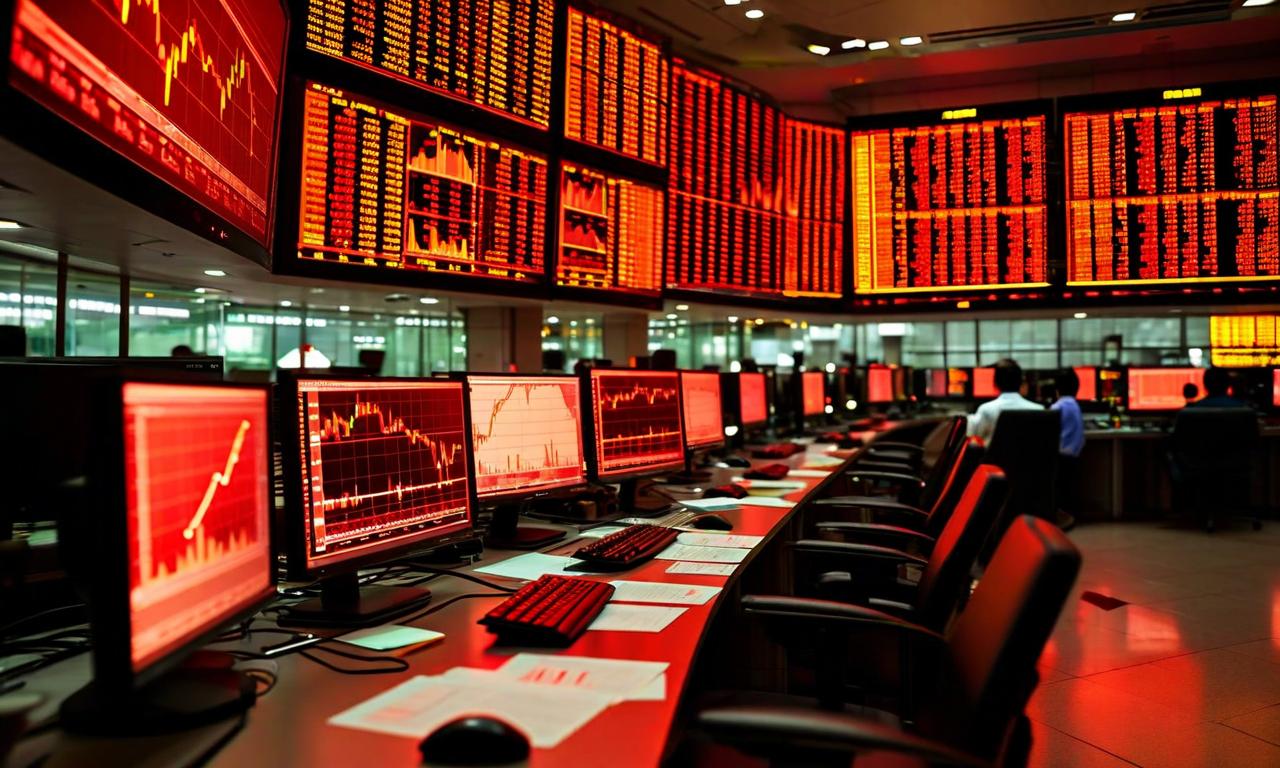
*this image is generated using AI for illustrative purposes only.
Indian equity markets extended their losing streak to a fifth consecutive session on Friday, as investor sentiment remained subdued amid uncertainty over potential US-India tariff measures and escalating geopolitical tensions. The decline reflects growing caution among market participants ahead of a potential US Supreme Court ruling on tariff-related matters.
Market Performance Overview
The benchmark indices posted significant declines during Friday's trading session:
| Index | Closing Level | Daily Change (Points) | Daily Change (%) |
|---|---|---|---|
| BSE Sensex | 83,576.24 | -604.72 | -0.72% |
| Nifty 50 | 25,683.30 | -193.55 | -0.75% |
The Nifty 50 has corrected approximately 2.62% from its all-time high of 26,373 recorded on January 5, 2026, over the last four trading sessions. According to Sudeep Shah, Head - Technical and Derivatives Research at SBI Securities, this movement highlights a shift from consolidation to a short-term corrective phase.
Volatility and Broader Market Impact
Market volatility surged significantly with India VIX jumping 16% to close near the 11 mark, indicating heightened investor anxiety. The broader market indices faced substantial pressure during the session:
- Midcap Index: Declined 0.70%
- Smallcap Index: Fell approximately 2.00%
Ajit Mishra, SVP Research at Religare Broking, noted that the small-cap index has corrected 3.80% over the last two sessions alone.
Sectoral Performance and Stock Movements
Among sectoral indices, oil & gas and IT posted modest gains, while realty and auto sectors emerged as the top losers. During the week, 15 of the major sectors declined, though Bank Nifty outperformed relative to the broader market despite posting losses.
Top Performers and Laggards
| Top Gainers | Top Losers |
|---|---|
| Asian Paints | Adani Enterprises |
| ONGC | NTPC |
| HCL Tech | Adani Ports |
| Bharat Electronics | ICICI Bank |
| Jio Financial Services |
Foreign and Domestic Investment Flows
Investment flows showed contrasting patterns between foreign and domestic institutional investors:
| Investor Category | Flow Amount | Direction |
|---|---|---|
| Foreign Institutional Investors (FIIs) | ₹3,367.12 crore | Outflow |
| Domestic Institutional Investors (DIIs) | ₹3,701.17 crore | Inflow |
Market Breadth and Technical Indicators
Market breadth remained decisively negative, with 3,104 stocks declining against just 1,062 advances out of 4,342 stocks traded on the BSE. Additionally, 326 stocks hit 52-week lows compared with only 73 reaching 52-week highs, underscoring the weak market undertone.
Analyst Outlook
Vinod Nair, Head of Research at Geojit Investments, indicated that the market remains in a consolidation phase due to weak global cues and rising global bond yields. However, he noted that domestic GDP growth is expected to remain strong, and Q3 results should indicate a recovery led by midcaps, potentially stabilizing investor sentiment. Market participants are closely monitoring developments regarding US-India trade relations and awaiting key Q3FY26 IT earnings scheduled for release.
 19
19










 Access 50+ Readymade Screeners
  Use 200+ Custom Filters
  Get Full Market Insights





