
 NewsIndian Markets Lose ₹17 Lakh Crore in Six Days as Sensex Drops 2,700 Points, Nifty Falls 3%
Indian Markets Lose ₹17 Lakh Crore in Six Days as Sensex Drops 2,700 Points, Nifty Falls 3%


Indian equity markets suffered their sixth consecutive day of decline, with the Sensex falling over 500 points to 83,043 and Nifty dropping below 25,550. The selloff has erased ₹16.85 lakh crore in market value, driven by uncertainty over Trump tariff policies, persistent FII selling of ₹3,769 crore on Friday, and global market concerns including Fed independence issues.


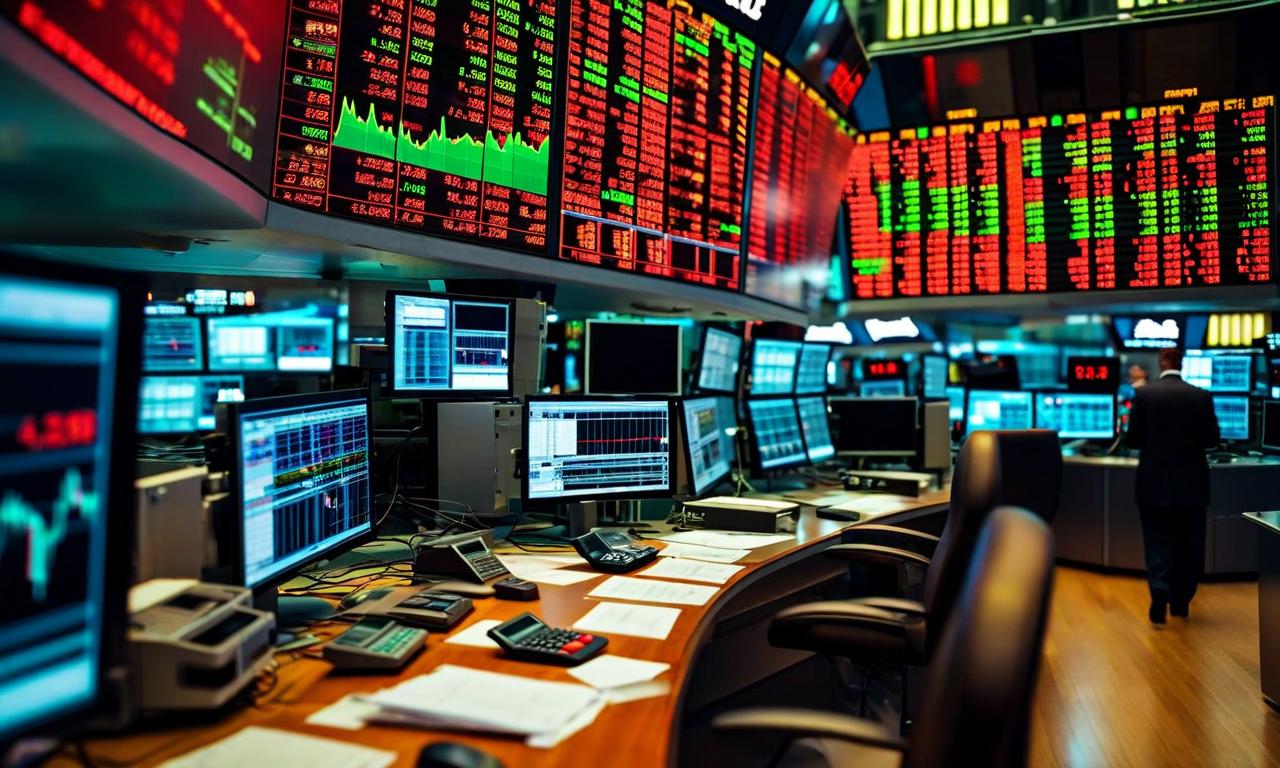
*this image is generated using AI for illustrative purposes only.
Indian equity markets extended their sharp decline on Monday, with benchmark indices deepening a selloff that has wiped out nearly ₹17 lakh crore in market value over six trading sessions. The BSE Sensex dropped over 500 points to hit an intraday low of 83,043.45, while the NSE Nifty 50 slid over 140 points, falling below the 25,550 mark during early trade.
Market Performance Overview
The scale of the market decline has been significant across both major indices:
| Index | Period | Decline | Low Point |
|---|---|---|---|
| BSE Sensex | Jan 2 - Current | 2,718+ points | 83,043.45 |
| NSE Nifty 50 | Jan 2 - Current | ~3% | 25,529.05 |
| Market Cap Loss | 6 days | ₹16.85 lakh crore | ₹464.39 lakh crore |
From a closing high of 85,762.01 on January 2, the Sensex has shed more than 2,718 points, while the Nifty has declined approximately 3% over the same period. The market capitalisation of all listed BSE companies has fallen by ₹16.85 lakh crore in six days to ₹464.39 lakh crore.
Key Factors Behind the Selloff
Trump Tariffs and U.S.-India Trade Uncertainty
Uncertainty over U.S. tariff policies has emerged as a primary concern for investors. Dr. VK Vijayakumar, Chief Investment Strategist at Geojit Investments, noted that "the market has turned distinctly weak, weighed down by a series of India-specific and global geopolitical events. The drama surrounding the US-India trade deal is getting murkier with strange remarks from the US administration."
The absence of an anticipated U.S. Supreme Court ruling on Trump tariffs has prolonged policy uncertainty. Vijayakumar explained that "an expected ruling on Trump tariffs from the US Supreme Court on Friday didn't materialise; there is no clarity on when this will happen. Yet it can happen any time and, therefore, investors have to be watchful of the development on this front."
Persistent Foreign Institutional Investor Selling
Foreign institutional investors have maintained their selling pressure, with outflows worth ₹3,769 crore recorded on Friday, January 9. This marked the sixth consecutive session of FII selling after a brief pause on January 2. The sustained withdrawal of foreign capital has significantly impacted market liquidity and amplified losses amid global uncertainty.
Global Market Headwinds
International market conditions have added to the cautious sentiment on Indian bourses. Concerns emerged around Federal Reserve independence after Fed Chair Jerome Powell revealed that the Trump administration had threatened him with criminal indictment. This development unsettled global investors and contributed to risk-off sentiment.
| Global Market | Movement | Details |
|---|---|---|
| S&P 500 Futures | -0.50% | Declined after Fed concerns |
| European Futures | -0.10% | Down in Asian trading |
| Asia-Pacific Index | +0.50% | MSCI index excluding Japan |
| 10-year Treasury | ~4.15% yield | One basis point lower |
Market Volatility and Outlook
The India VIX has spiked, indicating heightened volatility ahead. Vijayakumar highlighted that "geopolitical developments in Venezuela, the crisis in Iran and Trump's threats regarding Greenland are also being viewed by the markets with concern. This has spiked the India volatility index India VIX indicating big volatility ahead."
The current decline represents the market's worst weekly performance in more than three months, reflecting broad-based investor unease. The combination of domestic policy uncertainty, persistent foreign selling, and global geopolitical tensions has created a challenging environment for Indian equities, with investors remaining cautious about near-term market direction.
 16
16











 Access 50+ Readymade Screeners
  Use 200+ Custom Filters
  Get Full Market Insights





