

India Expands Trade Network With Seven New FTAs Since 2021


India has successfully concluded seven Free Trade Agreements (FTAs) since 2021, spanning multiple continents and economic regions. These agreements, including partnerships with New Zealand, Oman, UK, EFTA countries, UAE, Australia, and Mauritius, have significantly expanded market access for Indian exporters, professionals, and businesses across various sectors. The FTAs offer benefits such as reduced tariffs, increased professional mobility, and enhanced investment opportunities, strengthening India's position in global value chains.


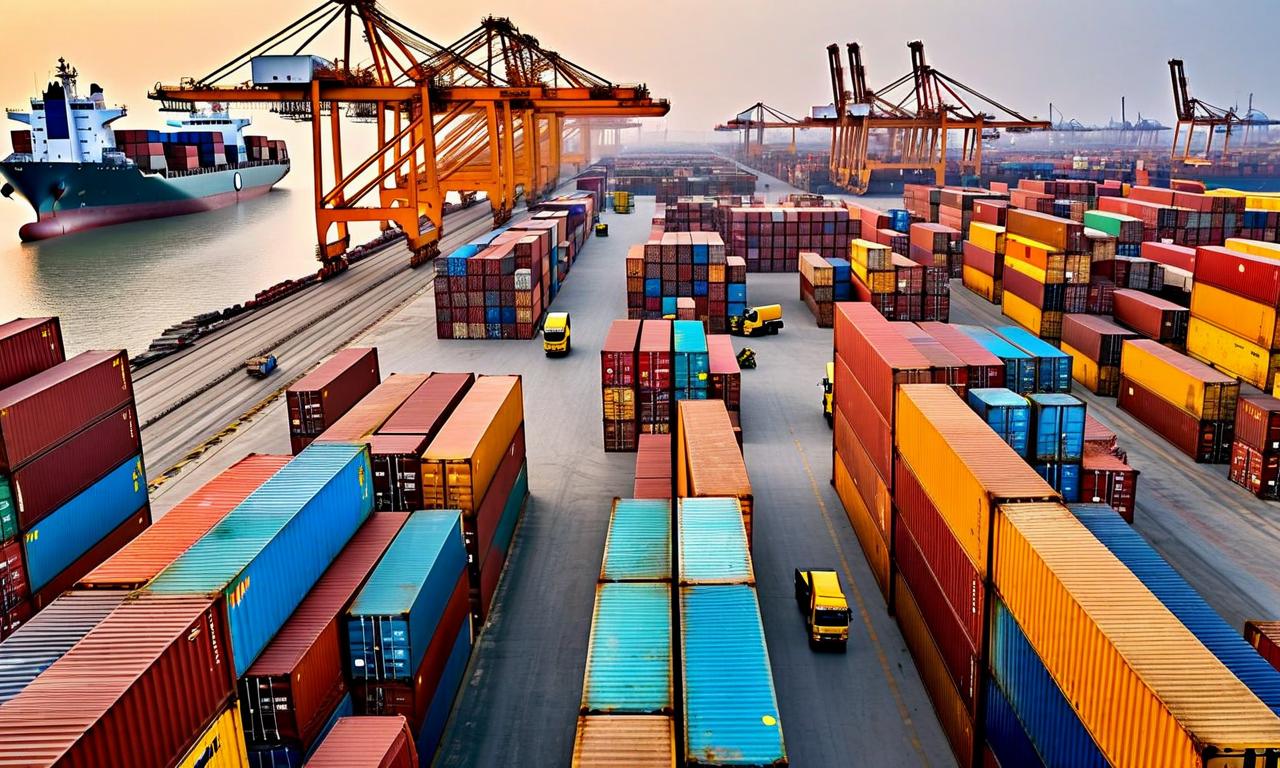
*this image is generated using AI for illustrative purposes only.
India has emerged as a major player in international trade negotiations, successfully concluding seven Free Trade Agreements (FTAs) since 2021 that span across multiple continents and economic regions. These agreements have created new opportunities for exporters and professionals across multiple sectors.
Recent Trade Agreements Expand Market Access
The comprehensive trade expansion strategy has opened new opportunities for Indian businesses, farmers, students, and professionals while strengthening India's position in global value chains. These agreements collectively provide Indian exporters with enhanced market access, reduced tariffs, and improved opportunities across diverse sectors.
| Agreement | Year | Key Benefits |
|---|---|---|
| India-New Zealand FTA | 2025 | Duty-free access, professional mobility in IT, healthcare, education |
| India-Oman CEPA | 2025 | Near duty-free access for textiles, gems, pharmaceuticals |
| India-UK CETA | 2025 | 99% tariff removal, 1,800 annual professional quotas |
| India-EFTA TEPA | 2024 | $100 billion investment target, 1 million job creation |
New Zealand Partnership Opens Oceania Markets
The India-New Zealand FTA provides Indian exporters with major duty-free access to the New Zealand market while protecting sensitive sectors within India. The agreement extends market reach beyond New Zealand to nearby Oceania and Pacific Island countries, creating opportunities for Indian professionals in IT, engineering, healthcare, education, and construction. Specialized services including yoga instructors, Indian chefs, Ayush practitioners, and music teachers are expected to benefit significantly from enhanced mobility provisions.
Gulf and European Market Integration
The India-Oman Comprehensive Economic Partnership Agreement, signed on December 18, 2025, strengthens economic ties with Gulf partners by providing near duty-free access across textiles, gems, leather, pharmaceuticals, and engineering goods. The agreement enhances services trade and allows full investment in major sectors while creating opportunities for Ayush and wellness exports.
The India-EFTA pact, signed on March 10, 2024, and effective from October 2025, represents a significant milestone with Switzerland, Norway, Iceland, and Liechtenstein. This agreement aims to attract $100 billion in foreign direct investment over 15 years while supporting the creation of one million direct jobs in India.
Established Partnerships Show Strong Results
The India-UAE CEPA, effective from May 1, 2022, has provided preferential market access on over 97% of tariff lines, covering 99% of Indian exports by value. Major benefits have been realized in labour-intensive sectors including gems and jewellery, textiles, leather, footwear, sports goods, and pharmaceuticals. The agreement also opened opportunities across 111 sub-sectors in 11 broad service areas.
| Partnership | Market Access | Key Sectors |
|---|---|---|
| India-UAE CEPA | 97% tariff lines | Gems, textiles, pharmaceuticals, automobiles |
| India-Australia ECTA | Doubled trade by 2024 | Textiles, chemicals, agriculture, gold products |
| India-Mauritius CECPA | 310 products access | Spices, tea, furniture, motor vehicle parts |
The India-Australia Economic Cooperation and Trade Agreement, signed in 2022 as an interim pact, has already shown remarkable results with merchandise trade more than doubling by 2024. Indian exports have grown across textiles, chemicals, agriculture, and specialized products including gold studded with diamonds and turbojets.
Comprehensive Sector Coverage
The India-UK Comprehensive Economic and Trade Agreement, signed in July 2025, removes tariffs on 99% of India's exports to the UK, with major benefits for marine products, textiles, leather, and processed foods. Indian agriculture has gained significantly with most agri-exports now entering the UK duty-free, while services sectors including IT, finance, education, and healthcare have gained greater access.
The India-Mauritius CECPA, signed in February 2021, covers trade in goods, services, investment, and specialized areas like customs, telecom, and financial services. Mauritius provides preferential access on 310 products with Tariff Rate Quotas on 88 products, while Indian service providers access around 115 sub-sectors across 11 broad service categories including professional services, telecommunications, and tourism.
Historical Stock Returns for Nippon Life India AMC
| 1 Day | 5 Days | 1 Month | 6 Months | 1 Year | 5 Years |
|---|---|---|---|---|---|
| -2.37% | -6.86% | -10.58% | +28.37% | +24.78% | +147.54% |
 16
16













 Access Market Heat-map & Insights
  Create, Save & Share your Screener
  Use 200+ Screening Filters





