

SpaceX stock drops 9% on $20B bond sale news


SpaceX (NASDAQ: SPCX) saw its shares drop 9% on June 18, 2026, after reports of a planned $20 billion bond sale. This follows the company's record $75 billion IPO and a $60 billion stock acquisition of Anysphere. Analysts have raised concerns over valuation and execution risks, while the company faces significant capital commitments and a restricted share float.

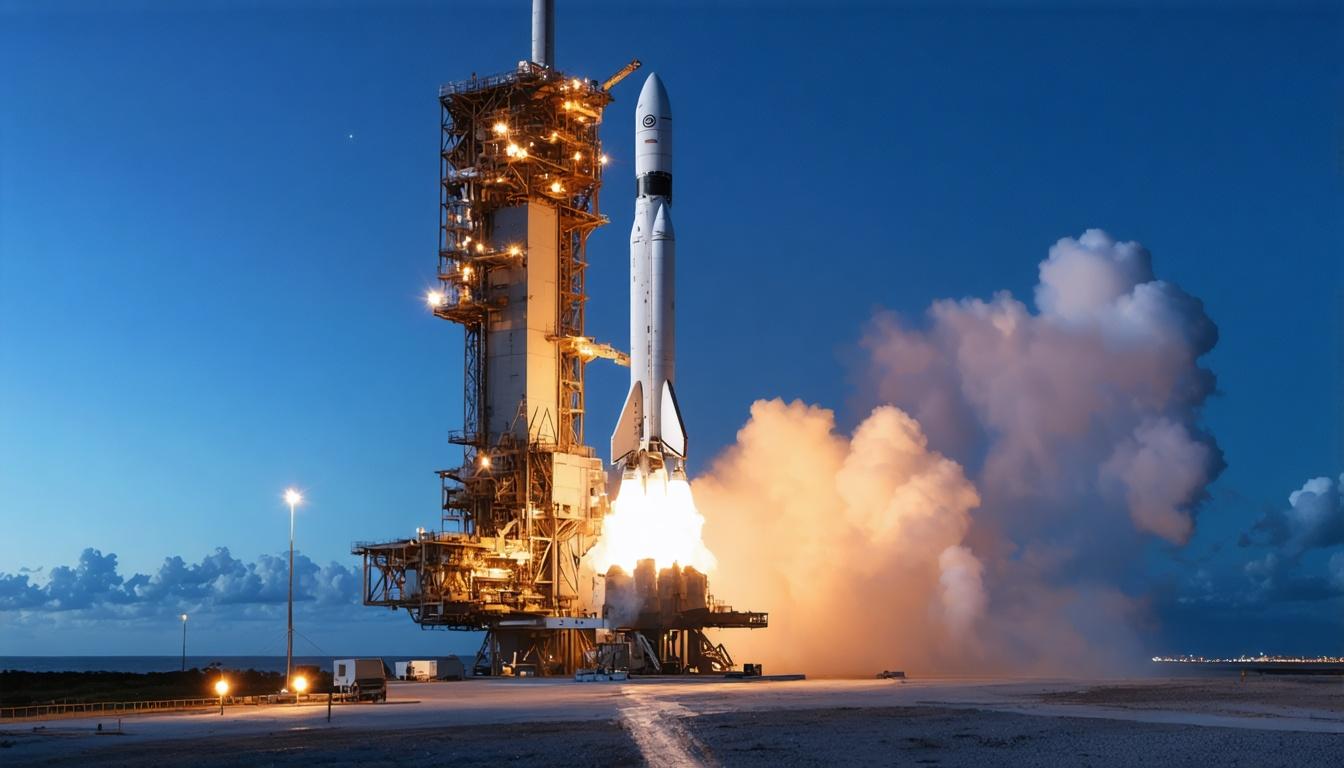

*this image is generated using AI for illustrative purposes only.
SpaceX (NASDAQ: SPCX) experienced a 9% single-session drop on June 18, 2026, following reports that bankers are preparing a bond sale of at least $20 billion. This decline came just six days after the company priced the largest IPO in history at $135 per share, raising $75 billion. The stock, which hit an all-time high of $225.64 on June 16, pulled back to around $174, though it remains 29% above its IPO price. The volatility stems from a rapid succession of capital events, including a $60 billion all-stock acquisition of Anysphere and the looming bond sale, raising questions about capital requirements and execution risks.
The Week in Plain Numbers
The market debut was followed by immediate and aggressive capital deployment. On June 12, SPCX closed up 19% at $161.11. By June 16, the company announced it would acquire Anysphere, the parent company of AI coding tool Cursor, for $60 billion in stock. Cursor reportedly had roughly $4 billion in annualized recurring revenue prior to the deal. The stock subsequently pulled back 5.6% on June 17 before the additional 9% drop on June 18 upon news of the bond sale.
Valuation and Analyst Views
The rapid expansion has drawn scrutiny from analysts. Morningstar cut its fair value estimate to $62 following the acquisition, listing SPCX as one of the most expensive stocks in its coverage. At current prices around $174, the stock trades at approximately 3.2 times this estimate, implying potential downside. The firm noted that even at $63 per share, the valuation assumes significant benefit of the doubt. Former Nasdaq CEO Robert Greifeld also commented that the stock trades on hopes rather than fundamentals, though he acknowledged the company's visible momentum.
Capital Structure and Commitments
SpaceX is utilizing a multi-instrument approach to capital management. The IPO raised $75 billion in equity, while the Anysphere deal was conducted entirely in stock. The proposed $20 billion bond sale is intended to provide operational flexibility without diluting shareholders or using IPO proceeds. The company faces $25.45 billion in contractual commitments, primarily for cloud capacity, with 95% of those obligations due in 2026 and 2027. Additionally, the company is investing heavily in xAI, orbital data centers, and its commercial launch operations.
Lockup Structure and Float Risks
A key factor in the stock's volatility is the restricted float. Only about 5% of SPCX shares are currently tradable, with the remaining 95% locked up until December 8, 2026. This constrained supply contributes to violent price swings. The lockup structure includes tiered releases tied to performance and earnings. If SPCX closes at or above $175.50 for at least five of ten consecutive trading sessions around Q2 earnings, an additional 10% of locked shares becomes eligible. Furthermore, up to 20% of locked shares can be sold starting two trading days after the Q2 earnings report, expected around September 2. Elon Musk's personal holdings are subject to a separate 366-day lockup expiring June 12, 2027.
Business Fundamentals
Despite the valuation concerns, the underlying business metrics remain strong. Starlink has surpassed 12 million active subscribers, maintaining its position as the only satellite broadband network with global scale. The Falcon 9 rocket boasts a better than 99% success rate. The acquisition of Cursor adds $4 billion in enterprise AI software revenue. Analysts are also watching for the potential commercial payload flights of Starship in the second half of 2026, which could provide a significant cost-per-kilogram advantage.
| Metric | Value |
|---|---|
| IPO Price | $135 |
| First Day Close | $161.11 |
| All-Time High | $225.64 |
| Current Price (June 18) | ~$174 |
| Starlink Subscribers | >12 million |
| Anysphere Deal Value | $60 billion |
| Proposed Bond Sale | >$20 billion |

How will the market react when the lockup expiration begins releasing up to 30% of restricted shares starting in September 2026?
Can SpaceX successfully integrate Anysphere's AI capabilities to justify the $60 billion valuation premium despite analyst skepticism?
Will the proposed $20 billion bond sale face higher interest rates given the company's aggressive post-IPO capital deployment strategy?
 15
15









 Create Custom Screeners
  Access 200+ Pre-built Filters
  Use 50+ Readymade Screener





