Gordie Howe Bridge opening delayed amid trade tensions

1 min read     Updated on 13 Jun 2026, 02:48 AM
scanx
Reviewed by
Radhika SScanX News Team
AI Summary

The opening of the $4.7 billion Gordie Howe International Bridge has been delayed by the U.S. and Canada to resolve outstanding issues requested by the Trump administration. This development occurs amidst trade tensions, including disputes over alcoholic beverages, dairy tariffs, and digital streaming acts. While Trump stated the U.S. does not need Canadian goods, data shows Canada supplies 62% of U.S. oil imports and 25% of refinery input.


powered bylight_fuzz_icon
42712748

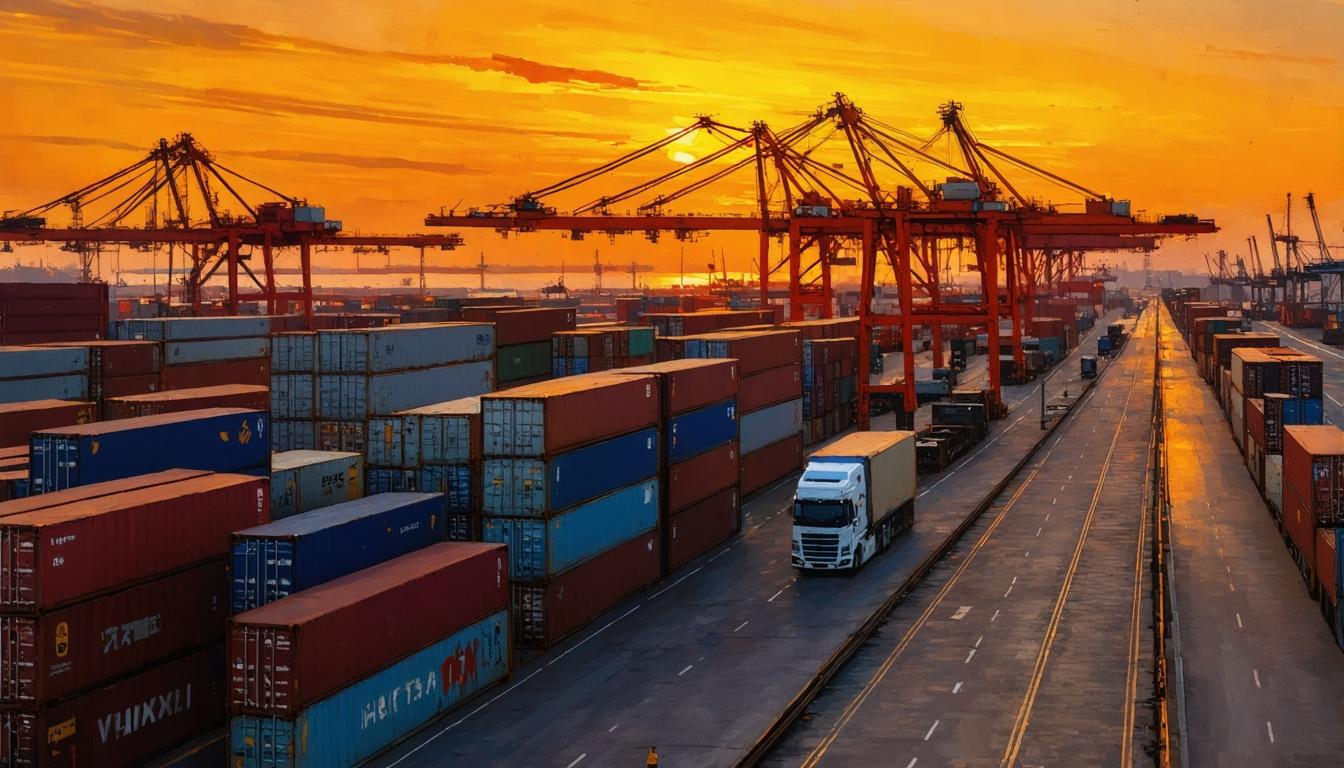
*this image is generated using AI for illustrative purposes only.

The opening of the $4.7 billion Gordie Howe International Bridge, connecting Detroit and Windsor, Ontario, has been delayed by the U.S. and Canada. The Windsor-Detroit Bridge Authority announced that both nations agreed to postpone the opening, initially planned for Friday, to take the necessary time to resolve outstanding issues. Canadian Prime Minister Mark Carney confirmed the delay was at the request of the Trump administration, emphasizing the need to address matters for a project intended to serve both countries for decades.

Talks regarding the bridge opening are being led by U.S. Ambassador to Canada Pete Hoekstra and Commerce Secretary Howard Lutnick. The delay occurs amid volatile trade relations, as President Donald Trump previously suggested he could block the bridge's opening. Trump cited Canada's refusal to stock certain U.S. alcoholic beverages, tariffs on American dairy products, and its trade negotiations with China as reasons for his stance.

Trade Policy Context

The bridge delay coincides with broader trade disputes. Canada's Liberal government recently announced a new policy under the Online Streaming Act, potentially reducing contributions from American streaming companies like Netflix Inc., Amazon.com's Prime, and The Walt Disney Company's Disney+ to support Canadian TV production. Critics view this as a concession in the ongoing trade war with the U.S.

Ontario Premier Doug Ford urged the president to finalize a deal quickly. However, Trump expressed doubts about renewing the U.S.-Mexico-Canada Agreement (USMCA), citing trade deficits. During a press briefing on Wednesday, Trump stated, "We don't need anything that Canada has."

Energy Sector Data

GasBuddy Analyst Patrick De Haan countered Trump's assertion regarding the lack of need for Canadian goods, highlighting the energy sector's reliance on imports. De Haan provided data illustrating the dependency on Canadian oil:

Metric Percentage
Share of total US oil imports 62%
Share of total US refinery input 25%

The analyst questioned the concept of "energy independence" given these figures, emphasizing Canada's role as a key supplier. The USMCA is currently slated for renegotiation on July 1, with U.S. Trade Representative Jamieson Greer indicating that tariffs on Mexico's auto and steel sectors would remain in effect despite the talks.

How will the continued delay of the Gordie Howe International Bridge impact cross-border supply chain costs and efficiency in the short term?

Could the U.S. leverage the bridge opening as a permanent bargaining chip in future USMCA renegotiations?

How might Canada retaliate against U.S. trade pressure regarding the Online Streaming Act and energy sector disputes?

like20
dislike

KashKick survey finds 62% prioritize earning and debt payoff

2 min read     Updated on 13 Jun 2026, 02:09 AM
scanx
Reviewed by
Radhika SScanX News Team
AI Summary

KashKick's survey shows 62.32% of consumers prioritize earning and debt payoff over long-term savings. 70.07% would use unexpected funds for essential bills, reflecting financial strain. Geographic data highlights high costs in Texas, Florida, and California.

powered bylight_fuzz_icon
42842365

*this image is generated using AI for illustrative purposes only.

A new survey by KashKick reveals that 62.32% of consumers rank increasing income or paying off debt as their top financial priority, placing these goals ahead of investing, saving for retirement, or building an emergency fund. The findings highlight a shift in household financial behavior toward immediate cash-flow management rather than long-term wealth accumulation. This trend is particularly pronounced in Texas, Florida, and California, which accounted for the largest shares of survey respondents.

The survey indicates active financial engagement among respondents, with 50.57% checking their bank balance daily. A majority described their financial situation as uncertain or unstable. Yasmin Marinaro, Head of Consumer Marketing at KashKick, noted that this behavior reflects a focus on covering everyday expenses. "People who are focused on covering everyday expenses check their balances the way a small business owner checks the register," Marinaro said.

Geographic data aligns with broader cost-of-living trends, as Texas, Florida, and California have experienced sharp increases in housing and everyday expenses since 2021. For median-income households in these states, fixed costs have outpaced wage growth. Consequently, flexible earning methods have become integrated into monthly budgets rather than serving as occasional supplements.

Financial pressure remains a significant driver of these priorities. When asked how they would use an unexpected $100, 70.07% of respondents said they would pay bills or essential expenses. This compares to 16.90% who would save the money, 6.61% who would spend on non-essential items, and 4.33% who would invest it.

Key Survey Findings

Metric Percentage Priority/Action
Top Priority: Income or Debt 62.32% Increasing income or paying off debt
Daily Balance Check 50.57% Checking bank balance daily
Use of Unexpected $100 70.07% Pay bills or essential expenses
Use of Unexpected $100 16.90% Save the money
Use of Unexpected $100 6.61% Spend on non-essential items
Use of Unexpected $100 4.33% Invest

Debt impacts future planning for many respondents. Nearly 43% expressed worry that existing debt will affect their future quality of life, while 40.98% reported that debt makes saving for the future "very difficult" or impossible. Additionally, 47.07% of respondents indicated they are not currently saving for retirement.

For households managing this pressure, rewards platforms are increasingly viewed as a source of supplemental income, particularly for stay-at-home parents and caregivers. KashKick, founded in 2017, operates as a rewards platform allowing users to earn cash and gift cards through activities such as playing games, completing surveys, and trying new apps.

How long will the shift toward immediate cash-flow management delay household wealth accumulation and retirement readiness?

Will the reliance on flexible earning methods and rewards platforms become a permanent fixture in household budgets?

What impact will the current lack of retirement savings have on the broader economy and social safety nets in the coming decades?

like15
dislike

More News on United States