Iran warns of painful retaliation as US deploys 10,000 troops

scanx
Reviewed by
Anirudha BScanX News Team
Key Highlights
  • Pentagon deploys third aircraft carrier and 9,000 to 10,000 additional troops to the Middle East
  • IRGC warns of a significantly more lethal response than Operation True Promise 2 if attacked
  • Senator Chris Van Hollen labels the campaign an illegal war of choice and urges Congress to cut funding
powered bylight_fuzz_icon
52577927

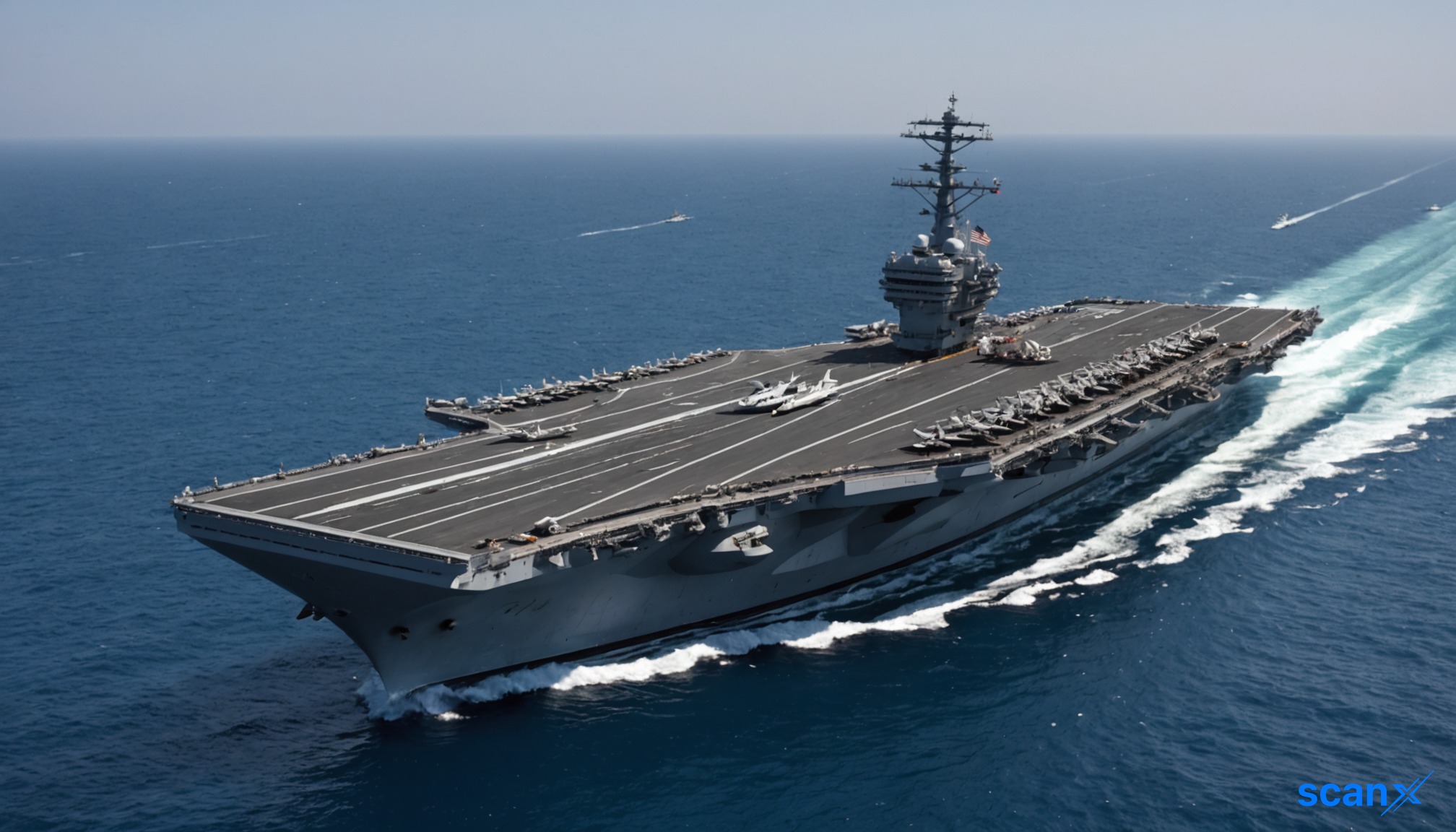
*this image is generated using AI for illustrative purposes only.

Iran’s Islamic Revolutionary Guard Corps warned of a significantly more lethal response to any future aggression, coinciding with reports that the Pentagon is deploying approximately 9,000 to 10,000 additional troops to the Middle East.

The deployment includes a third aircraft-carrier strike group and an additional Marine expeditionary unit, with warships, fighter jets, Marines, and sailors expected to arrive by the end of November. The Wall Street Journal reported these movements citing U.S. officials, noting that President Donald Trump has reportedly told aides he anticipates renewing bombing operations against Iran following the November midterm elections.

Senator calls for funding cutoff

Senator Chris Van Hollen (D-Md.) criticized the military buildup, labeling it an "illegal war of choice" and accusing the administration of withholding information about American military casualties. He urged lawmakers to intervene by cutting off funding for the campaign.

"The President, who continues to hide service member casualties, is now sending up to another 10,000 troops to his illegal war of choice in Iran," Van Hollen stated on X. He cautioned against dismissing the plans for renewed action, adding, "When Trump says he's planning on renewing his war next month, believe him."

IRGC marks anniversary with threat

The IRGC issued its warning on Friday, marking the second anniversary of Operation True Promise 2, the October 2024 missile attack against Israel. The force described the operation as retaliation for the assassinations of senior figures, including Ismail Haniyeh, Hassan Nasrallah, and Abbas Nilforoushan.

Asserting that the previous attack demonstrated Iran’s ballistic missile capabilities and challenged perceptions of U.S. and Israeli military superiority, the IRGC declared that the "era of cost-free threats has ended." The group stated that any future aggression would trigger a "regrettable and painful response."

Entity Action/Statement Key Detail
Pentagon Troop Deployment 9,000 to 10,000 additional troops
IRGC Threat Significantly more lethal than Operation True Promise 2
Sen. Van Hollen Legislative Call Cut off funding for the conflict

The White House and Pentagon did not immediately respond to requests for comment regarding the reported buildup and potential strikes.

Disclaimer: This article is AI-generated using data from ViewTrade. ScanX is not liable for any inaccuracies.

How might the November midterm elections influence the timing and scale of potential U.S. military strikes against Iran?

What specific legislative mechanisms could Congress utilize to effectively enforce a funding cutoff for ongoing military operations in the Middle East?

How are regional allies and Gulf states adjusting their security postures in response to the significant increase in U.S. naval and marine presence?

like17
dislike

Iran security chief mocks Trump's claim Tehran is ready to fold

scanx
Reviewed by
Shriram SScanX News Team
Key Highlights
  • Mohsen Rezaei mocked Trump's claim that Iran is ready to fold up
  • Trump stated U.S. will win war right after November midterm elections
  • U.S. blockade has severely disrupted Iran's oil exports and revenue
  • Iran's president affirmed openness to peace talks but refused surrender
powered bylight_fuzz_icon
52258760

*this image is generated using AI for illustrative purposes only.

Iran’s top security official Mohsen Rezaei dismissed President Donald Trump’s assertion that Tehran is close to surrendering, accusing the U.S. leader of confusing fantasy with reality. Rezaei, secretary of Iran’s Supreme National Security Council, responded on X after Trump stated Iran was "ready to fold up" and predicted a U.S. win shortly after the November midterm elections.

Rezaei challenges Trump's narrative

Rezaei criticized Trump in a post on October 2, 2026, labeling him the "worst president in American history" for his persistent rhetoric following what he described as repeated failures. He argued that Trump’s words had "outrun his own fantasies," emphasizing that actual outcomes are determined by Iran’s people, soldiers, and missiles rather than presidential declarations.

"You can win every day in your own imagination," Rezaei wrote. "But reality is shaped by Iran."

Trump asserts U.S. advantage in conflict

Trump made the remarks regarding Iran’s surrender status during an event at a Peterbilt Motors facility in Denton, Texas, on Thursday night. He claimed the United States was engaged in a war with a country that would never possess a nuclear weapon and was prepared to yield. Trump indicated he believed the U.S. would secure victory "right after the election," while leaving open the possibility of an earlier resolution.

During the same event, Trump noted that the U.S. was "trying to be nice" to Iran’s current leadership but acknowledged uncertainty regarding whom Washington could effectively negotiate with. Earlier in the week, Trump told TIME magazine that U.S. military action against Iran could resume after the midterm elections if no agreement is reached. He also expressed skepticism about achieving peace with Iran.

Economic pressure and diplomatic stance

On Tuesday, Trump had described Iran as "doing very poorly" in its conflict with the U.S., though he remained unsure if Tehran would "give up yet." This characterization aligns with reports that a U.S. blockade has severely disrupted Iran’s oil exports, a critical revenue source, thereby increasing economic pressure on the Iranian population.

Despite these challenges, Iran’s president told the UN General Assembly last week that Tehran would not surrender to U.S. pressure but remained open to peace negotiations. The divergence between Trump’s public confidence in an imminent resolution and Iran’s official stance of resilience highlights the continued fluidity of the situation.

Disclaimer: This article is AI-generated using data from ViewTrade. ScanX is not liable for any inaccuracies.

How might the U.S. oil blockade against Iran impact global crude oil prices and energy market stability in the coming weeks?

What specific military or economic escalations are analysts predicting if no diplomatic agreement is reached before the November midterm elections?

How could the continued stalemate between Washington and Tehran influence Iran's strategic partnerships with Russia and China?

like17
dislike