

Vardhman Textiles sees Q1 FY27 profit rise on strong spinning margins


Vardhman Textiles delivered improved Q1 FY27 financials, buoyed by full spinning utilization and partial trading gains from raw material price lags. While the fabric segment faced headwinds from missed U.S. orders, management anticipates recovery. Global cotton supply constraints, including reduced output in Australia, Brazil, and China, support price stability. The company continues its INR 3,600 crore capex cycle, focusing on modernization, renewable energy, and new synthetic fabric capacity.


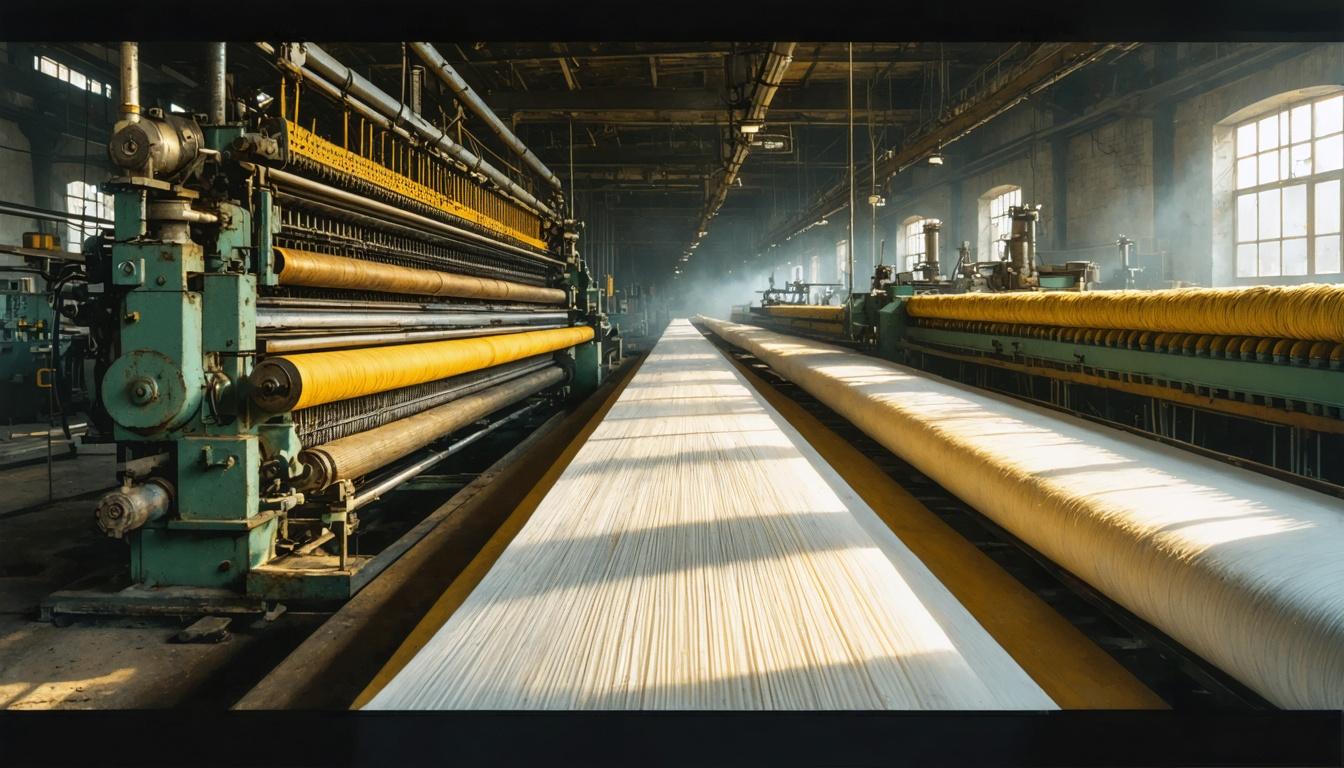
*this image is generated using AI for illustrative purposes only.
Vardhman Textiles reported an improvement in financial results for the first quarter of fiscal year 2027 (Q1 FY27), driven primarily by robust performance in its spinning segment. Managing Director Neeraj Jain highlighted that both percentage and absolute profit figures increased, citing favorable raw material trading gains and full capacity utilization in spinning. While the fabric division remained comparable to the previous year’s quarter due to delayed U.S. orders, management expects significant recovery in the next two to three months.
The company disclosed the transcript of its earnings conference call held on July 31, 2026, pursuant to Regulation 30 read with Part A of Schedule III of the SEBI (Listing Obligations and Disclosure Requirements) Regulations, 2015. The filing was signed by Company Secretary Sanjay Gupta and submitted to BSE Limited and The National Stock Exchange of India Ltd on August 3, 2026.
Operational Highlights
| Segment | Performance Driver | Outlook |
|---|---|---|
| Spinning | Full utilization; partial trading gain from raw material price lag | Strong demand from China; export volumes up to 110 million kg |
| Fabric | Lower utilization due to missed U.S. sampling season; new line addition | Expected improvement in next 2–3 months; comparable to Q1 FY26 |
| Synthetic Fabric | New capacity of 15 lakh meters/month; currently at 15–20% utilization | Targeting 70–80% utilization within 6 months; two big brand approvals received |
Neeraj Jain noted that the spinning business benefited from a partial trading gain as yarn prices adjusted faster than raw material costs. The company’s yarn exports have risen to approximately 110 million kg, up from less than 100 million kg previously, with China accounting for about 30% of these exports. This shift is attributed to high domestic cotton prices in China (USD 1.15–1.16 per pound) compared to international rates, making imported yarn more economical for Chinese mills.
Global Cotton Supply Constraints
Management emphasized a tightening global cotton supply outlook, which supports near-term price stability. Jain pointed out that India is experiencing El Niño conditions with uneven rainfall, potentially affecting crop quality. Brazil has reduced planting area by 5%, while Australia expects a major crop drop to 3.5 million bales. Additionally, China has deliberately reduced cotton growing areas to focus on food crops, and the U.S. faces drought conditions in West Texas.
"It looks like after 3 years, this will be a year where production could be lower than consumption," Jain stated. He projected a potential 3–4% gap between supply and consumption for the next one to two years, which should sustain reasonably good cotton prices. International cotton prices have stabilized in the range of USD 0.78 to USD 0.81 per pound, with Indian prices aligning closely at approximately INR 64,000 per candy.
Capital Expenditure and Future Growth
Vardhman Textiles is executing a capital expenditure plan totaling approximately INR 3,600 crore. Most of this spending is focused on modernization and renewable energy projects, including biomass boilers in Baddi and Madhya Pradesh, which are expected to reduce operational costs. Jain confirmed that about INR 800–900 crore of capex will be carried forward to FY28, primarily for an open-end project with a capacity of 55–60 tons per day and further modernization efforts.
The company is also advancing plans for a new site in Dhar under the PM MITRA Park initiative. However, construction will commence only after land and power availability are confirmed, expected by December 2026 or June 2027 respectively. Jain indicated that this site could host multiple projects over the next three to five years, driving long-term top-line growth.
What the Numbers Show
The divergence between the spinning and fabric segments highlights the company’s transitional phase. While spinning benefits from immediate global supply shocks and favorable export dynamics, the fabric division faces short-term headwinds from geopolitical tariff issues and new capacity ramp-up lags. However, the strategic move into synthetic fabrics and garmenting—aimed at doubling garment capacity to 4.5 million units—positions Vardhman to capture value-added segments. The alignment of Indian and international cotton prices, coupled with duty-free import windows, provides management with flexibility to optimize raw material sourcing, potentially sustaining margins above the distressed levels of 9–10% seen in previous years.
Investors should monitor the realization of synthetic fabric utilization targets and the timeline for the Dhar project, as these factors will determine the sustainability of margin improvements beyond the current trading gains.
Historical Stock Returns for Vardhman Textiles
| 1 Day | 5 Days | 1 Month | 6 Months | 1 Year | 5 Years |
|---|---|---|---|---|---|
| -1.00% | -5.74% | -10.71% | +1.06% | +28.19% | +42.86% |

How might the projected 3–4% global cotton supply deficit impact Vardhman's ability to maintain margin improvements if raw material trading gains normalize in subsequent quarters?
What are the specific risks associated with the delayed commencement of the Dhar PM MITRA Park project, and how could potential delays beyond June 2027 affect the company's long-term capacity expansion roadmap?
Given the heavy reliance on China for spinning exports (30%), how vulnerable is Vardhman to potential shifts in Chinese domestic cotton pricing policies or new trade barriers?
 15
15







 Access 50+ Readymade Screeners
  Use 200+ Custom Filters
  Get Full Market Insights





