

R Systems named Horizon 2 GCC Accelerator in HFS Horizons 2026 report


R Systems International Limited was named a Horizon 2 GCC Accelerator in the HFS Horizons: GCC Services, 2026 Report. The firm was recognized for its AI-first GCC model and proprietary tools like GCC Copilot and OptimaAI. HFS cited the company's strong execution in GCC setup and transformation, supported by over 1,400 AI experts and 120+ AI-led case studies.

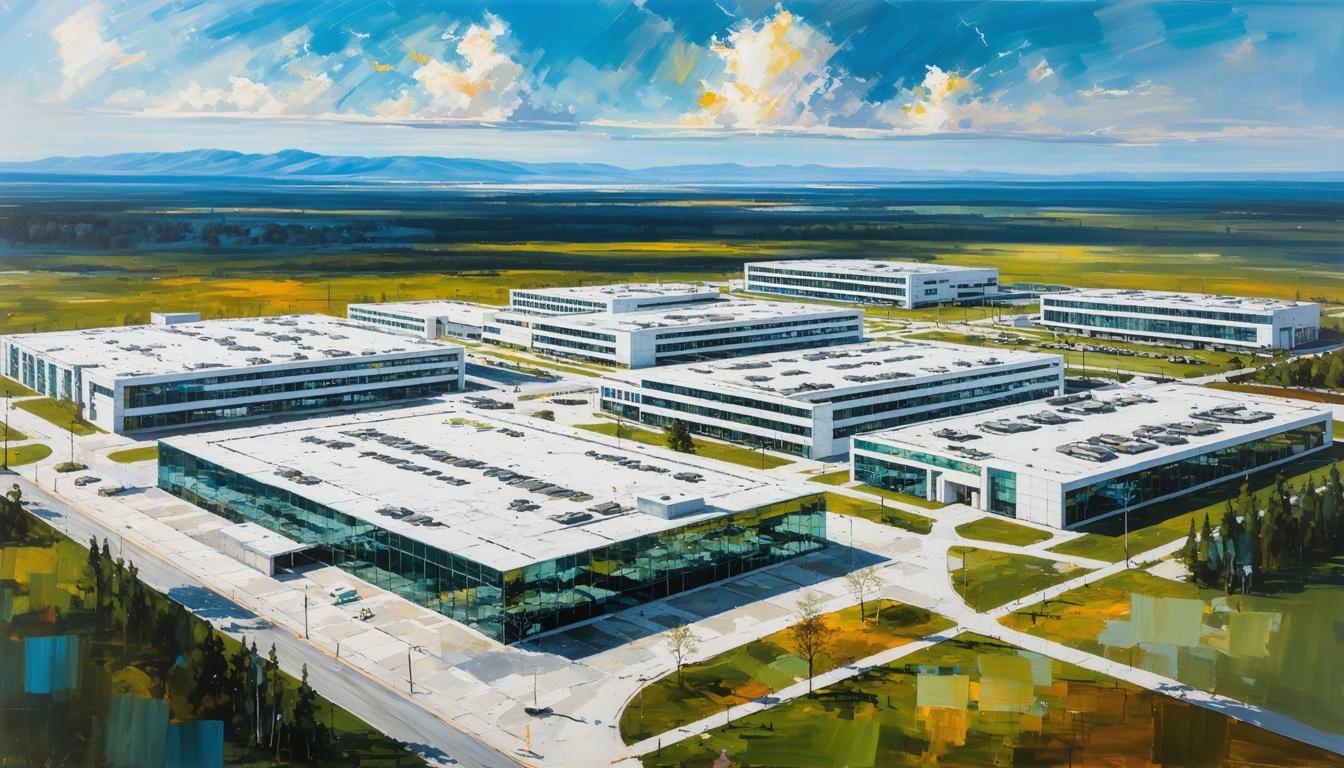

*this image is generated using AI for illustrative purposes only.
R Systems International Limited has been recognized as a Horizon 2 GCC Accelerator in the HFS Horizons: GCC Services, 2026 Report. The research firm cited r systems international for its AI-first Global Capability Center (GCC) model, platform-led delivery capabilities, and strong execution across GCC setup, operations, and transformation. This positioning underscores the company's growing role in helping enterprises establish, scale, and transform GCCs through an AI-native approach that accelerates business outcomes and operational excellence.
The announcement was made on July 29, 2026, from Greater Noida, India, and El Dorado Hills, California. In its assessment, HFS Research highlighted R Systems' portfolio of proprietary accelerators, including GCC Copilot, OptimaAI, EXIQO, and C-Osmosis. These tools are designed to help enterprises accelerate GCC maturity, improve engineering productivity, and drive measurable business outcomes.
Key Capabilities and Assets
HFS Research noted R Systems' focus on innovation, supported by significant investments in AI infrastructure and talent. The report highlighted the following key metrics:
| Capability Area | Metric |
|---|---|
| AI-led Case Studies | More than 120 |
| AI Experts | Over 1,400 |
| Reusable AI Agents | 150+ |
| Industry Blueprints | 18 |
These assets are designed to help enterprises scale AI adoption across their GCC ecosystems. Achyuta Ghosh, Executive Research Leader at HFS Research, stated that R Systems' positioning reflects its strength in helping enterprises move from people-led delivery to AI-enabled, platformized GCC operations. He noted that assets such as GCC Co-Pilot, OptimaAI, EXIQO, Gen AI C-Osmosis, BRACED, and QA-to-QE bring repeatability to setup, operations, engineering velocity, resilience, and Build-Operate-Transfer (BOT) transitions.
Strategic Outlook
Ashok Chawla, Co-Chief Delivery Officer at R Systems, said that Global Capability Centers are entering a new phase of evolution. "Enterprises are no longer looking at GCCs solely as delivery engines; they expect them to become strategic centers of innovation, AI adoption, and business transformation," Chawla said. He added that the recognition validates the company's vision of enabling GCCs to become AI native by combining engineering excellence, platform-led execution, and measurable business outcomes.
R Systems' GCC offerings span the entire GCC lifecycle, from strategy and setup to operations, optimization, workforce transformation, and AI-driven innovation. The company supports clients through flexible engagement models, including Build-Operate-Transfer (BOT), Build-Operate-Transform-Transfer (BOTT), assisted GCC, and hybrid operating models across India, Eastern Europe, APAC, and the Americas.
What the Numbers Show
The recognition highlights a shift in how service providers are evaluated in the GCC space. With over 1,400 AI experts and 150+ reusable AI agents, R Systems is demonstrating a scalable approach to AI integration that goes beyond project-based execution. The presence of 18 industry blueprints suggests a standardized yet adaptable framework for rapid deployment across different sectors, allowing mid-market and private equity-backed enterprises to achieve speed and flexibility in their GCC transformations.
Historical Stock Returns for R Systems International
| 1 Day | 5 Days | 1 Month | 6 Months | 1 Year | 5 Years |
|---|---|---|---|---|---|
| -3.05% | +10.02% | +6.83% | +12.77% | -34.23% | +22.83% |

How might R Systems' AI-native GCC model disrupt traditional IT service providers who rely on labor arbitrage rather than platform-led delivery?
What specific regulatory or data sovereignty challenges could arise as R Systems expands its AI-driven GCC operations across diverse regions like Eastern Europe and the Americas?
Will the proliferation of reusable AI agents and industry blueprints lead to commoditization of GCC setup services, potentially pressuring R Systems' margins?
 17
17




 Create Custom Screeners
  Access 200+ Pre-built Filters
  Use 50+ Readymade Screener





