

CoreWeave CDS hit 1,194 bps as bond yields top 15%


- CoreWeave shares fell 6.4% Friday, extending weekly losses to ~22%
- Five-year credit default swaps hit a record 1,194.5 bps, implying >60% default odds
- Bond yields for 2031 and 2032 maturities rose above 15.3% and 15.4% respectively
- Bank of America maintains Buy rating with $140 target despite credit market stress
- Combined free cash flow of major AI spenders forecast to swing to -$63 billion this year



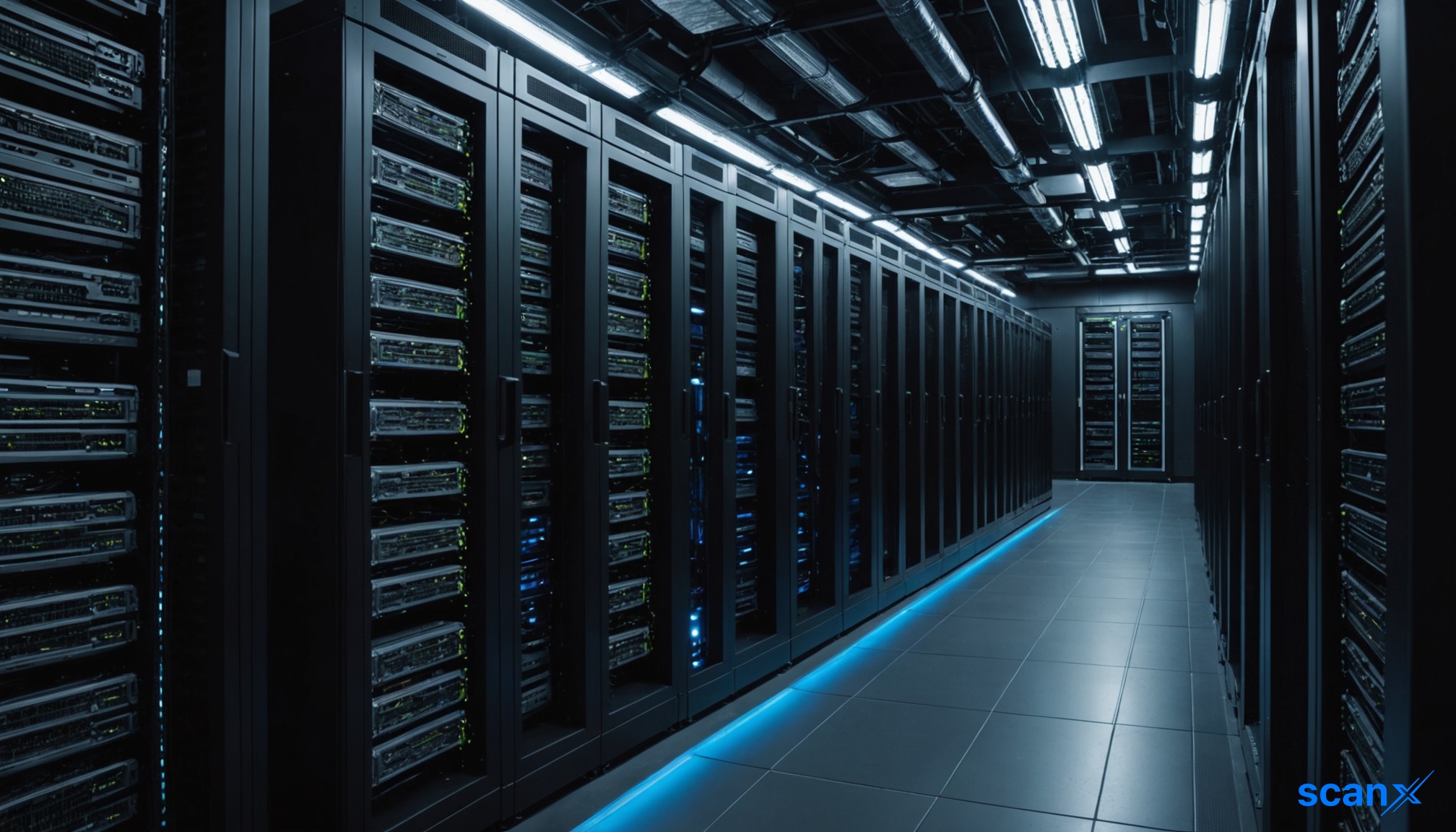
*this image is generated using AI for illustrative purposes only.
CoreWeave Inc shares fell 6.4% to $65.25 on Friday morning, extending a weekly loss to nearly 22% as credit markets priced in heightened default risk. The stock slid further in premarket trading, losing a third of its value over the last seven sessions.
Despite the sell-off, Bank of America reiterated its Buy rating and $140 price target, about 105% above current levels. BNP Paribas analyst Daniel Wang also maintained a positive outlook with a $169 price forecast, implying 157% upside from the October 14 close of $65.80. The divergence highlights the tension between credit market skepticism and equity analyst optimism regarding the company's growth trajectory.
Credit markets signal distress
Credit markets are sending a far less hopeful signal than equity bulls. CoreWeave’s five-year credit default swaps hit a record 1,194.5 basis points on Thursday, according to ICE Data Services data reported by Bloomberg. That price implies a more than 60% chance of default within five years, by standard market calculations.
The yield on CoreWeave’s 9.625% bond due 2032 rose above 15.4% on Thursday, with the bond trading near 78 cents on the dollar, a level widely treated as the line where a borrower is considered financially strained. The yield on its 9.75% bond due 2031 stood above 15.3%. S&P Global rates CoreWeave B+, which is in junk territory. The selloff coincided with a hotter U.S. inflation report that pushed traders toward betting on a December Fed rate hike, raising refinancing costs for heavily indebted companies.
| Metric | Value | Context |
|---|---|---|
| Stock Price (Fri AM) | $65.25 | Down 6.4%, weekly loss ~22% |
| 5-Year CDS Spread | 1,194.5 bps | Record high, implies >60% default odds |
| Bond Yield (9.75% due 2031) | >15.3% | Climbed Thursday |
| Bond Yield (9.625% due 2032) | >15.4% | Trading near 78 cents |
| Total Debt/Obligations | >$51 billion | Financing AI buildout |
| Backlog | ~$129 billion | Meta 27.1%, OpenAI 17.4% |
Analysts flag distinct risks
Bank of America analyst Tal Liani said Wednesday’s drop “likely reflects concerns over financing hurdles for AI infrastructure players.” His team raised its forecasts, expecting revenue growth of 105% in 2027 and 63% in 2028, up from 102% and 58% previously.
Two levers drive the upgrade:
- Capacity: CoreWeave had 1.5 gigawatts of active power at the end of the second quarter, with expectations of 4.8 gigawatts by the end of 2028.
- Pricing: Annual revenue per watt is projected to rise from about $10 today to $14 by the end of 2028, as Nvidia Corp.’s next-generation Vera Rubin chips roll out.
The $140 target values CoreWeave at 26 times the bank’s estimate of 2027 operating profit, measured as enterprise value to EBIT. Cloud data center peers trade at 14 to 19 times.
BNP Paribas analyst Daniel Wang urged investors to distinguish between two types of debt: AssetCo financing, which supports infrastructure assets, and ParentCo borrowing, which funds broader corporate needs. Wang sees limited repayment risk associated with AssetCo debt because cash flows from the underlying infrastructure should comfortably cover operating costs, interest and principal payments. However, ParentCo debt presents a greater challenge, with implied yields on certain unsecured obligations reaching 15%, making traditional corporate borrowing increasingly expensive.
Cash needs remain substantial
Bank of America’s model shows why bondholders are nervous. It forecasts negative free cash flow of about $67 billion combined from 2026 to 2028. To fill that gap, it assumes about $59 billion of new borrowing.
Interest expense nearly doubles over the period, from $3.08 billion in 2026 to $5.9 billion in 2028. Operating profit is not expected to cover interest payments fully until 2028, the same year the bank sees CoreWeave’s first full-year profit. In the second quarter, CoreWeave generated $679 million in operating cash flow while spending about $6.4 billion on equipment. Net interest expense more than doubled to $640 million.
Wang noted that CoreWeave may need to rely on convertible debt or equity issuance to finance expansion until credit investors gain confidence in its ability to fund growth internally. He expects the company's financial position to improve as more graphics processing units become operational and newer contracts with better economics generate revenue.
Sector-wide pressure
Ludovic Subran, chief investment officer at German insurer Allianz, described the situation as a “Darwin moment” for data centre bonds, where the weakest credits struggle to survive. Rival neocloud Nebius Group N.V. is down about 20% this week.
Bank of America’s Michael Hartnett sees the pressure moving up the food chain. He cited 3% inflation-adjusted yields, the Nov. 3 midterms and weak trading in AI “spenders and lenders.” The spenders are CoreWeave’s customers: Amazon, Alphabet, Meta, Microsoft and Oracle. Their AI spending is expected to reach $807 billion this year. As a result, their combined free cash flow is forecast to swing from $191 billion in 2025 to minus $63 billion this year, according to consensus estimates compiled by Bank of America.
What the numbers show
The divergence between the bond market and analyst theses hinges on timing and debt structure. The banks bet that contracted revenue arrives on schedule and grows into the debt, while bond traders question what happens if financing becomes more expensive first. With interest expenses doubling by 2028 and operating profit not covering them until then, the company relies heavily on continued access to capital markets to bridge the gap between heavy upfront investment and eventual profitability. Wang specifically highlighted that evidence that CoreWeave can meet its corporate debt obligations without repeatedly raising capital could restore investor confidence.

How might a potential December Fed rate hike specifically impact CoreWeave's ability to secure the $59 billion in new borrowing required to bridge its projected negative free cash flow through 2028?
What specific milestones regarding the transition from AssetCo to ParentCo debt repayment would serve as the most credible signal to credit markets that CoreWeave's default risk is subsiding?
If major AI spenders like Meta and Microsoft face constrained free cash flows as predicted, could this lead to renegotiations or delays in CoreWeave’s $129 billion backlog contracts?










 Create Custom Screeners
 Access 200+ Pre-built Filters
 Use 50+ Readymade Screener





