

Micron Q4FY26 Results: Revenue up 379% to $54.23 billion, NAND surges 526%


- Micron Technology reported record Q4FY26 revenue of $54.23 billion, up 379% YoY, beating analyst estimates of $50.75 billion
- NAND revenue surged 526% YoY to a record $14.1 billion, with data-center SSD revenue approaching $10 billion, more than 10 times the year-earlier level
- Non-GAAP EPS of $33.42 exceeded the consensus estimate of $31.45; non-GAAP gross margin expanded to 87.0% from 45.7% a year ago
- Micron guided Q1FY27 revenue of $60.000 billion-$63.000 billion, above analyst estimates of $56.553 billion
- Micron has signed 26 Strategic Customer Agreements covering over 35% of revenue through 2030, with customer financial commitments reaching $32 billion

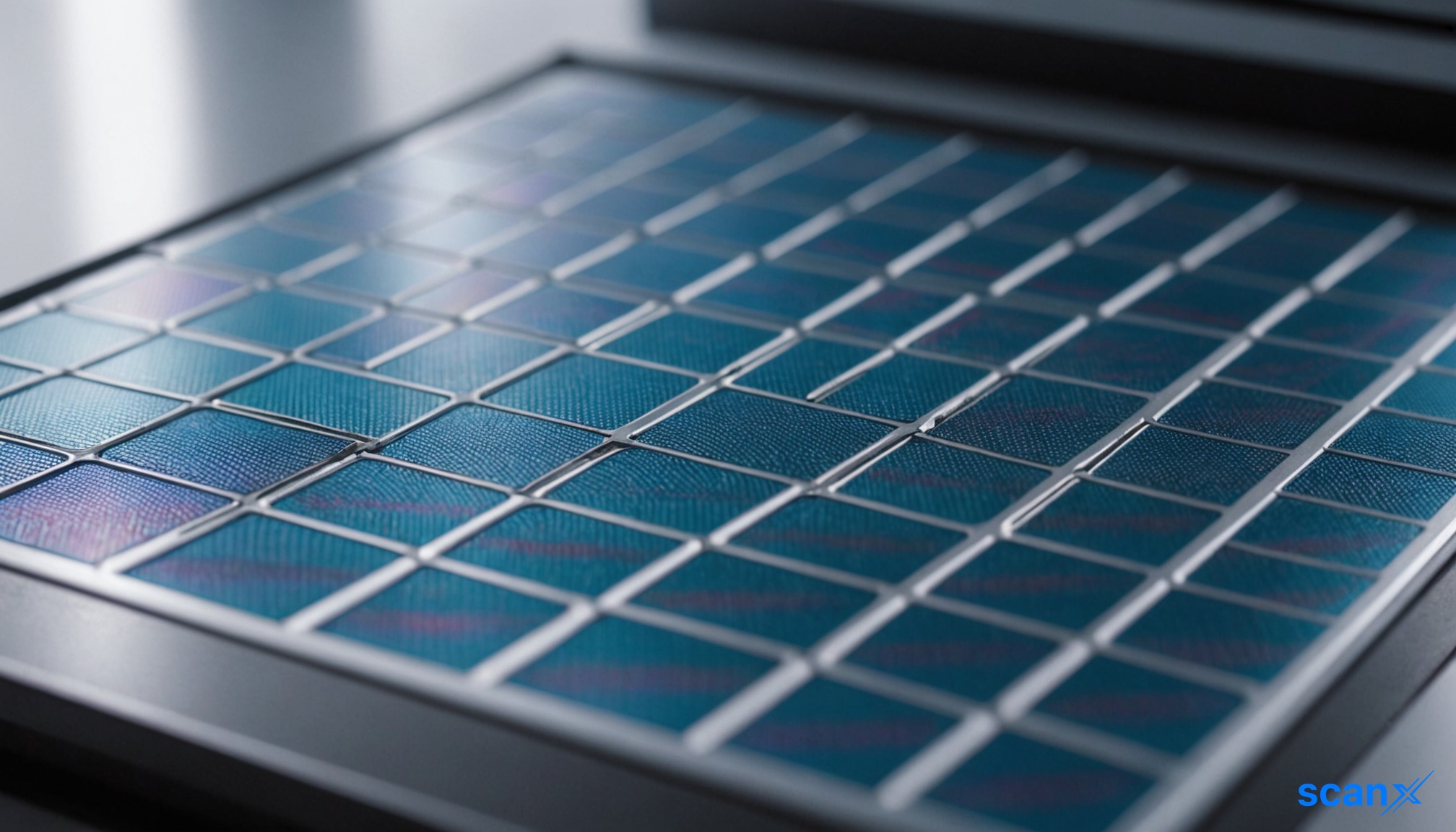

*this image is generated using AI for illustrative purposes only.
Micron Technology Inc. reported record fiscal fourth-quarter revenue of $54.23 billion, up 379% year over year, beating analyst estimates of $50.75 billion. NAND revenue surged 526% to a record $14.1 billion, driven by AI data center storage demand.
Non-GAAP EPS of $33.42 exceeded the consensus estimate of $31.45 and the prediction market threshold of $32.22. Operating cash flow reached $43.97 billion, up from $25.39 billion in the prior quarter and $5.73 billion in the comparable quarter last year. Adjusted free cash flow stood at $33.20 billion. Micron ended the year with cash, marketable investments, and restricted cash of $73.48 billion.
Q4FY26 financial highlights
The quarter showcased significant margin expansion driven by AI demand. Gross margin reached 86.8% on a GAAP basis and 87.0% on a non-GAAP basis, compared to 44.7% and 45.7% respectively in the prior-year quarter. Operating income was $43.75 billion (GAAP) and $44.64 billion (non-GAAP). Capital expenditures for the quarter were $10.77 billion.
| Metric | Q4FY26 | Q4FY25 | YoY change |
|---|---|---|---|
| Revenue | $54.23 billion | $11.31 billion | +379% |
| Non-GAAP EPS | $33.42 | $3.03 | +1003% |
| Non-GAAP gross margin | 87.0% | 45.7% | +4130 bps |
| Operating cash flow | $43.97 billion | $5.73 billion | +667% |
| NAND revenue | $14.1 billion | — | +526% |
Why AI data centers need more NAND
The 526% surge in NAND revenue reflects how much more information AI systems now need to store and retrieve, according to MS Hwang, research director at Counterpoint Research. Hwang pointed to the KV cache, which stores information an AI model has already processed and may need again. "If it cannot all fit into HBM, it needs to be spilled over to DRAM, and from there, down to NAND," Hwang said.
High-bandwidth memory (HBM) is the ultra-fast memory used alongside AI accelerators such as Nvidia Corp. GPUs. DRAM provides broader working memory, while NAND is slower and cheaper storage used in solid-state drives (SSDs). The industry calls this storage tiering: keeping the most urgent data in fast memory while moving less urgent information into cheaper storage. Micron said longer context windows and larger models are increasing memory and storage requirements, with much of that storage sitting in SSDs. Micron's data-center SSD revenue approached $10 billion last quarter, more than 10 times the year-earlier level and more than two-thirds of its total NAND revenue.
AI workloads are getting much bigger
Hwang said AI has moved beyond text into images, video, and more complex tasks, sharply increasing the amount of data systems need to process and retain. He compared the shift with moving from simple computer games in the early 1990s to 3D games later in the decade, adding that today's increase in data is "even greater." Hwang also said Micron's ability to make both DRAM and NAND leaves it more flexible than pure NAND suppliers if DRAM moves to 3D designs, which could expand capacity at lower cost.
Cloud providers are buying more, and earlier
AI demand is not the only force pushing NAND purchases higher. Hwang said memory investment remains concentrated in DRAM, leaving less new capacity for NAND and prompting cloud providers to bring SSD orders forward ahead of tighter supply and higher prices. Micron's NAND prices rose about 30% sequentially last quarter. Customers are already trying to reduce memory requirements as costs rise, including by reusing older DRAM. However, Hwang said that does not necessarily mean fewer purchases. Even if customers put less memory in each system, "the total volume of required chips increases even faster," he said, calling the cutbacks "a completely different story from an actual drop in purchase volumes."
Business unit performance
Data center segments continued to dominate revenue growth. The Cloud Memory Business Unit generated $16.28 billion in revenue, up from $4.54 billion a year ago. The Core Data Center Business Unit saw revenue jump to $18.00 billion from $1.58 billion. Both units maintained gross margins above 83%, reflecting strong pricing power in HBM and server DRAM products. Mobile and Client revenue rose to $13.11 billion from $3.76 billion, while Automotive and Embedded revenue increased to $6.82 billion from $1.43 billion. Management highlighted that server LPDDR SOCAMM portfolio revenue more than doubled sequentially in the quarter.
Guidance for Q1FY27
Micron guided for first-quarter fiscal 2027 revenue of $60.000 billion-$63.000 billion, implying continued sequential growth, and exceeding analyst estimates of $56.553 billion. The company expects non-GAAP gross margins to remain elevated at approximately 86.25%. GAAP diluted EPS is projected at $36.84-$38.84, surpassing the analyst estimate of $34.97. Non-GAAP diluted EPS is projected at $37.15-$39.15, against the consensus estimate of $35.07.
CEO commentary on AI evolution
Sanjay Mehrotra, Chairman and CEO, stated that Micron delivered record fiscal 2026 results and expects an even stronger fiscal 2027. He noted that AI is becoming "Super Intelligence" (SI) and that memory enhances this intelligence and the competitiveness of customers' platforms. Mehrotra emphasized that Micron is increasing investments in technology, products, and manufacturing to help drive SI forward with its customers. He added that Strategic Customer Agreements provide added confidence in the durability of Micron's financial performance.
Strategic customer agreements and supply outlook
During the earnings call, management disclosed that Micron has signed 26 Strategic Customer Agreements (SCAs), estimated to cover over 35% of revenue through 2030. Three-quarters of this revenue has a defined pricing framework, with the majority featuring floor and ceiling prices. Financial commitments from customers under these agreements have increased to $32 billion, predominantly in cash deposits. Remaining performance obligations (RPO) stand at approximately $150 billion.
Mehrotra stated that Micron does not have line of sight to when supply and demand will return to balance, expecting tighter conditions in calendar 2027 and 2028 compared to 2026. More than 75% of output for calendar 2027 is already committed across SCA and non-SCA customers. To address supply constraints, Micron plans to increase capital expenditures in fiscal 2027, primarily for construction to accelerate clean-room space availability.
Market reaction and historical context
Prior to the release, options traders priced a 6.3% move, while prediction markets assigned a 95% probability of adjusted EPS exceeding $32.22. Historically, Micron stock has moved an average of 9.4% the day after earnings, with seven of the last ten reports exceeding the implied volatility threshold. Despite beating estimates in December 2024, the stock fell 16.2%, highlighting heightened sensitivity to guidance. Micron shares finished Thursday about 3% higher after erasing early post-earnings losses. Bank of America analyst Vivek Arya reiterated a Buy rating with a $1,550 price objective, emphasizing gross-margin durability. Arya noted that buybacks could resume from December 9, once restrictions tied to Chips Act grants are lifted.
What the numbers show
A divergence exists between Micron's valuation multiples and its recent growth trajectory. The stock trades at a forward price-to-earnings ratio of 6.8, significantly lower than the industry average of 37. This discount persists despite Micron's status as a top performer over the past year, driven by a memory shortage that has elevated chip prices. The low multiple suggests the market may be pricing in cyclical risks or anticipating a normalization of margins despite record revenue expectations.
The gap between the implied volatility (6.3%) and the historical average absolute move (9.4%) indicates that options traders may be underpricing the risk of a significant post-earnings repricing, particularly given that five of the last ten reactions were double-digit moves. The combination of high prediction market confidence (95%) for an EPS beat and the historical precedent of sharp declines despite beats (-16.2% in December 2024) highlights a disconnect between fundamental performance and market sentiment.

How will the anticipated tighter NAND supply in calendar 2027-2028 impact pricing power for competitors like Samsung and Kioxia?
What specific technological milestones must Micron achieve to sustain 86%+ gross margins as AI model complexity continues to scale?
How might the resumption of share buybacks after December 9 influence Micron's capital allocation strategy given its massive cash reserves?
 20
20










 Access 50+ Readymade Screeners
  Use 200+ Custom Filters
  Get Full Market Insights





