

Keto Motors unveils Urbanova KE9 electric bus with 150 km range


Keto Motors Limited unveiled the Urbanova KE9 electric bus on August 2, 2026, featuring a 150 km range and advanced digital fleet management capabilities. The launch aligns with a ₹300 crore manufacturing expansion in Telangana, creating over 2,000 jobs and establishing the company as a key player in India's sustainable public transport sector.



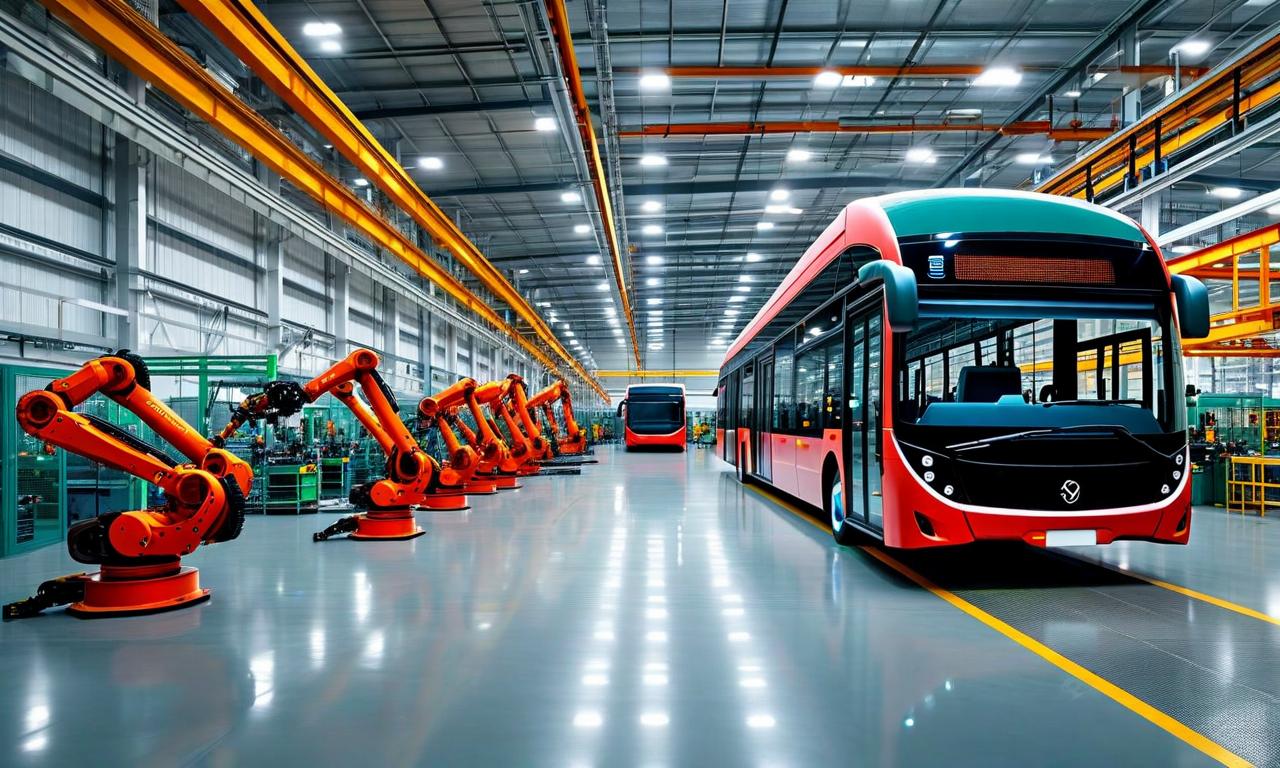
*this image is generated using AI for illustrative purposes only.
Keto Motors Limited unveiled the Urbanova KE9, a 9-meter commercial electric bus, on August 2, 2026, marking its formal entry into India’s competitive electric public transport sector. The launch, which included the ceremonial handover of the vehicle to an operating partner, signals the company’s shift from product development to scaled manufacturing. This move aims to address growing demand for zero-emission urban mobility while leveraging the founding team’s legacy in pioneering India’s early electric bus industry. The disclosure was made pursuant to Regulation 30 of the SEBI (Listing Obligations and Disclosure Requirements) Regulations, 2015.
The Urbanova KE9 is engineered for urban and institutional transportation, featuring a certified operating range of over 150 km under fully loaded conditions and a top speed of up to 80 km/h. It measures 8,985 mm in length, 2,532 mm in width, and 3,189 mm in height, with a floor height of 900 mm for easy boarding. The bus seats up to 31 passengers and includes safety features such as electro-hydraulic power steering, Anti-lock Braking System (ABS), regenerative braking, and disc brakes. It has secured CMVR Type Approval Certification from the Global Automotive Research Centre (GARC).
| Specification | Detail |
|---|---|
| Length | 8,985 mm |
| Width | 2,532 mm |
| Height | 3,189 mm |
| Seating Capacity | 31 passengers |
| Certified Range | Over 150 km (fully loaded) |
| Top Speed | Up to 80 km/h |
| Floor Height | 900 mm |
Technologically, the vehicle relies on a strategic partnership with TRON Energy Technology, a Taiwanese manufacturer, for patented liquid-cooled battery systems and Battery Management Systems (BMS). Complementing the hardware, Keto Motors developed KETO Connected, a digital operations platform created with ROQIT. This system provides real-time vehicle health monitoring, battery analytics, remote diagnostics, and predictive maintenance to maximize fleet uptime.
Manufacturing Expansion and Strategic Context
Supporting this product launch, Keto Motors signed a Memorandum of Understanding with the Government of Telangana in December 2025. The agreement commits an investment of approximately ₹300 crore to expand its existing 20-acre facility at Jadcherla and establish a greenfield facility at the Telangana EV Mobility Valley. This investment will support the manufacturing of 9-metre electric buses and create more than 2,000 direct jobs over the next three years.
What the Numbers Show
The launch of the Urbanova KE9 coincides with significant capital expenditure commitments, indicating a strategic pivot toward volume production rather than limited pilot deployments. The ₹300 crore investment in Telangana underscores Keto Motors’ intent to localize manufacturing while relying on international supply chains for critical battery components via TRON Energy Technology. This hybrid approach aims to mitigate early-stage R&D risks while leveraging local engineering for chassis customization, positioning the company to compete in the rapidly expanding Indian electric bus market.

How will Keto Motors' reliance on TRON Energy Technology for battery systems impact its supply chain resilience amidst potential global semiconductor or lithium shortages?
What is the projected timeline for the Jadcherla expansion and Telangana greenfield facility to reach full operational capacity, and how will this affect near-term production volumes?
How does the Urbanova KE9's 150 km range compare to competitors' offerings in India's 9-meter bus segment, and will this limit its deployment to specific urban routes?
 17
17











 Create Custom Screeners
  Access 200+ Pre-built Filters
  Use 50+ Readymade Screener





