

Kalyani Forge FY26 PAT hits 14-year high, targets 20% EBITDA


Kalyani Forge reported a record PAT of ₹9.32 crores for FY26, the highest in 14 years, with EBITDA margins rising to 13.3%. The company targets 20% EBITDA margins, driven by strategic shifts to high-margin OEM orders and operational efficiency.

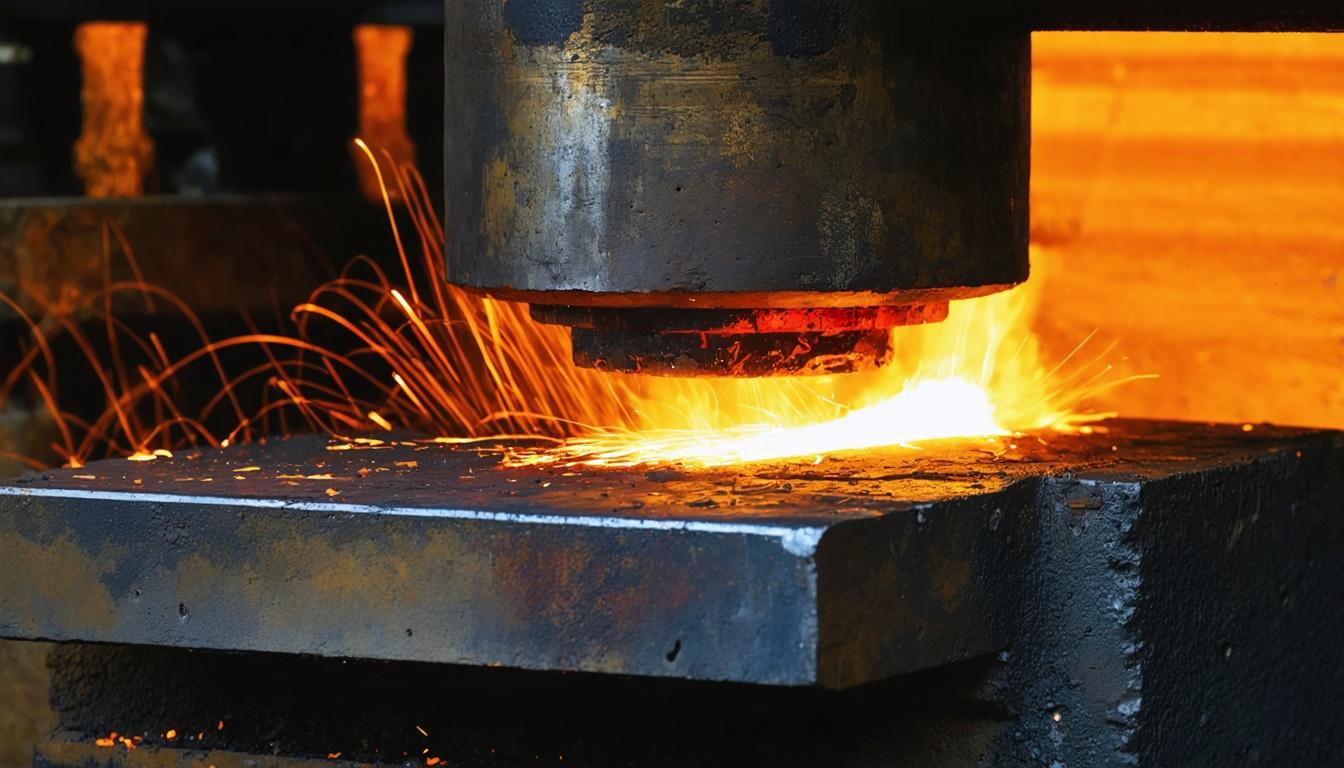

*this image is generated using AI for illustrative purposes only.
Kalyani Forge achieved a record profit after tax of ₹9.32 crores for the financial year ended March 31, 2026, marking the highest profitability in approximately 14 years. The company reported an EBITDA margin of 13.3% for FY26, an increase from 11.1% in the previous year, while revenue remained flat at ₹238 crores despite phasing out non-core business worth ₹40 crores. The strong performance underscores the success of the company's strategic shift towards high-margin OEM orders and operational efficiency drives. Management stated that the 15% EBITDA margin is now a baseline floor, with a target to reach 20% margins in the coming year.
Financial Performance and Margins
The company’s EBITDA for FY26 stood at ₹31.58 crores, compared to ₹26 crores in FY25. For the fourth quarter, EBITDA was ₹9 crores with a margin of 15.2%, marking the second consecutive quarter of maintaining margins above 15%. Profit before tax for the year was ₹14.37 crores, while Q4 PAT reached ₹5.88 crores. Earnings per share for FY26 was ₹25.6, with Q4 EPS at ₹16.17. Management highlighted that the deferred tax impact, which had suppressed Q3 PAT, reversed in Q4, and advised analyzing the two quarters together for a smoother trend.
| Metric | FY26 | FY25 |
|---|---|---|
| Total Revenue | ₹238 crores | - |
| EBITDA | ₹31.58 crores | ₹26 crores |
| EBITDA Margin | 13.3% | 11.1% |
| PAT | ₹9.32 crores | ₹8.31 crores |
| EPS | ₹25.6 | - |
Operational Efficiency and Capex
Return on capital employed (ROCE) improved from 14% in Q1 FY26 to 18% in Q4, reflecting stronger capital efficiency. The debt-to-equity ratio stood at 1.11, linked to growth capex and working capital requirements, with a target range of 1 to 1.2. The cash conversion cycle, which peaked at 176 days in Q2, is now a focus area for reduction, with a target of 120 to 130 days. The company reclassified dies and toolings inventory worth ₹10 crores into fixed assets to align with industry benchmarks, strengthening inventory policies.
Capex for FY26 totaled ₹23.44 crores, excluding the reclassification, taking the total Property, Plant, and Equipment (PPE) installed to ₹86.5 crores. The plan for FY27 is set at ₹30 crores, with 60% of the allocation directed towards future growth areas such as driveline and axle segments. Fixed asset turnover is stabilizing closer to the industry benchmark of 1.5 to 2, down from the historically stretched levels of 3.5 to 4.
Strategic Business Development
Kalyani Forge secured three major order wins in Q4, including OEM wheel hub orders from customers like SKF and Schaffler, ramping up from Q1 FY27. A new order win in the EV high-volume axle business is expected to generate annual revenue of ₹20 crores. The company continues to phase out low-margin legacy businesses, having removed approximately ₹40 crores of non-fit business in FY26, while growing core OEM revenues to ₹37.3 crores.
Historical Stock Returns for Kalyani Forge
| 1 Day | 5 Days | 1 Month | 6 Months | 1 Year | 5 Years |
|---|---|---|---|---|---|
| -3.17% | -9.89% | -19.32% | +36.85% | +15.37% | +312.87% |

What specific operational strategies will be employed to bridge the gap between the current 13.3% EBITDA margin and the 20% target for the coming year?
How will the planned ₹30 crore Capex for FY27 specifically impact production capacity for the new driveline and axle segments?
What measures are being prioritized to reduce the cash conversion cycle from current levels to the target range of 120-130 days?
 20
20












 Access Market Heat-map & Insights
  Create, Save & Share your Screener
  Use 200+ Screening Filters





