Joby Aviation signs 45,000 sq ft lease at Perot Field Fort Worth Alliance Airport

scanx
Reviewed by
Riya DScanX News Team
Key Highlights

Joby Aviation has secured a 45,000-square-foot lease at the Alliance Air Trade Center in Haslet, Texas, marking its first major operational hub in North America. The facility, part of Hillwood's AllianceTexas development, will host the eVTOL Integration Pilot Program, leveraging Perot Field's infrastructure for advanced air mobility testing.

powered bylight_fuzz_icon
47578956

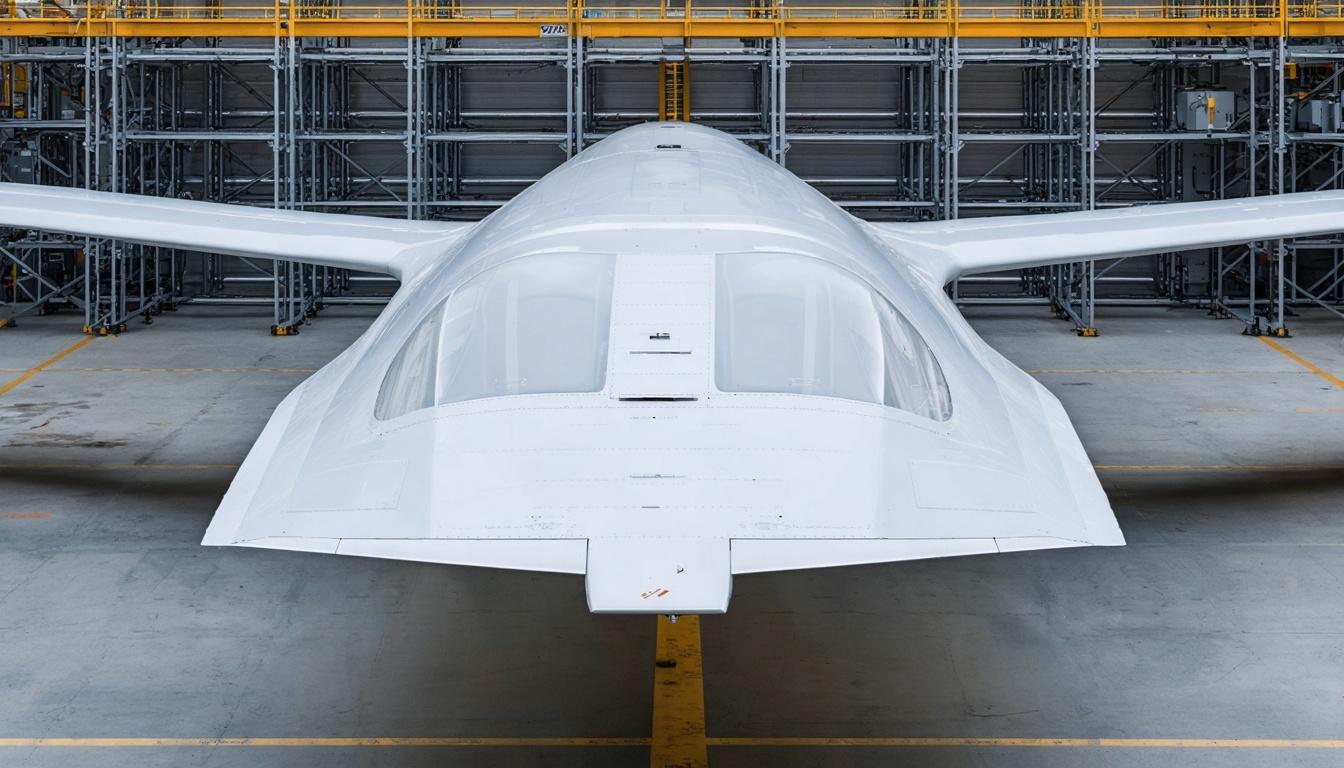
*this image is generated using AI for illustrative purposes only.

Joby Aviation, Inc. (NYSE: JOBY) has established its first significant operational hub in Texas by signing a lease for 45,000 square feet of space at the Alliance Air Trade Center in Haslet. Located within Hillwood’s 27,000-acre AllianceTexas development at Perot Field Fort Worth Alliance Airport, the facility positions the electric vertical takeoff and landing (eVTOL) aircraft manufacturer to begin its eVTOL Integration Pilot Program (eIPP) flights across the Dallas-Fort Worth Metroplex. This expansion strengthens Joby’s footprint in one of the United States’ most active advanced air mobility markets.

The lease agreement was announced by Hillwood, the developer of AllianceTexas. The new location provides Joby with access to multimodal transportation infrastructure, a skilled regional workforce, and a network of public- and private-sector partners focused on mobility innovation. Perot Field serves as the aviation cornerstone of the AllianceTexas Mobility Innovation Zone, a public-private ecosystem designed to advance technologies across air and surface mobility.

Strategic Location Details

Facility Detail Specification
Company Joby Aviation, Inc.
Location Alliance Air Trade Center, Haslet
Airport Perot Field Fort Worth Alliance Airport
Leased Space 45,000 square feet
Development AllianceTexas (27,000 acres)
Developer Hillwood

Greg Bowles, Joby Aviation’s Chief Policy Officer, stated that establishing a presence in Texas places the company in one of the most exciting markets in the country. He noted that the site provides a base to demonstrate the value of air mobility services across the Dallas-Fort Worth metroplex and the state. Bowles highlighted strong leadership in advanced air mobility from partners including Hillwood, the Texas Department of Transportation (TxDOT), and the North Central Texas Council of Governments (NCTCOG).

Samuel Rhea, vice president at Hillwood, said welcoming Joby reflects the ability to pair flexible real estate solutions with resources needed for growth. He added that Joby brings an important new capability and demonstrates how AllianceTexas continues to evolve to support aviation, manufacturing, and the advanced air mobility sector.

Christopher Ash, president of Alliance Aviation Companies, described Joby’s presence as a significant milestone for the airport and North Texas aviation. He noted that locating within the AllianceTexas Mobility Innovation Zone validates collaborative work in the region and advances the integration of eVTOL technology across the transportation network.

What the Numbers Show

The establishment of a dedicated 45,000-square-foot facility signals a transition from conceptual planning to physical infrastructure deployment for Joby Aviation in Texas. By anchoring operations within the AllianceTexas Mobility Innovation Zone, Joby leverages existing industrial airport infrastructure purpose-built for cargo and corporate aviation. This move reduces the capital expenditure required for greenfield development while providing immediate access to the logistical and regulatory ecosystem necessary for commercial passenger transportation trials. Perot Field is recognized as the world’s first industrial airport purpose-built for cargo and corporate aviation, further solidifying the strategic value of this partnership.

Disclaimer: This article is AI-generated using data from ViewTrade. ScanX is not liable for any inaccuracies.

How might the success of Joby's eIPP flights in Dallas-Fort Worth influence regulatory approval timelines for eVTOL operations in other major US metropolitan areas?

What are the projected capital expenditure requirements for scaling from the current 45,000-square-foot hub to a full commercial passenger service network in Texas?

How will Joby coordinate with local authorities to address noise regulations and public acceptance for eVTOL integration into the dense Dallas-Fort Worth airspace?

like15
dislike

Joby Aviation beats Q2 revenue estimates, raises FY26 guidance

scanx
Reviewed by
Ashish TScanX News Team
Key Highlights

Joby Aviation Inc. delivered a strong Q2FY26 performance with revenue of $38.64 million, surpassing analyst estimates by 27.18% and representing a massive increase from $15,000 in the prior year. The company raised its full-year FY26 revenue guidance to $115-125 million, beating the consensus of $114.93 million. However, profitability remains elusive, with a net loss of $0.25 per share missing the $0.23 estimate, reflecting ongoing investments in certification and infrastructure.

powered bylight_fuzz_icon
47508900

*this image is generated using AI for illustrative purposes only.

Joby Aviation Inc. reported second-quarter fiscal year 2026 (Q2FY26) revenue of $38.64 million, significantly beating the analyst consensus estimate of $30.38 million by 27.18%. Alongside the quarterly beat, the electric vertical takeoff and landing (eVTOL) developer raised its full-year FY26 sales guidance to a range of $115 million to $125 million, surpassing the market’s prior expectation of $114.93 million. The strong top-line performance marks a substantial acceleration from just $15,000 in revenue during the same period last year, signaling tangible progress in commercial readiness and partnership monetization.

Despite the revenue surge, Joby reported a net loss of $0.25 per share, missing the consensus estimate for a narrower loss of $0.23 per share. The wider-than-expected loss reflects continued heavy investment in certification, infrastructure build-out, and manufacturing scale-up required to transition from technology development to operational service. Investors should note that while the company is generating meaningful revenue, it remains in a pre-profitability phase with significant cash burn associated with its path to commercial certification.

Q2FY26 Financial Performance

Metric Actual Consensus Estimate Variance
Revenue $38.64 million $30.38 million +27.18%
Net Loss Per Share $0.25 ($0.23) Missed
YoY Revenue Growth From $15,000 — Significant

The revenue beat was driven by increased activity across certification milestones, partnership developments, and infrastructure preparations. JoeBen Bevirt, founder and CEO, stated that the company is unlocking the "third dimension of mobility" and turning electric vertical flight into an everyday reality. He highlighted meaningful progress on certification, partnerships, infrastructure, and commercial readiness as key factors behind the improved financial outlook.

Updated Full-Year Outlook

Joby Aviation revised its FY26 total revenue guidance upward from a previous range of $105 million to $115 million to a new range of $115 million to $125 million. This adjustment places the midpoint of the new guidance above the prior ceiling and exceeds the analyst consensus estimate of $114.93 million. The lift in the lower bound of the guidance range to $115 million reduces downside risk relative to earlier projections and suggests management anticipates accelerated demand or faster execution of its air taxi services and related manufacturing activities.

Guidance Revision Details

Metric Previous Guidance New Guidance Market Estimate
FY26 Sales $105 million - $115 million $115 million - $125 million $114.93 million

The upward revision aligns with growing investor confidence in Joby Aviation’s path toward commercial certification and operational scale. While the company did not specify the exact drivers behind the revision, such adjustments typically stem from increased pre-orders, partnership milestones, or improved production timelines. The new guidance indicates that internal forecasts are now more optimistic than broader analyst consensus, reflecting tangible progress in securing government contracts, airline partnerships, or manufacturing contracts.

What the Numbers Show

The divergence between the revenue beat and the earnings miss highlights the capital-intensive nature of Joby’s current growth phase. While top-line momentum is accelerating—evidenced by the jump from $15,000 to $38.64 million year-over-year—the company is still investing heavily in R&D, regulatory compliance, and infrastructure. Investors should monitor subsequent filings for details on order book growth, certification updates, or capital expenditure plans that may support this elevated revenue trajectory. The ability to convert this early commercial traction into sustainable unit economics will be critical as Joby moves closer to full-scale operations.

Disclaimer: This article is AI-generated using data from ViewTrade. ScanX is not liable for any inaccuracies.

How will Joby Aviation's current cash burn rate impact its capital requirements and potential dilution risks before achieving commercial profitability?

What specific regulatory milestones or FAA certification updates are anticipated in the near term to validate the accelerated revenue guidance?

Which key airline or government partnerships are driving the increased pre-orders and infrastructure preparations cited in the revenue beat?

like15
dislike

More News on Joby Aviation