Joby Aviation Q2 Results: Options price 11.75% move, shorts pile in

scanx
Reviewed by
Suketu GScanX News Team
Key Highlights

Joby Aviation reports Q2 earnings with options pricing an 11.75% move. Short interest rises to 109.76 million shares (16.73%). Analysts maintain a Buy rating with a $12 target. Company holds $2.5 billion in cash.

powered bylight_fuzz_icon
47498442

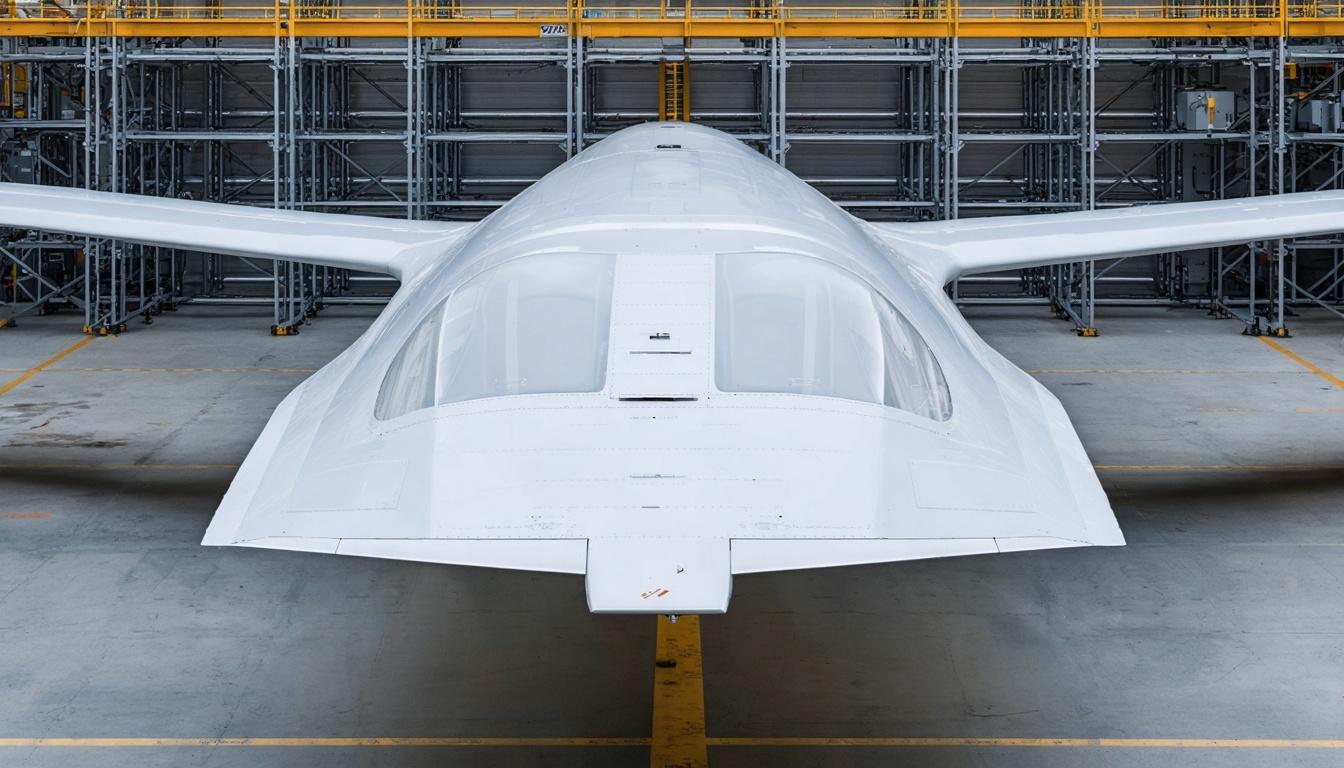
*this image is generated using AI for illustrative purposes only.

Joby Aviation, Inc. (NYSE: JOBY) reports second-quarter earnings after market close on Wednesday, with the options market pricing in significant volatility ahead of the release. Traders are bracing for an implied move of roughly 11.75% in either direction following the report, according to Benzinga Pro data. The stakes are high as investors weigh fundamental performance against updates on Federal Aviation Administration (FAA) type certification progress.

Short sellers have increased their bearish bets, with short interest climbing from 99.79 million to 109.76 million shares. This increase pushes short interest to 16.73% of available shares. At current trading volumes, covering these positions would take 2.43 days without triggering a sharp price increase. Wall Street consensus expects a loss of 23 cents per share on revenue of $30.38 million for the quarter.

Analyst Outlook and Certification Progress

Despite the short buildup, analysts remain bullish on Joby Aviation’s long-term prospects. Data from Benzinga shows a consensus Buy rating across six analysts, with an average price target of $12. This target implies 55.6% upside from current levels, where the stock was trading at $7.89, down 0.94% at the time of publication.

Beyond financial metrics, certification milestones serve as key catalysts. Joby cleared Stage 4 of FAA type certification in March 2026 and has moved into for-credit flight testing with FAA pilots at the controls. This is the final phase before receiving a type certificate. Management targets a commercial launch in late 2026, though outside analysts note a possibility that the timeline could slip into 2027.

Financial Context and Cash Position

In the prior quarter, Joby posted an earnings per share (EPS) loss of just 12 cents on $24.25 million in revenue, beating estimates by eight cents. A repeat beat in Q2 could trigger a short squeeze given the elevated short interest.

Cash burn remains a critical focus for investors. Joby closed the first quarter with $2.5 billion in cash, cash equivalents, and short-term investments. This substantial liquidity provides a long runway despite ongoing losses. Any deviation in the burn rate could shift investor focus from certification hype to balance-sheet sustainability.

Metric Value
Implied Move 11.75%
Short Interest 109.76 million shares
Short Interest Ratio 16.73%
Days to Cover 2.43 days
Consensus EPS Estimate -23 cents
Consensus Revenue Estimate $30.38 million
Prior Quarter EPS -12 cents
Prior Quarter Revenue $24.25 million
Cash & Equivalents (Q1) $2.5 billion
Average Price Target $12

What the Numbers Show

The divergence between analyst sentiment and short seller activity highlights the binary nature of Joby Aviation’s near-term outlook. While analysts see significant upside potential based on future commercialization, short sellers are betting on near-term execution risks or delays in FAA certification. The high short interest ratio of 16.73% suggests that any positive surprise in earnings or certification updates could lead to rapid price appreciation due to forced covering. Conversely, a miss or delay could exacerbate losses given the heavy short positioning.

Disclaimer: This article is AI-generated using data from ViewTrade. ScanX is not liable for any inaccuracies.

How might a potential slip in the FAA certification timeline to 2027 impact Joby's cash burn rate and its ability to maintain its current runway without dilutive capital raises?

Given the 16.73% short interest, what specific operational or financial metrics in the Q2 report would be most likely to trigger a significant short squeeze?

If Joby misses the consensus EPS estimate of -23 cents, how could this affect the stability of the $12 average analyst price target and the broader sentiment toward eVTOL stocks?

like20
dislike

Joby Aviation Partners with Atoms to Build Vertiport Infrastructure

scanx
Reviewed by
Jubin VScanX News Team
Key Highlights

Joby Aviation partners with Atoms to develop vertiports in Florida, Texas, New York, and California, shifting industry focus to infrastructure. While Joby advances FAA certification, Archer scales manufacturing in Georgia, EHang operates autonomously in China, and Vertical Aerospace pursues European approval for its VX4 aircraft.

powered bylight_fuzz_icon
47494641

*this image is generated using AI for illustrative purposes only.

Joby Aviation (NYSE: JOBY) announced a strategic partnership with Atoms, the infrastructure company founded by Travis Kalanick, to acquire and develop vertiports across key U.S. launch markets including Florida, Texas, New York and California. This collaboration marks a pivotal shift in the electric vertical takeoff and landing (eVTOL) sector, moving focus beyond aircraft certification to the essential ground infrastructure required for commercial passenger operations. The partnership aims to establish multimodal transportation hubs that connect electric air taxis with ridesharing, autonomous vehicles and charging infrastructure, positioning vertiports as integral components of future urban mobility rather than simple landing pads.

The announcement coincides with Joby advancing through the final stages of Federal Aviation Administration (FAA) type certification. The company has flown its first FAA-conforming production aircraft and completed piloted demonstration flights in major metropolitan markets including the San Francisco Bay Area and New York City. By pairing aircraft certification with infrastructure development, Joby is addressing one of the industry’s primary commercialization challenges: ensuring passengers have seamless access to boarding, recharging and ground transportation connections when commercial operations begin under the White House-backed eVTOL Integration Pilot Program (eIPP).

Competitive Landscape in eVTOL

While Joby emphasizes integrated infrastructure, competitors are pursuing distinct strategic paths to capture market share in the emerging air taxi industry. Archer Aviation (NYSE: ACHR) continues focusing on manufacturing scale and commercial deployment, having invested heavily in its ARC manufacturing facility in Georgia designed to support large-scale production of its Midnight aircraft. Archer has developed partnerships spanning commercial airlines, defense initiatives and government agencies while working toward commercial certification.

Company Ticker Primary Strategy Focus Key Development
Joby Aviation NYSE: JOBY Infrastructure & Certification Partnership with Atoms for vertiports; FAA certification progress
Archer Aviation NYSE: ACHR Manufacturing Scale ARC facility in Georgia; airline and defense partnerships
EHang Holdings NASDAQ: EH Autonomous Operations Limited commercial operations in China; EH216-S aircraft
Vertical Aerospace NYSE: EVTL Certification & Partnerships VX4 electric aircraft testing; European regulatory approval

Archer’s strategy extends beyond passenger transportation alone, pursuing opportunities in military logistics, urban mobility and international markets while building relationships with operators expected to become early adopters of eVTOL technology. As certification efforts continue, Archer’s manufacturing readiness could become an important competitive advantage if demand accelerates following regulatory approvals.

Divergent Approaches to Commercialization

EHang Holdings (NASDAQ: EH) differentiates itself by already conducting limited commercial operations in China after receiving key regulatory approvals for its autonomous EH216-S aircraft. Unlike many Western competitors still pursuing certification, EHang has focused on sightseeing, tourism and demonstration routes while gradually expanding commercial use cases within China’s evolving low-altitude economy. The company’s autonomous approach contrasts with pilot-operated competitors, continuing to develop autonomous aerial mobility while expanding partnerships with municipalities and infrastructure providers throughout China.

Vertical Aerospace (NYSE: EVTL) remains focused on certification of its VX4 electric aircraft while leveraging partnerships with aerospace suppliers and aviation companies to support long-term commercialization. The company has continued flight testing as it works toward regulatory approval in both Europe and other international markets, combining established aerospace engineering expertise with electric propulsion technology aimed at regional and urban air mobility.

What the Numbers Show

The latest developments illustrate how competition within the eVTOL industry is evolving from aircraft performance metrics to ecosystem completeness. Early attention centered primarily on aircraft performance, battery technology and certification timelines. Increasingly, however, companies are investing in the broader ecosystem, including manufacturing, charging infrastructure, vertiports, software integration and operational networks, that will ultimately determine how efficiently commercial services can scale. Joby’s partnership with Atoms highlights that commercial success may depend not only on building a certified aircraft, but also on creating the infrastructure that enables passengers to incorporate air taxis into everyday transportation. As regulators move closer to approving commercial services, the race is expanding from aircraft development to building complete transportation networks capable of supporting the next generation of urban mobility.

Disclaimer: This article is AI-generated using data from ViewTrade. ScanX is not liable for any inaccuracies.

How might Joby's integrated infrastructure strategy with Atoms impact its capital expenditure requirements compared to Archer's manufacturing-focused approach?

What regulatory hurdles could arise from integrating eVTOL vertiports with existing urban ridesharing and autonomous vehicle networks under the eIPP?

Could EHang's head start in autonomous commercial operations in China provide a scalable model that Western competitors like Joby and Archer struggle to replicate due to stricter FAA/EASA regulations?

like17
dislike

More News on Joby Aviation