

Jagran Prakashan files FY26 sustainability report with stock exchanges


- Jagran Prakashan filed its FY26 BRSR report disclosing ₹1,64,723.56 lakh turnover
- Advertisement revenue contributed 64.99% of total turnover for the period
- Capital expenditure on sustainability initiatives was 4.47% of total capex
- Energy intensity per rupee of turnover improved to 51.9 GJ/INR Crore
- Company employed 6,285 employees and 750 workers as of March 31, 2026



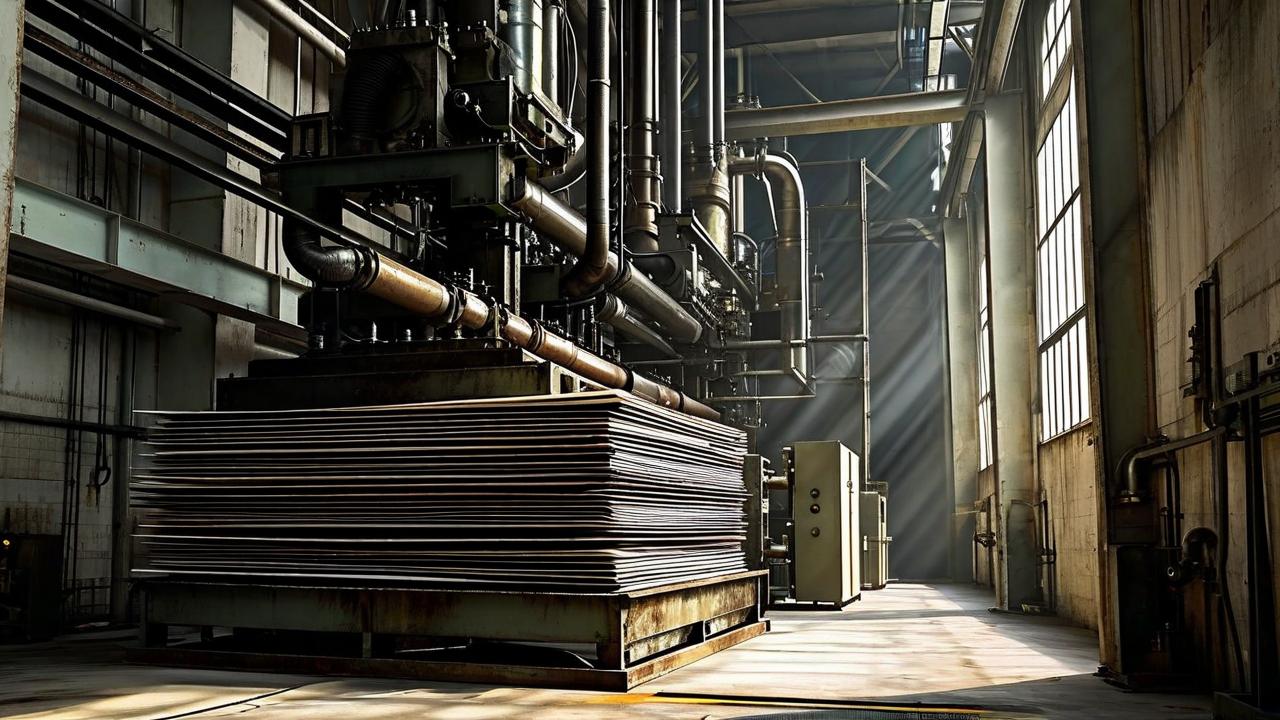
*this image is generated using AI for illustrative purposes only.
Jagran Prakashan submitted its Business Responsibility and Sustainability Report (BRSR) for FY26 to the Bombay Stock Exchange and the National Stock Exchange on August 21, 2026. The filing, signed by Chief Financial Officer Amit Jaiswal, discloses operational metrics, environmental initiatives, and governance structures in compliance with SEBI regulations.
Operational and Financial Overview
The report covers standalone operations for the financial year ended March 31, 2026. Jagran Prakashan reported a turnover of ₹1,64,723.56 lakh and a net worth of ₹1,81,081.41 lakh. Advertisement revenue remains the primary revenue driver, contributing 64.99% of total turnover, followed by newspaper and magazine sales at 19.37%. Outdoor advertising accounts for 9.56%, while event management contributes 4.13%.
The company operates 32 printing facilities and 10 key business offices across India. Its digital division serves a global audience, though export contribution stands at 1.29% of total turnover.
Environmental Initiatives
Jagran Prakashan allocated 4.47% of its total capital expenditure to sustainability initiatives in FY26, down from 5.90% in the previous year. Key investments included solar panel installations and electric vehicle procurement. Total energy consumption rose slightly to 85,504.5 GJ from 84,952.8 GJ in FY25. However, energy intensity per rupee of turnover improved to 51.9 GJ/INR Crore from 53.66 GJ/INR Crore.
Water management efforts include the adoption of 'Vio Green Plate Technology' for waterless printing and the installation of Effluent Treatment Plants (ETPs) at all printing presses. Total water withdrawal from groundwater sources was 20,931 kilolitres, marginally higher than 20,010 kilolitres in FY25. The company reports zero liquid discharge at its printing locations.
Greenhouse gas emissions data shows Scope 1 emissions at 744.7 metric tonnes of CO2 equivalent and Scope 2 emissions at 14,315.6 metric tonnes. Combined emission intensity per rupee of turnover decreased to 9.1 MT/INR Crore from 9.8 MT/INR Crore.
Employee Welfare and Governance
As of March 31, 2026, the company employed 6,285 employees and 750 workers. Female representation among permanent employees stands at 5.05%, while workers are predominantly male at 99.87%. The turnover rate for permanent employees was 12.6% in FY26, compared to 12.0% in FY25.
Health insurance coverage for permanent employees was 7.3%, with accident insurance covering 28.9%. All permanent employees received paternity benefits, and all female permanent employees received maternity benefits. The company reported one POSH complaint during the year, which was duly resolved.
What the Numbers Show
Advertisement revenue dominates the revenue mix at nearly two-thirds of total turnover, highlighting the company's reliance on media spending cycles. While absolute energy consumption increased slightly year-on-year, the improvement in energy intensity per rupee of turnover suggests that revenue growth outpaced energy usage growth, indicating improved operational efficiency despite higher overall consumption.
Historical Stock Returns for Jagran Prakashan
| 1 Day | 5 Days | 1 Month | 6 Months | 1 Year | 5 Years |
|---|---|---|---|---|---|
| +0.26% | +0.16% | -1.12% | -7.22% | -14.00% | 0.0% |

How might Jagran Prakashan's heavy reliance on advertisement revenue (64.99%) impact its financial stability amidst shifting digital media consumption trends?
What strategic initiatives could the company pursue to diversify its revenue streams and reduce dependency on traditional advertising cycles?
Given the decline in sustainability capital expenditure from 5.90% to 4.47%, what are the company's long-term plans to meet evolving ESG regulatory requirements?
 20
20







 Create Custom Screeners
  Access 200+ Pre-built Filters
  Use 50+ Readymade Screener





