
 NewsIRB Infrastructure Developers Outlines FY27 Guidance: 25% Profit CAGR, Asset Rotation Strategy
IRB Infrastructure Developers Outlines FY27 Guidance: 25% Profit CAGR, Asset Rotation Strategy


IRB Infrastructure Developers has outlined a comprehensive growth strategy in its concall update, targeting 25% profit CAGR, net debt-zero within five years, and an asset base of ~INR1.4 trillion over three years. FY27 guidance includes ~10% toll revenue growth, 20% cash flow growth for the combined IRB and Private InvIT toll business, and construction & O&M revenue exceeding INR3,000 crores, with growth driven by asset rotation rather than capital raising.

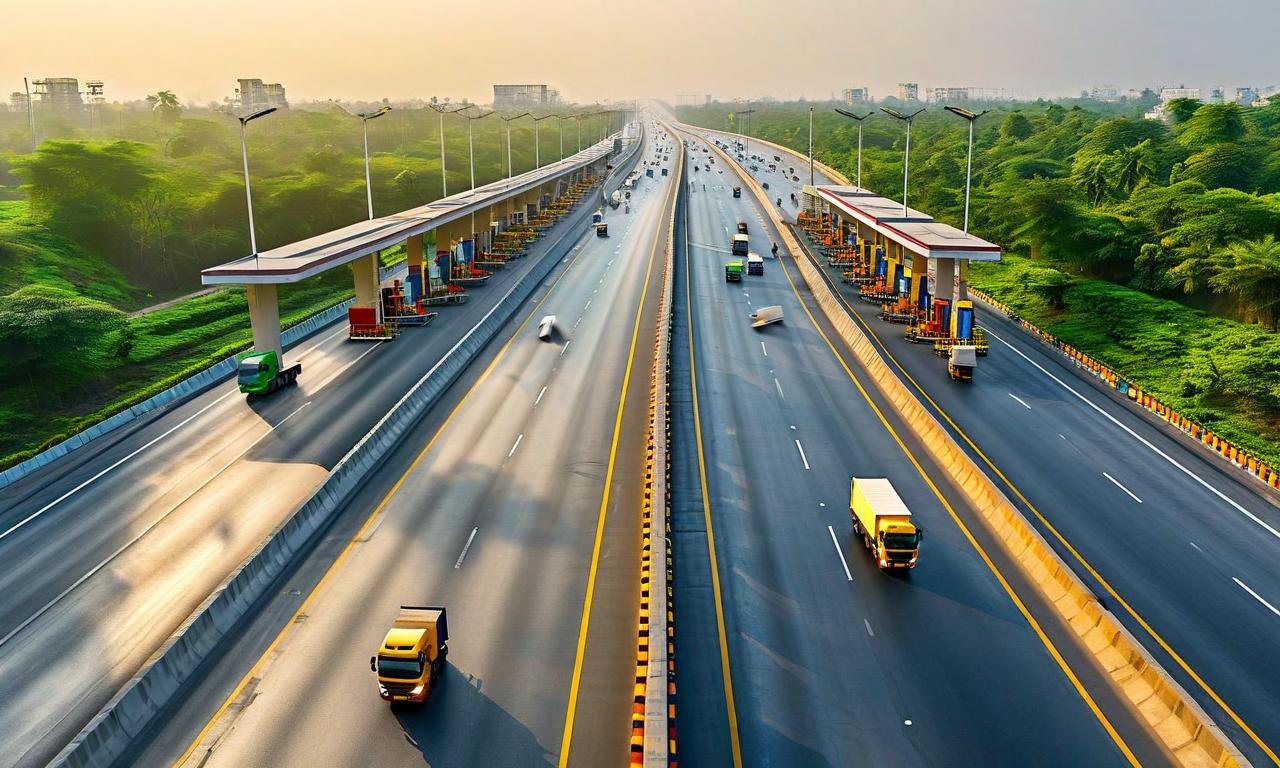

*this image is generated using AI for illustrative purposes only.
IRB Infrastructure Developers has laid out a comprehensive growth roadmap in its latest concall update, projecting a 25% compound annual growth rate (CAGR) in profit while targeting a net debt-zero position within the next five years. The company also revised its FY27 toll revenue growth guidance to approximately 10%, alongside a broader set of financial and operational targets.
FY27 Revenue and Cash Flow Guidance
For FY27, IRB Infrastructure Developers has guided toll revenue growth of around 10%, with an ambition to achieve a five-digit gross revenue number. The company also targets 20% cash flow growth for the combined IRB and Private InvIT toll business. Additionally, construction and operations & maintenance (O&M) revenue for FY27 is expected to comfortably exceed INR3,000 crores. April traffic growth was recorded at 8-9%, providing an early positive indicator for the fiscal year.
The table below summarizes the key FY27 guidance metrics:
| Metric: | Details |
|---|---|
| FY27 Toll Revenue Growth (Guided): | ~10% |
| FY27 Cash Flow Growth (IRB + Private InvIT): | 20% |
| FY27 Construction & O&M Revenue Target: | Exceeds INR3,000 crores |
| April Traffic Growth: | 8-9% |
| Gross Revenue Target: | Five-digit number |
Capital Strategy and Asset Rotation
IRB Infrastructure Developers does not foresee any capital raising requirements, with growth expected to be driven primarily through asset rotation. The strategy involves moving assets from the Private InvIT to the Public InvIT and redeploying the unlocked capital into new opportunities. This approach is designed to support expansion without diluting equity or increasing external debt obligations.
Long-Term Financial Targets
Over a longer horizon, the company has outlined ambitious targets anchored by disciplined financial management. Profit is guided to grow at a 25% CAGR, and the company is on track to achieve a net debt-zero situation within the next five years. IRB Infrastructure Developers also aims to scale its asset base to approximately INR1.4 trillion over the next three years.
The following table captures the company's long-term financial and operational targets:
| Target: | Details |
|---|---|
| Profit Growth (CAGR): | 25% |
| Net Debt Target: | Zero within 5 years |
| Asset Base Target (3 Years): | ~INR1.4 trillion |
| Capital Raising Requirement: | None foreseen |
Key Highlights
- IRB Infrastructure Developers targets 25% profit CAGR and a net debt-zero position within five years.
- FY27 toll revenue growth is guided at approximately 10%, with 20% cash flow growth for the combined IRB and Private InvIT toll business.
- Construction and O&M revenue for FY27 is expected to comfortably exceed INR3,000 crores.
- Growth will be driven by asset rotation from Private InvIT to Public InvIT, with no capital raising foreseen.
- The company aims to scale its asset base to approximately INR1.4 trillion over the next three years.
- April traffic growth stood at 8-9%, reflecting healthy vehicular demand across its network.
Historical Stock Returns for IRB Infrastructure Developers
| 1 Day | 5 Days | 1 Month | 6 Months | 1 Year | 5 Years |
|---|---|---|---|---|---|
| +1.49% | -0.24% | +1.44% | +2.38% | -16.46% | +198.31% |

How might potential slowdowns in government highway awarding activity or NHAI project delays impact IRB's ability to scale its asset base to INR1.4 trillion within the three-year timeline?
What risks could the asset rotation strategy from Private InvIT to Public InvIT face if capital markets turn volatile or investor appetite for infrastructure InvITs weakens?
Could sustained toll revenue growth of 10% be challenged by the government's increasing push for alternative mobility solutions, EV adoption, or changes in toll pricing regulations?
 17
17








 Access 50+ Readymade Screeners
  Use 200+ Custom Filters
  Get Full Market Insights





