

Global Ship Lease H1 2026 Results: Revenue $396.8m, net income $180.7m


Global Ship Lease reported H1 2026 revenue of $396.8m and net income of $180.7m, with adjusted EBITDA of $264.6m and an EBITDA margin above 65%. Q2 2026 contributed $198.7m in revenue, $89.3m in net income, and $131.4m in adjusted EBITDA, with earnings of $2.48 per share. Contract cover stands at $3.2bn over a TEU-weighted average of 3.3 years, with $1.45bn of contracted revenue added in H1 2026. The company placed a 15-ship order at an aggregate contract price of $1.33bn, with deliveries between Q4 2028 and Q1 2030. Fleet utilisation improved to 97.4%; the company holds an annualised dividend of $2.50 per common share yielding 6%.



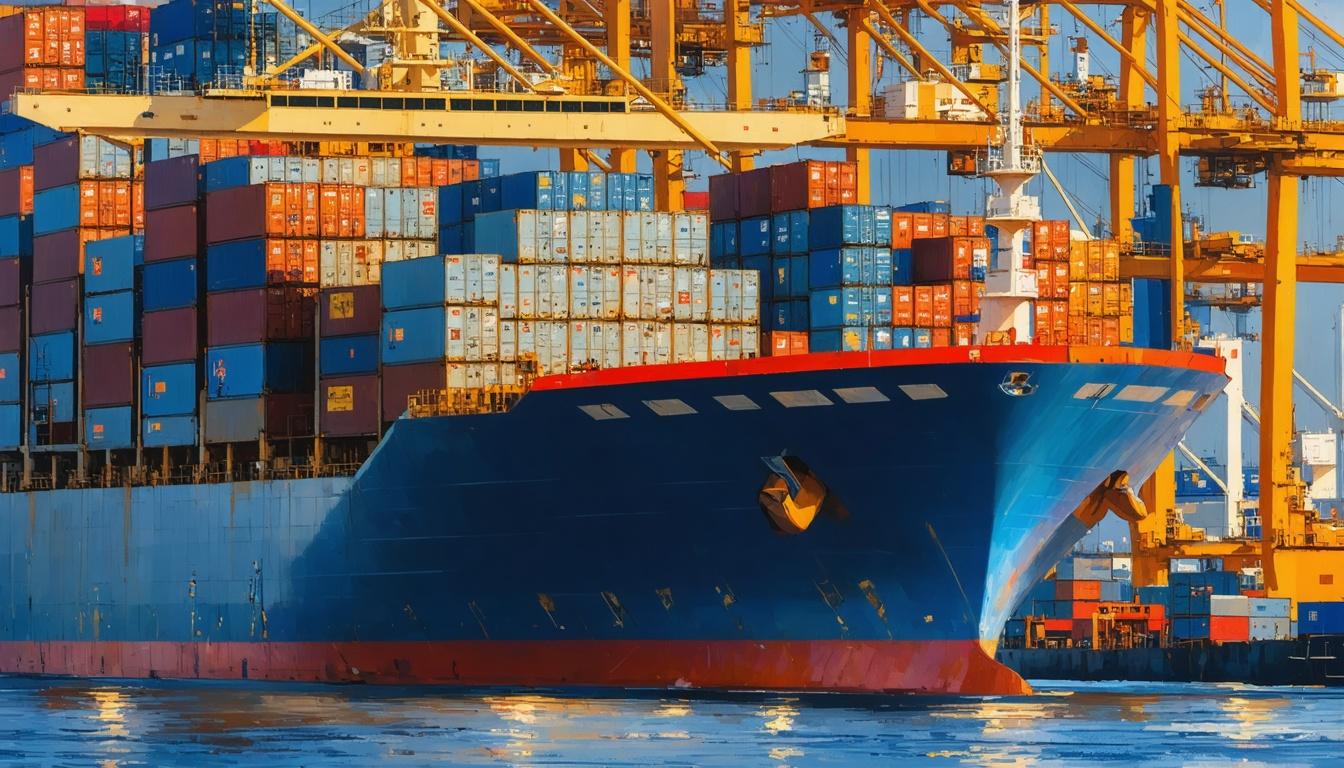
*this image is generated using AI for illustrative purposes only.
Global Ship Lease reported first-half 2026 revenue of $396.8m and net income of $180.7m, with CEO Thomas Lister noting the company generates net income at a rate of close to a million dollars a day.
Financial performance: H1 and Q2 2026
Adjusted EBITDA for the first half reached $264.6m, reflecting an EBITDA margin above 65%, with earnings of $5.02 per share. The second quarter contributed $198.7m in revenue, $89.3m in net income, and $131.4m in adjusted EBITDA, with earnings of $2.48 per share. The following table summarises the key financial metrics across both periods.
| Metric | H1 2026 | Q2 2026 |
|---|---|---|
| Revenue | $396.8m | $198.7m |
| Net income | $180.7m | $89.3m |
| Adjusted EBITDA | $264.6m | $131.4m |
| Earnings per share | $5.02 | $2.48 |
Contract cover stands at $3.2bn over a TEU-weighted average of 3.3 years, with $1.45bn of contracted revenue added in the first half alone. Market capitalisation is $1.5bn, and the annualised dividend of $2.50 per common share yields 6% on the share price.
Credit ratings and balance sheet position
The company's credit position has strengthened across multiple agencies. Moody's rates Global Ship Lease Ba2 with a positive outlook, while S&P and KBRA both hold BB+. Additionally, $350m of USPP notes maturing in 2027 carry an investment grade BBB rating from KBRA.
Utilisation and fleet changes
Fleet utilisation improved to 97.4% even as EBITDA came in modestly lower year on year. The decline reflects a reduction in fleet size rather than weaker operating performance: four non-core vessels were monetised and delivered to buyers during the first half of 2025, leaving one fewer vessel contributing to EBITDA. Lister noted the year-on-year EBITDA decline was largely anticipated by analysts, with results coming in broadly in line with consensus expectations.
Fifteen-ship order: specification and rationale
Global Ship Lease placed an order for 15 mid-size, ultra-high-reefer, wide-beam, latest-generation containerships at an aggregate contract price of $1.33bn, with deliveries scheduled between the fourth quarter of 2028 and the first quarter of 2030. Lister explained each specification element:
- Mid-size: vessels can be deployed as headhaul tonnage or feeders, offering flexibility suited to fragmented supply chains
- Ultra-high reefer: greater capacity for controlled-atmosphere cargoes, a segment growing faster in volume terms than dry cargo
- Wide-beam: lower slot costs through higher box capacity per vessel
- Latest generation: improved fuel efficiency
Underbuilt mid-size segment and market context
Lister highlighted that mid-size and smaller vessel classes have been underbuilt for years, while investment capital was directed toward ultra-large vessels. Liner shipping had optimised for stable, high-volume trade flows from China into Europe and the United States, where very large vessels offer strong unit economics. That trading environment has changed, and the orderbook has not yet caught up. Fleet composition cannot be redirected overnight, and shifting ordering activity toward smaller vessel classes takes time.
Red Sea and Hormuz: no exposure for Global Ship Lease
Asked about the status of the Strait of Hormuz and the Red Sea, Lister acknowledged that any assessment would likely be outdated within a day. A handful of liner operators are tentatively reintroducing Red Sea and Suez services, though he noted the vessels normally deployed on that corridor are larger ships moving between Asia, the Middle East, and Europe, making the outcome less material for mid-size and smaller tonnage. On Hormuz, he declined to speculate, citing seafarer safety as the governing consideration. Global Ship Lease has no vessels deployed in that trade.

How might the delivery of 15 new mid-size vessels between 2028 and 2030 impact Global Ship Lease's fleet utilization rates and EBITDA margins given current market demand trends?
What are the potential risks to Global Ship Lease's $1.33bn shipbuilding order if geopolitical tensions in the Red Sea or Strait of Hormuz escalate and disrupt global supply chain fragmentation?
Could the company's high dividend yield of 6% be sustained as it finances the upcoming vessel deliveries, and how might this affect its credit ratings from Moody's, S&P, and KBRA?
 17
17










 Access Market Heat-map & Insights
  Create, Save & Share your Screener
  Use 200+ Screening Filters





