

Gevo Q2 Results: Net loss widens, but 2026 EBITDA guidance doubles


Gevo reported a Q2 net loss of $177 million due to a $176 million impairment charge from exiting its South Dakota project. However, the company raised its full-year 2026 Adjusted EBITDA guidance to over $60 million, driven by new Canada CFR pathway approvals and expected Section 45Z tax credit monetization. Operational production remained stable despite planned maintenance.

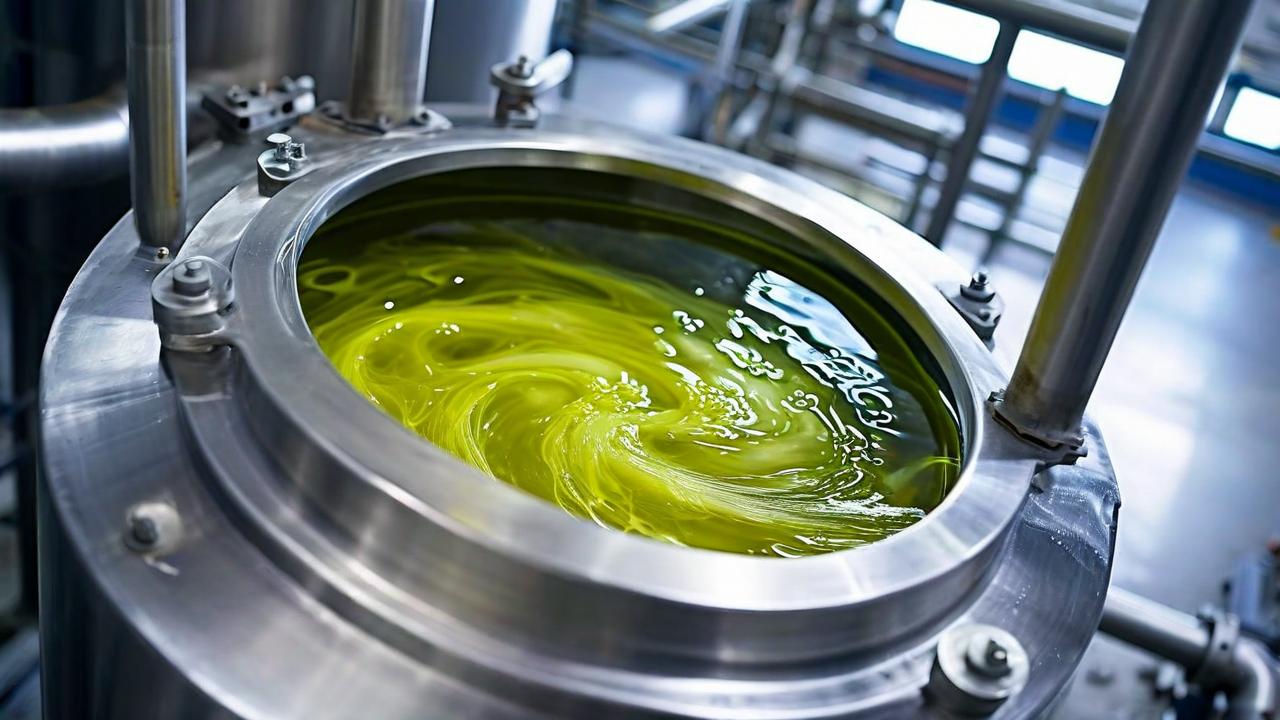

*this image is generated using AI for illustrative purposes only.
Gevo reported a net loss attributable to Gevo of $(177) million, or $(0.75) per share, for the second quarter ended June 30, 2026. The loss was primarily driven by a one-time, non-cash impairment charge of $176 million associated with capitalized development costs for the ATJ-60 project in South Dakota and other non-core activities. Revenue for the quarter stood at $47 million, affected by planned maintenance downtime completed in April. Despite the GAAP loss, Gevo raised its full-year 2026 non-GAAP Adjusted EBITDA outlook to more than $60 million, more than double the prior target of $30 million, signaling improved operational momentum from its North Dakota facility and new regulatory approvals.
The financial results reflect a strategic pivot by management to exit low-carbon ethanol and sustainable aviation fuel production in Lake Preston, South Dakota. This decision allows Gevo to focus capital on its Gevo North Dakota site, including debottlenecking activities and potential capacity expansion. The impairment charge consisted of $136 million in long-lived asset impairment and $40 million in allowance for credit losses on refundable deposits. Excluding these items, non-GAAP adjusted net loss was $(1) million, or $(0.01) per share, while non-GAAP Adjusted EBITDA reached $11 million for the quarter.
Key Financial Metrics
| Metric | Q2 2026 | Q2 2025 | H1 2026 | H1 2025 |
|---|---|---|---|---|
| Total Revenue | $47 million | — | $89 million | $73 million |
| Gross Profit | — | — | $36 million | $21 million |
| Net Loss (GAAP) | $(177) million | $2 million | $(199) million | $(20) million |
| Adj. Net Loss | $(1) million | $6 million | $(17) million | $(16) million |
| Adj. EBITDA | $11 million | $17 million | $20 million | $2 million |
Note: Q2 2025 revenue is not explicitly stated in the text highlights, though H1 data is provided. Gross profit figures are provided for the six months ended June 30.
Operational Highlights
Gevo produced 16.3 million gallons of low-carbon ethanol during the second quarter, down from 16.8 million gallons in the same period last year due to planned maintenance. Renewable natural gas (RNG) production increased to 95,939 MMBtu from 92,138 MMBtu year-over-year. The company confirmed no further operational downtime is expected for the remainder of 2026.
What the Numbers Show
The divergence between GAAP and non-GAAP metrics highlights the impact of Gevo’s portfolio rationalization. While the $176 million impairment charge significantly widened the GAAP net loss, the underlying operational performance remains positive, as evidenced by the $11 million Adjusted EBITDA. The doubling of the full-year EBITDA guidance to over $60 million suggests that management expects substantial cash flow generation in the third and fourth quarters, supported by the newly approved Canada Clean Fuel Regulation (CFR) pathway and targeted monetization of more than $70 million in Section 45Z tax credits.
Strategic Outlook
The improved outlook is anchored by three key factors:
- Canada CFR Pathway: Approval in Q2 creates a large compliance market opportunity for low-carbon ethanol, with sales expected to begin appearing in Q3 2026 results.
- Section 45Z Credits: Gevo targets monetizing more than $70 million in tax credits during 2026, up from $52 million in 2025, driven by improved carbon intensity of its products.
- Debottlenecking: Site improvements at Gevo North Dakota are on track to deliver a 10–15% increase in low-carbon ethanol, coproduct, and carbon capture volumes starting in 2027, including 75 million gallons per year of low-carbon ethanol.
Gevo continues to advance growth projects, including a planned expansion at Gevo North Dakota that would double production to about 150 million gallons per year, targeting startup in 2028.

How will the execution of the Gevo North Dakota debottlenecking project impact unit economics and margin expansion in 2027 compared to current levels?
What specific risks could hinder Gevo's ability to monetize the targeted $70 million in Section 45Z tax credits, given potential changes in federal tax policy or regulatory interpretation?
To what extent will the newly approved Canada Clean Fuel Regulation (CFR) pathway contribute to revenue growth in Q3 and Q4 2026, and are there logistical barriers to immediate supply?
 15
15









 Access 50+ Readymade Screeners
  Use 200+ Custom Filters
  Get Full Market Insights





