

Gallantt Ispat PAT drops 29% to ₹124 cr in Q1FY27 on cost surge


Gallantt Ispat's Q1FY27 standalone and consolidated PAT declined 29% to ₹124 crore, driven by a 10% surge in raw material costs and a 36% drop in pellet production due to maintenance. Despite revenue growth of 2%, EBITDA contracted 20%. The company appointed M/s Singhi & Co. as new statutory auditors following the resignation of M/s Maroti & Associates.


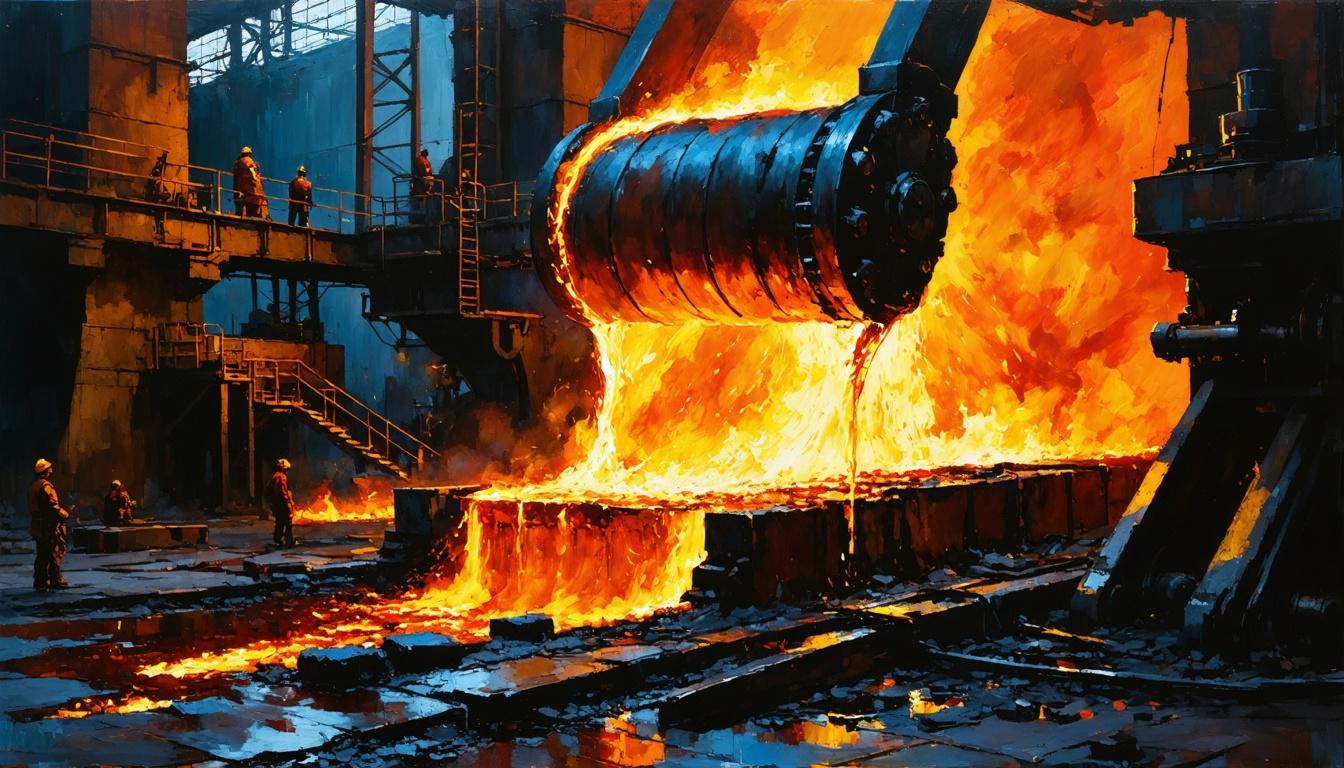
*this image is generated using AI for illustrative purposes only.
Gallantt Ispat Limited reported a 29% year-on-year decline in standalone net profit after tax (PAT) to ₹124 crore for the quarter ended June 30, 2026 (Q1FY27), primarily driven by surging raw material costs and a planned maintenance shutdown at its pellet plant. While revenue from operations grew modestly by 2% to ₹1,146 crore, EBITDA contracted by 20% to ₹203 crore, compressing operating margins from 23% in Q1FY26 to 18%. The company highlighted that despite margin pressure, it maintained debt-free status with all capex funded through internal accruals. Consolidated results mirrored the standalone figures, with net profit also standing at ₹124 crore.
The Board meeting held on July 27, 2026, approved the unaudited financial results for Q1FY27. The results were reviewed by M/s Maroti & Associates under Regulation 33 of SEBI (Listing Obligations and Disclosure Requirements) Regulations, 2015. In a significant governance update, the Board accepted the resignation of M/s Maroti & Associates as statutory auditors, effective July 27, 2026, citing increased audit complexity and resource constraints. M/s Singhi & Co. was appointed as the new statutory auditors to fill the casual vacancy until the ensuing Annual General Meeting. The Audit Committee confirmed no concerns were raised by the outgoing auditors pursuant to SEBI Circular CIR/CFD/CMD1/114/2019.
Financial Performance
Total income stood at ₹1,164 crore, up 3% from ₹1,135 crore in Q1FY26. However, total expenses rose sharply by 9% to ₹999 crore. Raw material costs jumped 10% to ₹882 crore from ₹800 crore year-on-year, driven by higher coal prices and increased open-market iron ore procurement following the annual maintenance shutdown at the Pellet Plant. Employee benefits increased by 24% to ₹39 crore, while finance costs rose 50% to ₹8 crore. EBITDA per tonne reduced to ₹8,787 in Q1FY27 compared to ₹11,068 in Q1FY26.
| Particulars: | Q1FY27 (₹ Cr) | Q1FY26 (₹ Cr) | YoY Change |
|---|---|---|---|
| Revenue from Operations | 1,146 | 1,128 | +2% |
| Total Income | 1,164 | 1,135 | +3% |
| Total Expenses | 999 | 918 | +9% |
| Net Profit Before Tax | 165 | 216 | -24% |
| Net Profit After Tax | 124 | 174 | -29% |
| Basic EPS (₹) | 5.13 | 7.20 | -28.8% |
Operational Updates and Capex
Production volumes showed mixed trends. TMT Bars production decreased slightly by 0.15% year-on-year to 196.2 KT, while DRI – Sponge Iron production grew by 2% to 236.4 KT. Pellet production dropped significantly by 36% year-on-year to 112.3 KT due to the maintenance shutdown. The company incurred ₹137 crore of capex in Q1FY27, bringing total capex to ₹775 crore since inception, funded entirely through internal accruals without incremental debt. A ₹3,000 crore capex program is underway, focusing on backward integration into iron ore mines in Sonbhadra (UP) and Todpura (Rajasthan), and expanding steel capacity to ~1.23 million MT per annum (MMTPA).
What the Numbers Show
The divergence between modest revenue growth of 2% and sharp expense growth of 9% underscores significant margin pressure in Gallantt Ispat’s operations. With raw material costs constituting the bulk of total expenses, the company’s ability to pass on price increases appears limited in the current quarter. The simultaneous resignation of long-term statutory auditors due to resource constraints adds a layer of operational transition risk, although the clean review report suggests no underlying accounting irregularities. The shift towards premium products like Gallantt Advance aims to support higher realizations, potentially offsetting some input cost pressures over time.
Historical Stock Returns for Gallantt Ispat
| 1 Day | 5 Days | 1 Month | 6 Months | 1 Year | 5 Years |
|---|---|---|---|---|---|
| -1.37% | -4.73% | -8.25% | -3.36% | -19.10% | +604.99% |

How will the completion of the ₹3,000 crore backward integration into iron ore mines impact Gallantt Ispat's raw material cost structure and margin stability in FY28?
What is the expected timeline for the pellet plant to resume full capacity post-maintenance, and how will this affect Q2FY27 production volumes?
Given the resignation of statutory auditors due to resource constraints, what specific operational or compliance complexities might the new auditors uncover during their tenure?
 18
18






 Create Custom Screeners
  Access 200+ Pre-built Filters
  Use 50+ Readymade Screener





