

Gallantt Ispat Q4 FY26 Results & Earnings Call: Key Highlights


Gallantt Ispat reported FY26 consolidated revenue of ₹4,418.92 Cr (+3.95% YoY) and PAT of ₹484.27 Cr (+20.8%), remaining net cash positive at ~₹360 Cr. The company outlined a ₹3,000 Cr capex programme covering steel capacity expansion to 1.3 MT, a 78 MW solar energy programme with annual savings of ₹30-40 Cr, and mine development targeting an EBITDA improvement of ~₹2,000 per ton, with margins targeted at ~20% upon completion.

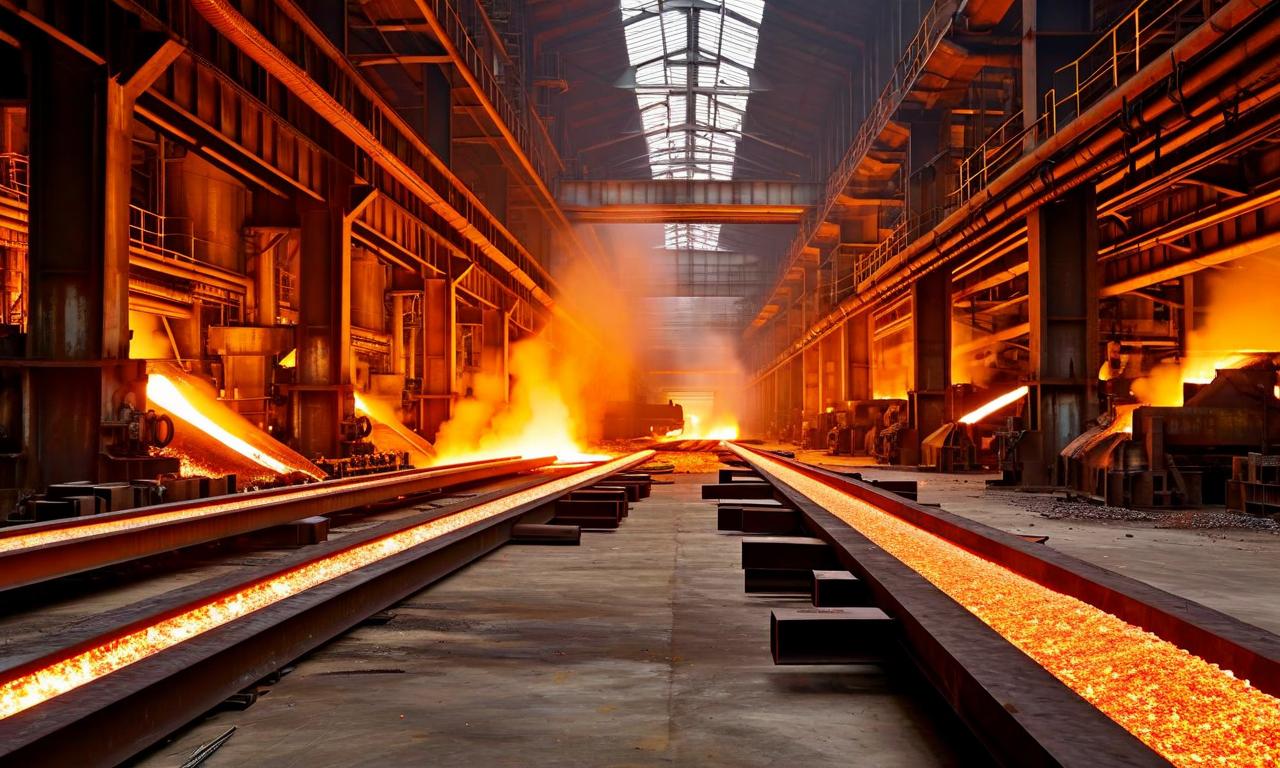

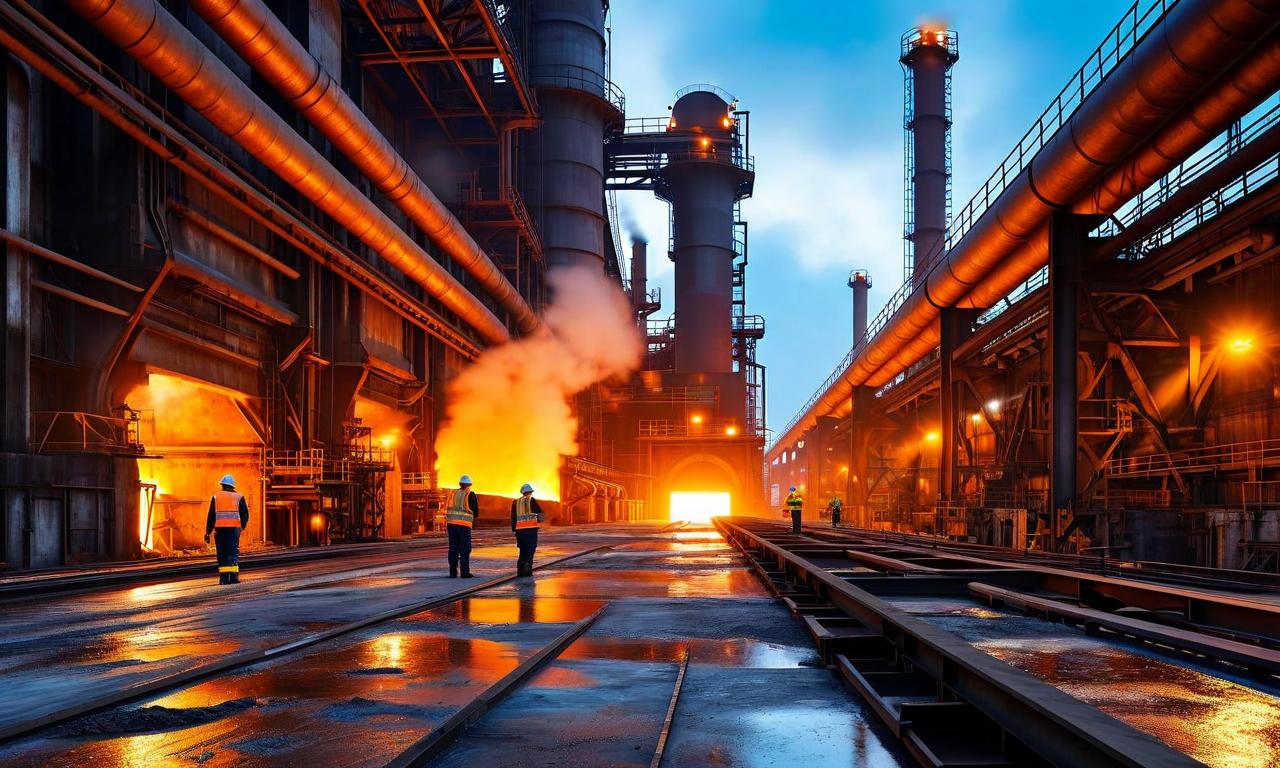
*this image is generated using AI for illustrative purposes only.
Gallantt Ispat Limited has announced its audited financial results for the quarter and fiscal year ended March 31, 2026, reporting resilient growth in both revenue and profitability. The company subsequently held its first-ever Earnings Conference Call with investors and analysts on May 06, 2026, pursuant to Regulation 30 of SEBI (Listing Obligations and Disclosure Requirements) Regulations, 2015. The transcript of the call, which featured senior management including Vice Chairman Mr. Dindayal Jalan, CEO Mr. Mayank Agrawal, CAO Mr. Amit Jalan, and CFO Mr. Pradyumna Satpathy, is available on the company's website at www.gallantt.com .
Q4 FY26 Financial Performance
For the fourth quarter of FY26, Gallantt Ispat recorded revenue from operations of ₹1,204.81 Cr, representing a 12.4% increase year-on-year and a sequential growth of 12.93% over Q3 FY26. EBITDA for the quarter stood at ₹208.92 Cr, up 7.3% from the same period last year, with an EBITDA margin of 16.99%, compared to ₹168.69 Cr and 15.5% in Q3 FY26. Profit After Tax (PAT) for the quarter increased by 5.6% to ₹122.84 Cr, resulting in a PAT margin of 10.2%.
FY26 Annual Results
The full fiscal year FY26 saw the company achieve consolidated revenue from operations of ₹4,418.92 Cr, with other income of ₹59.59 Cr taking total income to ₹4,478.51 Cr, representing a year-on-year growth of 3.95% supported by volume growth of 1.7%. EBITDA for FY26 was reported at ₹776.04 Cr, reflecting a 9.3% growth with a margin of 17.56% and EBITDA per ton of ₹8,785, improved from ₹8,300 per ton in FY25. PAT grew by 20.8% to ₹484.27 Cr with a PAT margin of 10.81%. The company remains a net cash, zero term-debt entity, with net cash of approximately ₹360 Cr as of March 31, 2026.
The following table summarises the key financial metrics for Q4 FY26 and FY26:
| Metric: | Q4 FY26 | Q4 FY25 | YoY Growth | FY26 | FY25 | YoY Growth |
|---|---|---|---|---|---|---|
| Revenue from Operations (₹ Cr): | 1,204.81 | 1,072.1 | 12.4% | 4,418.92 | 4,292.7 | 2.9% |
| EBITDA (₹ Cr): | 208.92 | 194.7 | 7.3% | 776.04 | 710.0 | 9.3% |
| EBITDA Margin (%): | 16.99% | 18.2% | 17.56% | 16.5% | ||
| PAT (₹ Cr): | 122.84 | 116.3 | 5.6% | 484.27 | 400.7 | 20.8% |
| PAT Margin (%): | 10.2% | 10.8% | 10.81% | 9.3% | ||
| EBITDA per Ton (₹): | 8,882 | 8,785 | 8,300 |
Operational Highlights
Gallantt Ispat delivered a comprehensive set of production and sales volumes for FY26, reflecting the depth of its integrated manufacturing platform. The company produced 788 KT of TMT Bars during FY26, compared to 765 KT in the previous year, while sales volumes for TMT Bars reached 766 KT. Production of DRI and Pellets increased significantly by 21% and 37% respectively, driven by backward integration.
The following table presents the detailed production and sales volumes for FY26 and Q4 FY26:
| Product: | FY26 Production (KT) | Q4 FY26 Production (KT) | FY26 Sales (KT) |
|---|---|---|---|
| Pellets: | 819 | 222 | 49 |
| Sponge Iron (DRI): | 915 | 245 | 125 |
| Billets: | 883 | 235 | 81 |
| TMT Bars: | 788 | 210 | 766 |
Management noted that capacity utilization has improved to 88%, with a target of reaching 90-92%. The company holds approximately 25% market share in its key operating regions of Uttar Pradesh and Gujarat, and commands a pricing premium over peers owing to its established brand.
Capex Programme and Growth Strategy
Management outlined a ₹3,000 Cr capex programme with three distinct components aimed at driving the next phase of growth. The capacity expansion from 1 million to 1.3 million tonnes at a capex of approximately ₹1,200 Cr is underway and is expected to commence production in H2 of the current financial year, with revenue expected to increase from approximately ₹4,500 Cr to ₹5,300-5,400 Cr upon completion. The second component is a ₹300 Cr solar energy programme, with CEO Mr. Mayank Agrawal noting an investment of approximately ₹225 Cr in solar capacity, comprising 18 megawatts at the Gujarat plant (near Sidhpur, scheduled for Q2 FY27) and 60 megawatts at the Gorakhpur, Uttar Pradesh plant (in Prayagraj area, expected in Q4 FY27), with projected annual savings of ₹30-40 Cr from the combined 78 megawatts of generation. The third component is mine development with a capex of approximately ₹1,500 Cr, targeting completion by FY28, covering captive iron ore blocks in Rajasthan and Uttar Pradesh (Sonbhadra, UP and Todpura, Rajasthan).
The following table summarises the three components of the ₹3,000 Cr capex programme:
| Capex Component: | Allocation | Timeline | Key Outcome |
|---|---|---|---|
| Steel Capacity Expansion (1 MT to 1.3 MT): | ~₹1,200 Cr | H2 Current FY | Revenue target ₹5,300-5,400 Cr |
| Solar Energy Programme (78 MW): | ₹300 Cr | By end of current FY / Q1 next FY | Annual savings of ₹30-40 Cr |
| Mine Development (UP & Rajasthan): | ~₹1,500 Cr | By FY28 | EBITDA improvement of ~₹2,000 per ton |
Management indicated that the mine integration is expected to translate into an EBITDA improvement of approximately ₹2,000 per ton, and that with the completion of projects and mining integration, EBITDA margins are targeted at approximately 20%, up from the current 15-17% range. The entire ₹3,000 Cr capex programme is being funded through internal accruals, with no equity issuance planned for this phase. Management also indicated plans to present a medium-term growth plan in Q2 FY27.
Balance Sheet and Capital Discipline
As of March 31, 2026, the company reported a Debt/Equity ratio of 0.1x and a Return on Capital Employed (ROCE) of 23%, improved from 13% five years ago. The gross block stood at ₹2,293 Cr, reflecting growth funded through internal accruals. Total borrowings of approximately ₹440 Cr are limited to working capital requirements, against a surplus of approximately ₹800 Cr, resulting in net cash of approximately ₹360 Cr. A portion of treasury funds has been deployed in the intercorporate market at an interest rate of 12%, payable on demand within three months. Capex during the year was ₹320 Cr, primarily towards capacity de-bottlenecking, integration initiatives, and initial work on the renewable energy programme.
| Financial Ratio: | FY26 |
|---|---|
| Debt/Equity Ratio: | 0.1x |
| Net Debt to EBITDA: | 0x |
| ROCE: | 23% |
| Gross Block (₹ Cr): | 2,293 |
| Annual Capex (₹ Cr): | 320 |
Governance and Management Commentary
Gallantt Ispat has strengthened its governance framework through the induction of eminent independent directors, including Mr. Atul Kumar Gupta (former Chief Secretary to the Government of Uttar Pradesh), Mr. Ashtbhuja Prasad Srivastava (retired Chief Commissioner of Income Tax), Mr. Kishore Pariyar (former CGM and Regional Director, RBI), Mr. Sanjay Kumar Jain (Practicing Chartered Accountant), and Ms. Nishi Agrawal (Educationalist). The shareholding pattern as of March 30, 2026, showed promoters holding 70.00% of the equity, while the public held 29.82%.
Addressing the broader industry context, CEO Mr. Mayank Agrawal noted that India's domestic demand drivers are structural in nature, underpinned by government infrastructure spending, the construction and housing cycle, the automotive sector, and the railways build-out. He also highlighted that India has become a net exporter of steel, reflecting the scale and competitiveness that domestic producers have built. Management stated that raw material cost as a proportion of net realization has been maintained at approximately 72% consistently across both FY24-25 and FY25-26, despite significant volatility in input prices. The company's iron ore sourcing for the Gorakhpur unit is managed through supplies from Odisha, Madhya Pradesh, and Maharashtra, while the Gujarat unit sources pellets from Rajasthan, holds long-term offtake contracts with NMDC, and also imports on a viability basis.
Historical Stock Returns for Gallantt Ispat
| 1 Day | 5 Days | 1 Month | 6 Months | 1 Year | 5 Years |
|---|---|---|---|---|---|
| -1.37% | -4.73% | -8.25% | -3.36% | -19.10% | +604.99% |

How might the commissioning of captive iron ore mines in Rajasthan and Uttar Pradesh by FY28 impact Gallantt Ispat's competitive positioning against larger integrated steel players like JSW Steel and Tata Steel?
Given that the entire ₹3,000 Cr capex programme is being funded through internal accruals, what risks could emerge if domestic steel demand softens or raw material costs spike significantly before the capacity expansion generates incremental revenue?
With India transitioning to a net steel exporter, how could potential anti-dumping measures or trade policy shifts in key export markets affect Gallantt Ispat's volume growth targets beyond the 1.3 million tonne capacity expansion?
 20
20






 Access Market Heat-map & Insights
  Create, Save & Share your Screener
  Use 200+ Screening Filters





