

Gallantt Ispat maintains 18% EBITDA margin in Q1FY27 despite cost pressures


Gallantt Ispat Limited delivered a Q1FY27 net profit of ₹124 crore, maintaining an 18% EBITDA margin despite a 9% rise in raw material costs and a pellet plant shutdown. Revenue grew 2% YoY to ₹1,146 crore. The company remains debt-free on term loans, funding its ₹3,000 crore capex through internal accruals. Key initiatives include capacity expansion to 1.23 million tonnes and 85 MW renewable energy projects.


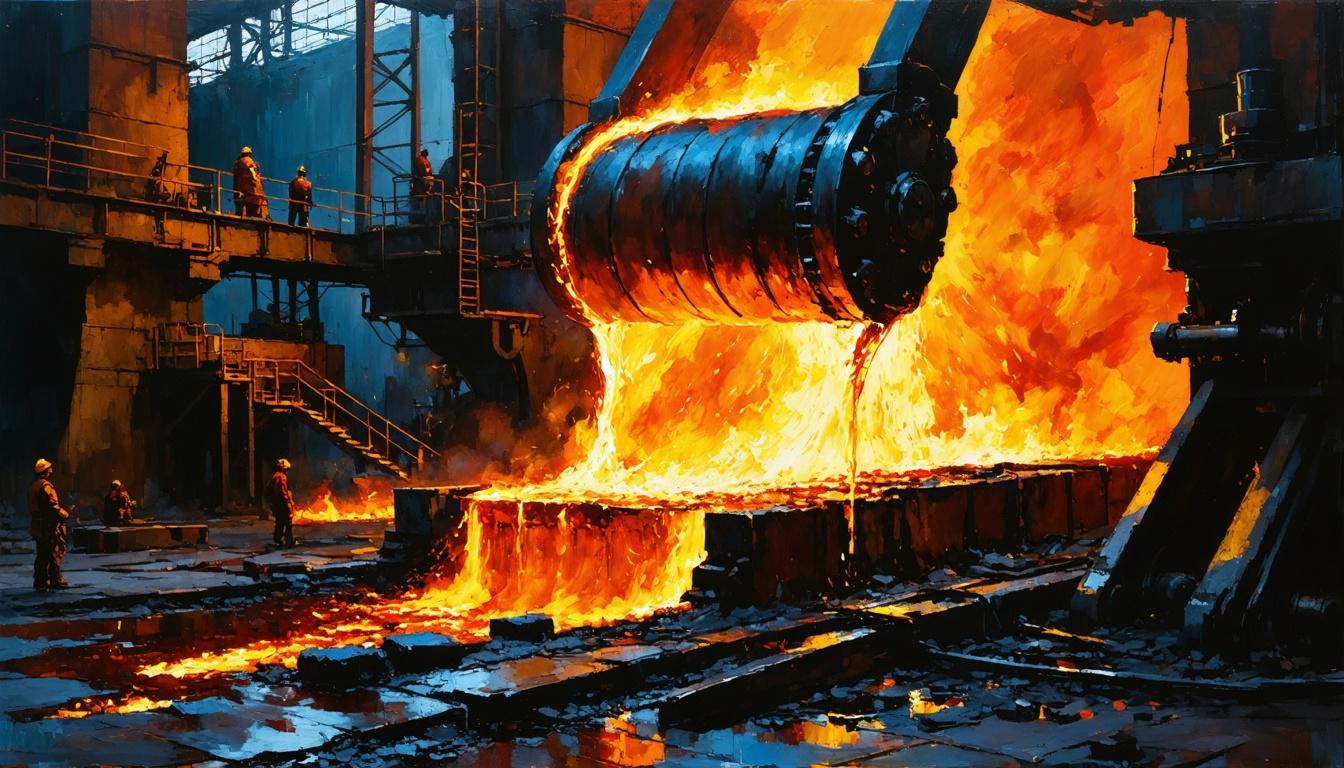
*this image is generated using AI for illustrative purposes only.
Gallantt Ispat Limited reported a net profit (PAT) of ₹124 crore for the quarter ended June 30, 2026, sustaining an EBITDA margin of 18% despite elevated raw material costs and a planned shutdown of its pellet plant. The company’s revenue from operations rose 2% year-on-year to ₹1,146 crore, driven by stable demand in its core long products segment. Management highlighted that sequential operating performance remained resilient against seasonal monsoon headwinds and global freight pressures, with the firm remaining debt-free on term loans.
The disclosure was made pursuant to Regulation 30 of the SEBI (Listing Obligations and Disclosure Requirements) Regulations, 2015. The earnings conference call, held on July 28, 2026, featured Vice Chairman Dindayal Jalan, Chief Executive Officer Mayank Agrawal, and Chief Financial Officer Amit Jalan. The transcript is available on the company’s website, providing detailed insights into the financial outcomes and strategic updates for Q1FY27.
Financial Performance
Gallantt Ispat’s profitability metrics remained broadly in line with the previous quarter but declined year-on-year due to input cost inflation. EBITDA stood at ₹203 crore, down from ₹254 crore in Q1FY26, though comparable to ₹209 crore in Q4FY26. Profit before taxes (PBT) was ₹165 crore, slightly higher than ₹162 crore in the preceding quarter.
| Metric | Q1FY27 | Q4FY26 | Q1FY26 | YoY Change |
|---|---|---|---|---|
| Revenue from Operations | ₹1,146 crore | ₹1,205 crore | ₹1,128 crore | +2% |
| EBITDA | ₹203 crore | ₹209 crore | ₹254 crore | -20% |
| EBITDA Margin | 18% | 17.3% | 23% | -500 bps |
| PAT | ₹124 crore | ₹123 crore | ₹174 crore | -29% |
| PAT Margin | 11% | 10% | 15% | -400 bps |
Raw material costs increased 9% year-on-year, outpacing revenue growth. This pressure stemmed from higher coal prices, geopolitical tensions affecting global freight, and the need to procure iron ore from the open market during the pellet plant’s annual maintenance shutdown. Employee costs rose 24% year-on-year, primarily due to the full-year impact of the DRI plant commissioned last year and annual salary revisions effective April 2026.
Operational Updates & Expansion
TMT bar sales volumes remained flat year-on-year at approximately 192,000 tonnes, reflecting seasonal softness in construction activity. Billet volumes, however, grew 13% year-on-year and 38% sequentially, exceeding internal plans. The company noted that pellet and sponge iron external sales were lower due to higher captive consumption and the plant shutdown, rather than weak demand.
Capacity utilization varied across units, with the Gorakhpur facility operating at 93% compared to 66% at the Kutch unit. Management identified improving Kutch’s rolling mill utilization as a key focus for Q2FY27. The ongoing capacity expansion from 1 million to 1.23 million tonnes, part of a ₹3,000 crore capital expenditure program, remains on track for commissioning in the second half of FY27.
What the Numbers Show
The stability of Gallantt Ispat’s EBITDA margin at 18% quarter-on-quarter, despite a 9% surge in raw material costs, underscores the protective value of its integrated business model. While revenue growth was modest at 2%, the ability to maintain margins suggests effective cost pass-through mechanisms or operational efficiencies offsetting input inflation. The divergence between flat TMT volumes and strong billet growth indicates a shift in product mix or internal processing dynamics, potentially linked to the pellet plant shutdown redirecting output. Furthermore, the company’s decision to fund its ₹3,000 crore capex entirely through internal accruals, while maintaining a net cash surplus position, highlights significant balance sheet strength and reduces interest rate risk exposure during this expansion phase.
Strategic Outlook
Management reaffirmed its medium-term growth strategy, citing expected domestic steel demand growth of 7% to 9%. Renewable energy initiatives totaling 85 megawatts are progressing as scheduled, with 18 megawatts in Gujarat set for commissioning in Q2FY27 and 67 megawatts in Gorakhpur targeted for Q4FY27. These projects aim to provide structural cost reductions once operational. Additionally, work continues on captive iron ore blocks in Rajasthan and Uttar Pradesh, with FY28 targeted as the operational start date to secure raw material supply chains.
Historical Stock Returns for Gallantt Ispat
| 1 Day | 5 Days | 1 Month | 6 Months | 1 Year | 5 Years |
|---|---|---|---|---|---|
| -1.37% | -4.73% | -8.25% | -3.36% | -19.10% | +604.99% |

How will the commissioning of the 1.23 million-tonne capacity expansion in H2FY27 impact Gallantt Ispat's market share and pricing power in the long products segment?
What is the projected timeline for the captive iron ore blocks in Rajasthan and Uttar Pradesh to achieve full operational efficiency, and how will this mitigate future raw material cost volatility?
Will the upcoming renewable energy projects (85 MW total) significantly reduce the company's operational costs per tonne, and when can investors expect to see these savings reflected in EBITDA margins?
 19
19






 Access 50+ Readymade Screeners
  Use 200+ Custom Filters
  Get Full Market Insights





