

Dhampur Sugar Mills AGM resolutions pass; promoter pay sees minor dissent


- All nine resolutions at Dhampur Sugar Mills' 91st AGM were formally passed
- Financial statements and ₹2 per share interim dividend received 99.99% support
- Promoter remuneration polls passed with 96%+ support despite institutional dissent
- Scrutinizer M/s GSK & Associates validated results on August 27, 2026



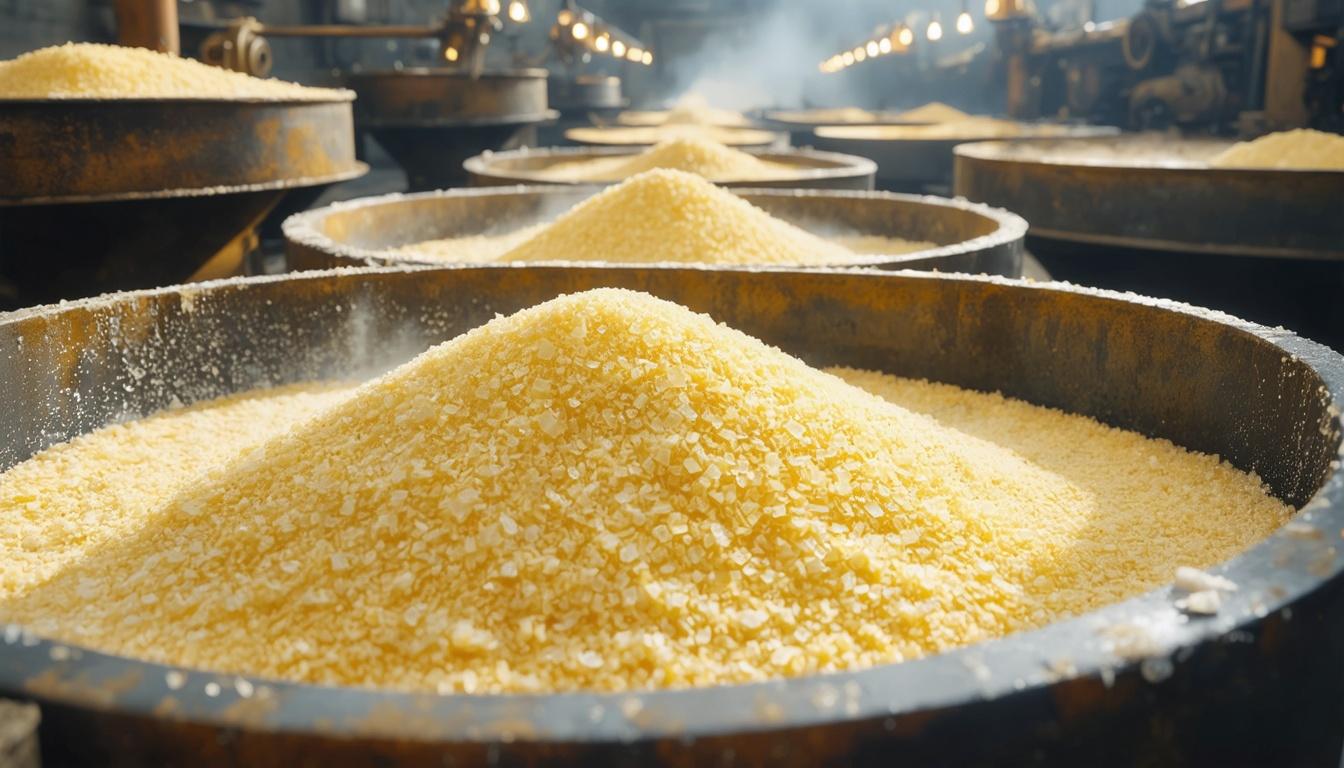
*this image is generated using AI for illustrative purposes only.
Dhampur Sugar Mills confirmed the formal passing of all nine resolutions at its 91st Annual General Meeting held on August 26, 2026. The scrutinizer’s report, issued by M/s GSK & Associates on August 27, 2026, validates the e-voting outcomes for both ordinary and special business items.
The virtual meeting commenced at 3:00 pm and concluded at 4:47 pm. Ms. Aparna Goel, Company Secretary and Compliance Officer, presided over the proceedings. All directors were present, alongside Joint Statutory Auditors from Mittal Gupta & Co. and T R Chadha & Co. LLP, who attended remotely.
Operational Highlights
Mr. Ashok Kumar Goel, Chairman, briefed members on the company’s performance for FY26. He highlighted improved financial results driven by higher sugar sales volume, better realizations, and improved sugar recovery. The management also noted lower production costs for maize-based ethanol. Strategic initiatives discussed included a shift in sugarcane varietal mix to enhance quality and yield through advanced agronomy practices.
Goel further outlined steps to enhance stakeholder value, citing the declaration of an interim dividend, an equity share buy-back, and a proposed entry into the NBFC sector. The company is also exploring growth opportunities in value-added chemicals derived from bio streams. He addressed regulatory changes, including increases in the State Advised Price of sugarcane and adjustments to levy molasses obligations.
Voting Results Overview
Shareholders voted via remote e-voting facilitated by NSDL between August 22 and August 25, 2026. Eleven members raised queries during the session, addressed by Mr. Gaurav Goel, Vice Chairman and Managing Director. The audited standalone and consolidated financial statements for FY26 were adopted without qualifications.
| Resolution Category | Key Outcome | Votes In Favour (%) |
|---|---|---|
| Financial Statements Adoption | Passed | 99.99% |
| Interim Dividend Confirmation (₹2/share) | Passed | 99.99% |
| Re-appointment of Directors (Pandey, Khanna) | Passed | 99.98% |
| Cost Auditor Remuneration | Passed | 99.99% |
| Independent Director Commission | Passed | 99.98% |
| Chairman Remuneration (Ashok Kumar Goel) | Passed | 96.30% |
| Vice Chairman & MD Remuneration (Gaurav Goel) | Passed | 96.14% |
Analytical Observation: Shareholder Dissent Patterns
While ordinary resolutions such as financial statement adoption and dividend confirmation saw near-unanimous support (>99.9%), special resolutions related to promoter remuneration attracted measurable dissent. Specifically, institutional investors voted against the remuneration packages for Chairman Ashok Kumar Goel and Vice Chairman Gaurav Goel at rates of 94.01% and 94.01% respectively of their polled votes. However, promoter group support remained absolute (100%), ensuring overall passage with 96.30% and 96.14% favourable votes respectively. This divergence highlights a split between institutional and promoter alignment on executive compensation structures, though it did not impact the final outcome.
The scrutinizer’s report confirms that all electronic data remains in custody until the Chairman approves the minutes.
Historical Stock Returns for Dhampur Sugar Mills
| 1 Day | 5 Days | 1 Month | 6 Months | 1 Year | 5 Years |
|---|---|---|---|---|---|
| +2.48% | +9.99% | +26.95% | +48.08% | +47.80% | -28.76% |

How might the significant institutional dissent on promoter remuneration influence future corporate governance reforms or executive compensation negotiations at Dhampur Sugar Mills?
What are the specific regulatory hurdles and capital requirements Dhampur Sugar Mills faces in its proposed entry into the NBFC sector, and how will this diversification impact its balance sheet?
Given the shift towards advanced agronomy and sugarcane varietal mixes, what is the projected timeline for realizing improved yields and cost efficiencies in FY27?
 20
20










 Access Market Heat-map & Insights
  Create, Save & Share your Screener
  Use 200+ Screening Filters





