CoreWeave raises $3B debt as AI financing faces scrutiny

scanx
Reviewed by
Shriram SScanX News Team
Key Highlights
  • CoreWeave shares fell over 4% after announcing a $3 billion convertible note raise
  • Company deployed first NVIDIA Vera Rubin NVL72 cluster for agentic AI workloads
  • Sona Asset Management highlights $3.6 trillion in circular AI financing deals
  • CoreWeave carries $35.6 billion debt with $35-39 billion capex guidance this year
  • Oracle also flagged for high leverage with $125.3 billion borrowings
powered bylight_fuzz_icon
51274521

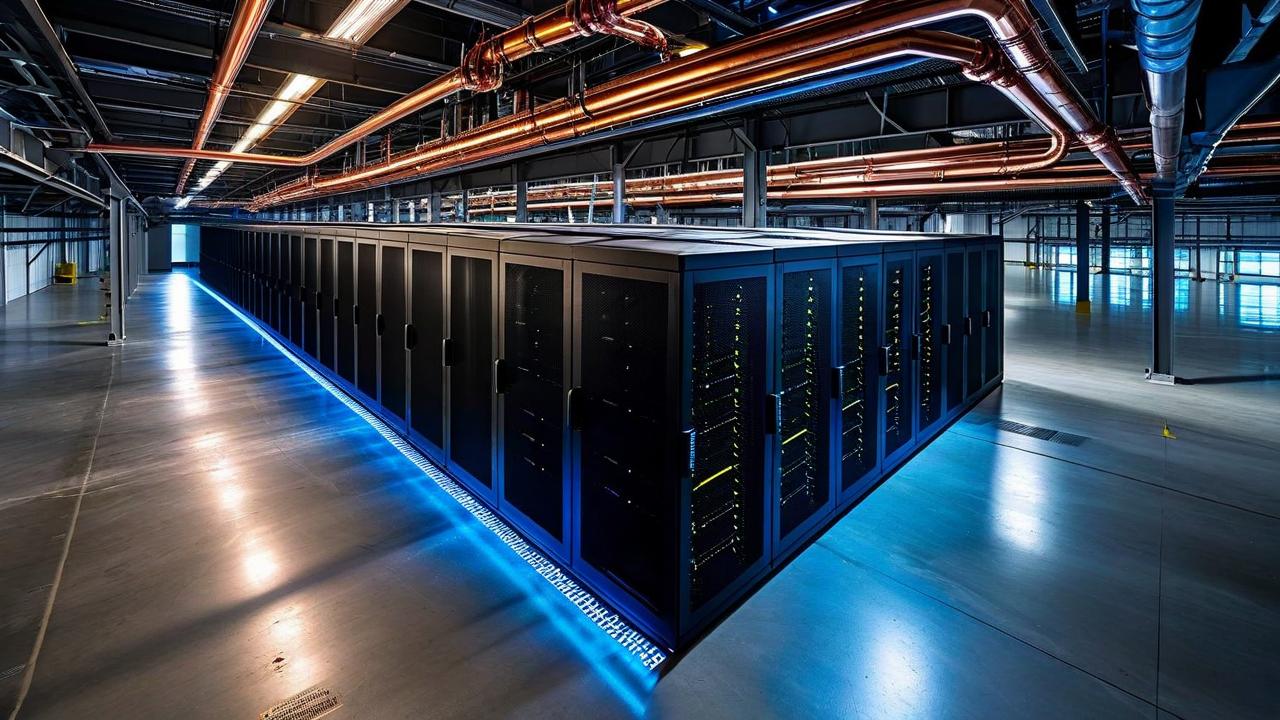
*this image is generated using AI for illustrative purposes only.

CoreWeave Inc. (NASDAQ: CRWV) shares fell over 4% after the company announced a $3 billion convertible note offering. The move coincides with new research highlighting massive leverage across the AI supply chain.

Rubin Cluster Deployment and Lease

On September 16, CoreWeave deployed its first NVIDIA Vera Rubin NVL72 cluster on CoreWeave Cloud. This multi-rack setup connects hundreds of GPUs for agentic AI workloads. The company also added cross-region write acceleration and an Archive tier to its AI Object Storage product.

Simultaneously, Blockfusion USA’s subsidiary, North East Data LLC, signed a definitive 15-year anchor lease with CoreWeave for capacity at its Niagara Falls, New York campus. The deal includes two five-year renewal options and utilizes low-carbon hydroelectric power.

Capital Raise Amid Leverage Concerns

On September 17, CoreWeave announced plans to raise $3.0 billion through private convertible senior notes due 2033. Initial purchasers have an option to buy up to an additional $500 million. The company also disclosed an at-the-market equity program for up to 35 million Class A shares.

The financing comes as London credit hedge fund Sona Asset Management mapped $3.6 trillion of AI-related financing across 176 deals. Sona flagged about 120 deals as highly circular, with companies often acting as investors, customers, and suppliers simultaneously.

Company Key Financial Metric Detail
CoreWeave Debt (as of June 30) $35.6 billion
CoreWeave Capex Guidance (This Year) $35 billion to $39 billion
Oracle Borrowings (as of Aug 31) $125.3 billion
Oracle Unstarted Data Center Leases $288 billion

Oracle and CoreWeave were identified as two of the most heavily indebted companies relative to earnings in the AI supply chain. Oracle has $288 billion in mostly unstarted data-center leases, typically running 15 to 19 years, alongside $664 billion in contracted future business.

What the Numbers Show

CoreWeave expects to spend between $35 billion and $39 billion on capital expenditures this year, having raised guidance in August due to increased demand. With $35.6 billion in existing debt, the company relies on continued access to capital markets to finance infrastructure before revenue arrives. This model faces pressure if financing costs rise or AI demand slows, particularly given the circular nature of industry funding centered around entities like OpenAI.

Market Reaction

At the time of publication, CoreWeave shares were trading lower following the announcement. Polymarket traders currently assign a 12% probability to an AI-industry downturn by December 31, requiring significant stress events such as major supplier bankruptcies or steep stock declines.

Disclaimer: This article is AI-generated using data from ViewTrade. ScanX is not liable for any inaccuracies.

How might the circular nature of AI financing, highlighted by Sona Asset Management, impact CoreWeave's ability to refinance its $35.6 billion debt if major partners like OpenAI face financial stress?

Given CoreWeave's $35-39 billion capex guidance, what specific revenue milestones or utilization rates must the company achieve to justify this leverage before its 2033 notes mature?

Could the 15-year anchor lease with Blockfusion USA serve as a template for other AI infrastructure deals, or does it expose CoreWeave to long-term counterparty risk in a rapidly evolving tech landscape?

like20
dislike

CoreWeave sets up ATM program, signs $25 billion in new AI compute deals

scanx
Reviewed by
Suketu GScanX News Team
Key Highlights
  • CoreWeave launched an ATM program to sell up to 35 million Class A shares for financing flexibility
  • New short-term AI compute contracts priced at approximately $40 million per megawatt in Q3
  • Company added more than $25 billion in net new customer commitments early in the third quarter
  • Total contracted power rose to 4.2 gigawatts as of Aug. 11, up from 3.7 gigawatts on June 30
powered bylight_fuzz_icon
51197765

*this image is generated using AI for illustrative purposes only.

CoreWeave Inc. (NASDAQ: CRWV) established an at-the-market stock offering program allowing the sale of up to 35 million Class A shares. The artificial intelligence cloud company simultaneously reported stronger pricing for new compute capacity and billions in additional customer commitments.

The financing initiative aims to provide flexibility and support the company’s goal of moving its enterprise credit profile toward investment grade. CoreWeave is not obligated to sell any shares under the program, with timing and size dependent on market conditions and capital structure goals.

Higher Pricing For Compute Capacity

CoreWeave stated it has continued signing contracts for new compute capacity at higher prices since June 30. During the third quarter, the company secured short-term customer contracts lasting approximately three to six months.

Pricing for these agreements was approximately $40 million per megawatt, calculated based on annualized revenue divided by the power required to service the related computing clusters. This pricing level indicates tight demand for AI computing infrastructure.

Contracted Power And Commitments

The company highlighted rapid expansion in its contracted business, adding more than $25 billion in net new customer commitments early in the third quarter. These commitments were not included in the revenue backlog as of June 30.

Total contracted power reached about 4.2 gigawatts as of Aug. 11, up from roughly 3.7 gigawatts on June 30.

Metric Value Date
Contracted Power 4.2 GW Aug. 11
Prior Contracted Power 3.7 GW June 30
New Customer Commitments >$25 billion Q3 (early)
Pricing Per Megawatt ~$40 million Q3 (short-term)

What The Numbers Show

The divergence between the $25 billion in new commitments and their exclusion from the June 30 backlog suggests a significant acceleration in deal velocity during the early part of the third quarter. This rapid inflow, combined with the rise in contracted power from 3.7 GW to 4.2 GW in just over six weeks, points to aggressive capacity deployment outpacing previous reported levels.

Stock Performance And Analyst Outlook

CoreWeave stock fell more than 2% in Thursday’s premarket session, bucking a broader rally in technology stocks. Nasdaq futures climbed 1.65%, while S&P 500 futures gained 1.25%.

The stock remains below several key moving averages. At $81.46, it is 6.2% below its 20-day simple moving average of $87.18 and 4.3% below its 50-day SMA of $85.44. It trades 15.2% below its 100-day SMA of $96.37 and 11.1% below its 200-day SMA of $92.02.

The relative strength index stands at 45.73, signaling neutral momentum. Key resistance sits near $94.50, while support stands near $79.

CoreWeave carries a Buy consensus rating with an average price forecast of $145.44. Recent analyst actions include:

  • Truist Securities raising its price forecast to $165 while maintaining a Buy rating on Aug. 24.
  • Goldman Sachs raising its forecast to $139 and maintaining a Neutral rating on Aug. 21.
  • Citigroup raising its forecast to $159 while maintaining a Buy rating on Aug. 14.
Disclaimer: This article is AI-generated using data from ViewTrade. ScanX is not liable for any inaccuracies.

How might the potential dilution from selling up to 35 million shares impact CoreWeave's earnings per share and valuation metrics if market conditions favor equity issuance?

Given the $40 million per megawatt pricing for short-term contracts, will CoreWeave be able to sustain these premium rates as long-term enterprise agreements are negotiated?

What specific infrastructure or operational milestones must CoreWeave achieve to successfully transition its credit profile to investment grade within the current fiscal year?

like17
dislike

More News on CoreWeave - Class A