

Cochin Shipyard Q1FY27 Results: Revenue rises 23%, net profit slips


- Q1FY27 revenue rose 23% YoY to ₹1,094 crore, driven by naval and commercial activity
- Net profit declined 2% to ₹151 crore as EBITDA margins contracted to 24% from 27%
- Order book stands at ₹20,700 crore, with defence contributing 54% of the total value
- Capital employed increased significantly to ₹7,294 crore, reflecting ongoing infrastructure investments
- Board approved JV with DP World for Kochi ship repair cluster; Vadinar cluster gains CCEA approval

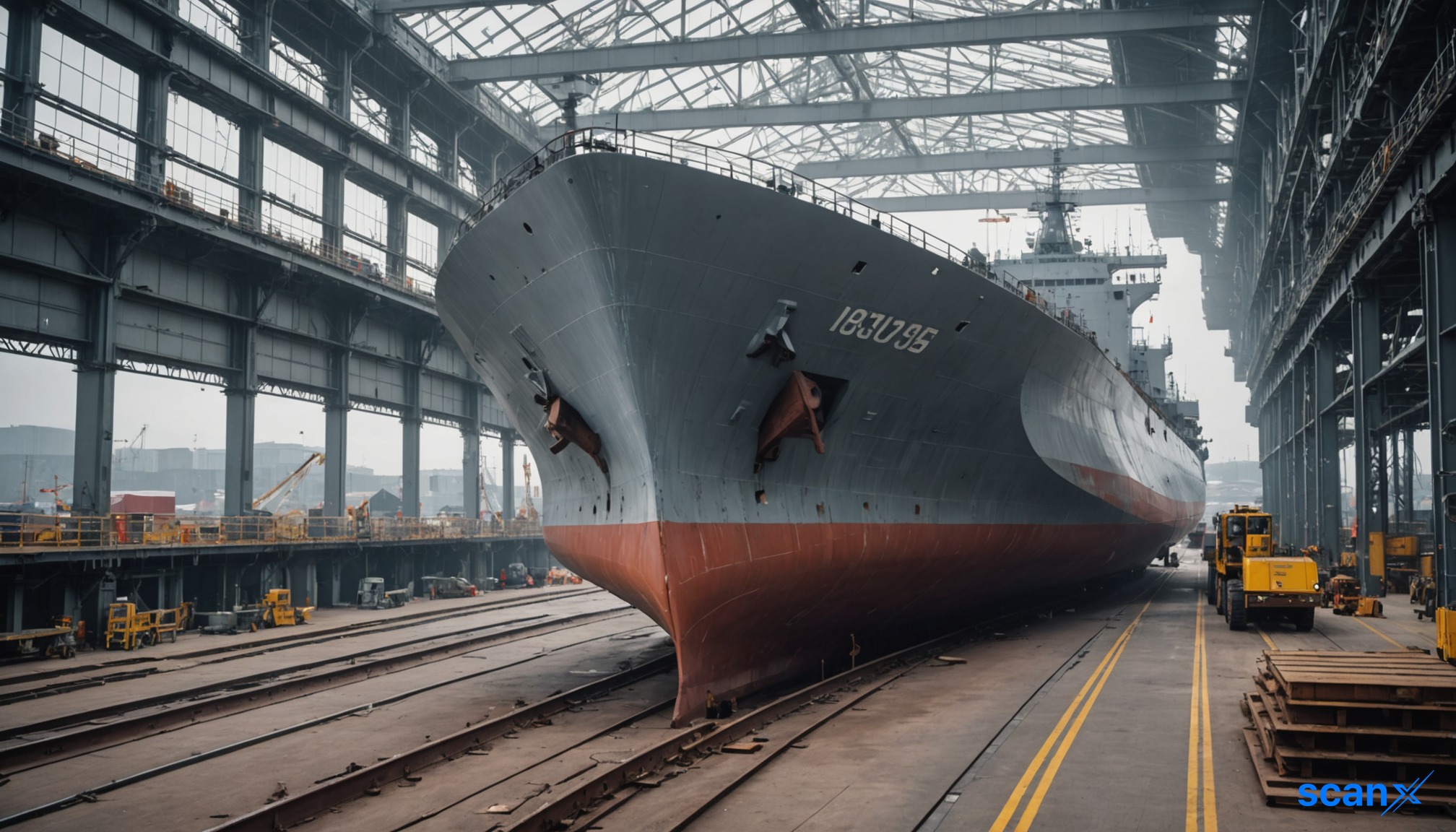

*this image is generated using AI for illustrative purposes only.
Cochin Shipyard Limited reported a 23% year-on-year rise in revenue for the first quarter of FY27, driven by sustained activity across its naval and commercial segments. However, profitability faced headwinds, with net profit declining slightly despite the top-line growth.
The company, which holds a dominant position in India’s shipbuilding and repair sector, delivered robust operational metrics alongside its financial results. The presentation highlighted an order book valued at approximately ₹20,700 crore, underscoring strong future revenue visibility.
Financial Performance
For the quarter ended June 30, 2026 (Q1FY27), total revenue reached ₹1,094 crore. This compares to ₹890 crore in the same period last fiscal, reflecting a significant acceleration in business execution.
| Metric | Q1FY27 | Q1FY26 | Change |
|---|---|---|---|
| Revenue | ₹1,094 crore | ₹890 crore* | +23% |
| EBITDA | ₹260 crore | ₹240 crore* | +8% |
| EBITDA Margin | 24% | 27%* | -300 bps |
| Net Profit | ₹151 crore | ₹154 crore* | -2% |
*Note: Q1FY26 figures are derived from YoY growth rates and absolute Q1FY27 values provided in the source data.
EBITDA stood at ₹260 crore, representing a margin of 24%. This marks a contraction from the 27% margin recorded in the corresponding quarter of FY26. Net profit was reported at ₹151 crore, down marginally from the previous year’s figure.
What the Numbers Show
The divergence between revenue growth and margin contraction indicates a shift in the company’s earnings mix. While top-line expansion was robust at 23%, EBITDA grew at a slower pace of 8%. This suggests that the incremental revenue generated in Q1FY27 carried lower profitability than the base period, likely due to the nature of projects recognized or higher input costs.
Furthermore, the company’s capital employed rose to ₹7,294 crore in Q1FY27, up from ₹5,648 crore in FY25. This substantial increase in asset base, coupled with a Return on Capital Employed (ROCE) of 4% for the quarter (non-annualized), highlights the capital-intensive phase of current operations. The debt-to-equity ratio remained low at 0.21x, indicating a conservative leverage profile despite heavy infrastructure investments.
Order Book and Strategic Expansion
The order book remains a key strength, with a total value of approximately ₹20,700 crore. The composition is heavily skewed towards defence, which accounts for 54% of the book (₹11,900 crore). Commercial export orders contribute 33% (₹7,200 crore), while domestic commercial and ship repair orders make up the remainder.
Key strategic developments include:
- A joint venture with DP World’s Dubai Drydocks World for the Kochi ship repair cluster, approved by the board on September 9, 2026.
- Progress on the Vadinar ship repair cluster in Gujarat, with CCEA approval received in May 2026.
- Acquisition of a 23% stake in Conoship International Holding B.V., Netherlands, to expand design capabilities.
The company also secured land allotment for a new hybrid shipyard in Tuticorin, with Phase 1 possession expected by September 2026.
Historical Stock Returns for Cochin Shipyard
| 1 Day | 5 Days | 1 Month | 6 Months | 1 Year | 5 Years |
|---|---|---|---|---|---|
| -2.69% | -7.12% | -18.92% | -9.39% | -33.61% | +576.00% |

How will the margin contraction in Q1FY27 persist as the company scales up operations with its expanded capital base, and what measures are being taken to stabilize EBITDA margins?
What is the expected timeline for the Vadinar and Tuticorin expansion projects to contribute meaningfully to revenue, and how will they impact the company's overall capacity utilization?
Given the heavy skew towards defence orders (54% of the order book), how exposed is Cochin Shipyard to potential delays or budgetary shifts in government defence procurement cycles?
 18
18












 Create Custom Screeners
  Access 200+ Pre-built Filters
  Use 50+ Readymade Screener





