

Cango Inc Q2FY26 Results: Net loss narrows to $81.6 million


- Cango Inc. reported a Q2 net loss of $81.6 million, narrowing significantly from $261.1 million in Q1
- Revenue fell roughly 50% to $50.8 million due to phasing out inefficient miners and shifting to leased capacity
- First customer signed for new AI high-performance computing center in Georgia, which now has 3 MW capacity
- Long-term debt remains low at $31.2 million after significant paydowns earlier in the year
- Bitcoin treasury holds 1,056 coins, with average mining cost of $73,313 below current market price



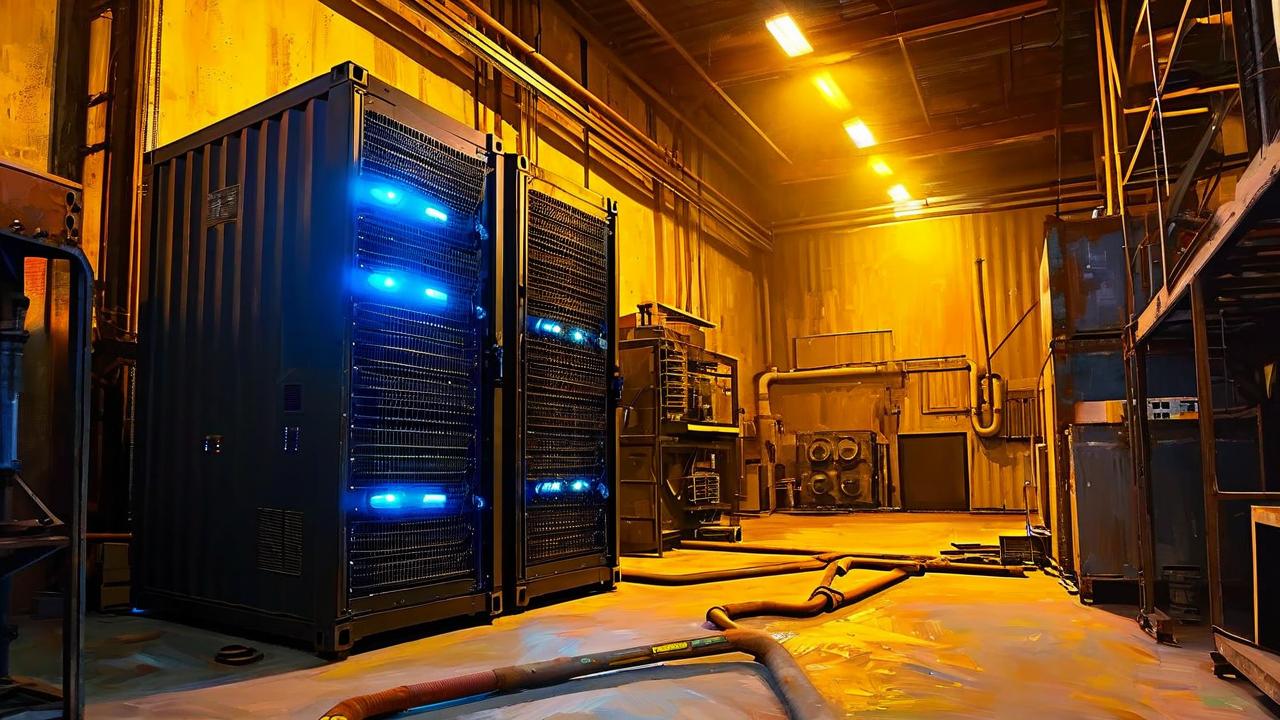
*this image is generated using AI for illustrative purposes only.
Cango Inc. (NYSE: CANG) reported a second-quarter net loss from continuing operations of $81.6 million, a significant improvement from the $261.1 million loss recorded in the prior quarter. The company also marked a strategic milestone by signing its first customer for its new high-performance computing (HPC) business.
The Georgia-based facility, converted from an existing bitcoin mining site, is now operational with 3 MW of computing capacity. CEO Paul Yu stated that Cango will run its bitcoin mining and AI operations as parallel businesses, with expectations to generate initial revenue from the AI segment in the third quarter.
Financial Performance
Revenue from continuing operations fell roughly by half to $50.8 million in the second quarter, down from $102 million in the first quarter. This decline was driven by the phasing out of older, less efficient mining machines and a strategic shift from self-mining to a hosted leasing model.
Despite the revenue contraction, profitability metrics improved sharply due to cost discipline and operational efficiency gains.
| Metric | Q2FY26 | Q1FY26 | Change |
|---|---|---|---|
| Revenue | $50.8 million | $102 million | ~-50% |
| Operating Loss | $80.6 million | $254.4 million | Improved |
| Adjusted EBITDA Loss | $10.7 million | $154.1 million | Improved |
| Net Loss (Continuing Ops) | $81.6 million | $261.1 million | Improved |
Long-term debt remained low at $31.2 million at the end of June, slightly up from $30.6 million at the end of March but significantly reduced from $557.6 million three months prior to that. The company used cash from bitcoin sales to pay down debt earlier in the year.
Bitcoin Mining Operations
Cango mined 656 bitcoins during the quarter, averaging about 219 per month, down from a monthly average of 422 bitcoins in the first quarter. Total mining capacity decreased to 27.58 EH/s as of June 30, from 37 EH/s at the end of March.
The average cost to mine each bitcoin stood at $73,313, down 5% sequentially. This unit cost is below the current market price of approximately $77,500. However, the all-in mining cost was $98,405 per bitcoin, which remains above the market price.
The company’s bitcoin treasury held 1,056 bitcoins at the end of June, similar to the 1,026 held at the end of March, but down dramatically from nearly 7,500 in January before the company began selling holdings. CFO Simon Tang noted that the company has started executing a hedging strategy for risk management purposes only.
What the Numbers Show
A critical divergence exists between Cango’s unit economics and its overall profitability. While the direct mining cost of $73,313 per bitcoin is below the market price of $77,500, the all-in cost of $98,405 exceeds it. This indicates that while operational efficiency has improved, fixed costs and other overheads still pressure the bottom line, resulting in a net loss despite positive contribution margins on individual coins mined.
AI Business Expansion
The Georgia facility serves as a proof of concept for hosting heavy-duty computing power for AI applications. The site has infrastructure supporting up to 3 MW of computing power, with room for future expansion. Hardware installation is proceeding in batches to support a phased ramp-up.
Outside Georgia, Cango has begun operating AI test nodes in Texas and on the U.S. West Coast to serve customers with proximity-based deployment needs. The company continues to evaluate potential new sites and the possibility of building new HPC facilities.

How will Cango's transition to a hosted leasing model impact its revenue stability and customer acquisition costs compared to its previous self-mining strategy?
What specific hardware configurations and cooling solutions is Cango deploying in Georgia to ensure the 3 MW facility remains competitive in the high-performance computing market?
Given that all-in mining costs still exceed market prices, what operational efficiencies or strategic shifts are required for Cango to achieve sustained profitability in its bitcoin division?
 16
16










 Access Market Heat-map & Insights
  Create, Save & Share your Screener
  Use 200+ Screening Filters





