

Cango Q1FY26 Results: Net loss widens to $261M on BTC losses


- Cango reported a Q1 2026 net loss of $261.1 million, driven by $151.8M in fair value losses on Bitcoin collateral and $49M in mining machine impairments.
- Revenue fell 43% QoQ to $102 million as the company reduced operational hashrate to prioritize margin resilience over scale.
- Cash cost per Bitcoin mined decreased 9% to $76,928, aided by phasing out S19 miners and deploying more efficient S21 models.
- Long-term debt dropped significantly to $30.6 million from $557.6 million at year-end 2025, following sales of Bitcoin holdings to repay loans.
- The company is advancing its ECOHASH AI infrastructure pilot in Georgia, targeting revenue generation in the second half of 2026.

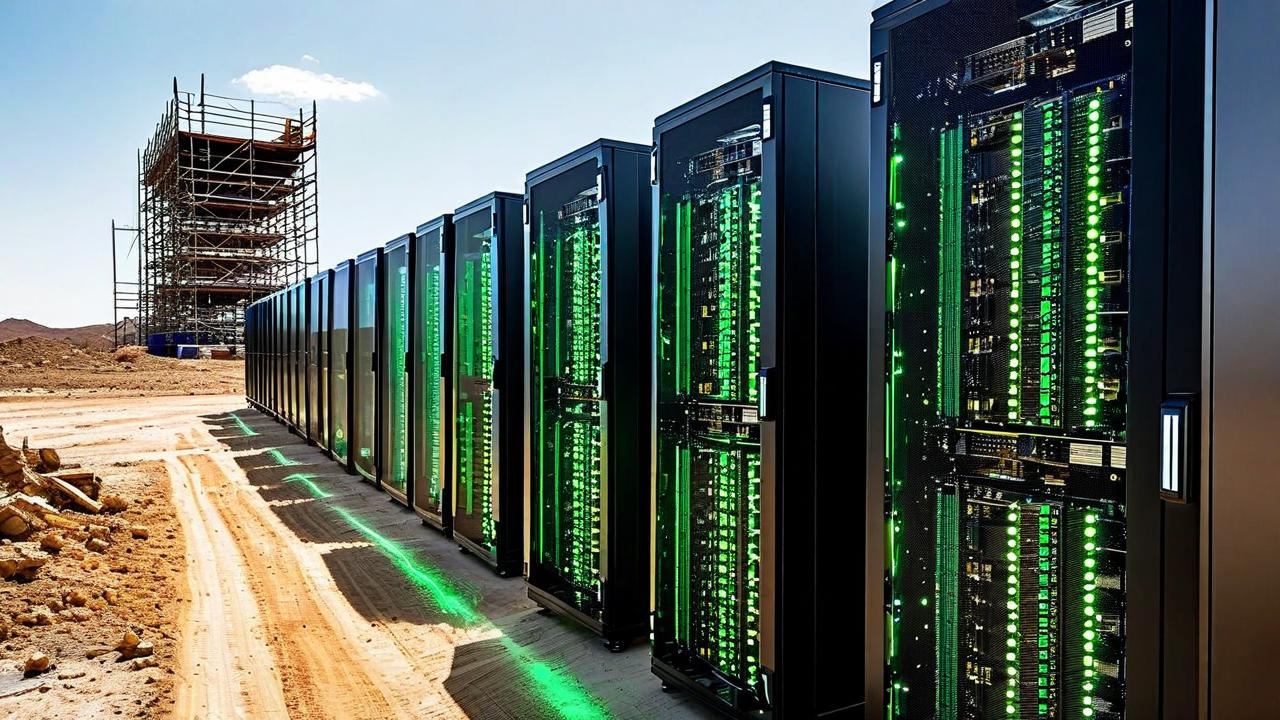

*this image is generated using AI for illustrative purposes only.
Cango Inc. (NYSE: CANG) reported a first-quarter 2026 net loss of $261.1 million, driven primarily by non-cash impairment charges on mining hardware and fair value losses on Bitcoin collateral. Total revenue for the quarter stood at $102 million, reflecting a strategic shift toward margin resilience over scale.
The company significantly reduced its operational hashrate and long-term debt during the period. Cash cost per Bitcoin mined decreased by 9% compared to the fourth quarter of 2025, reaching $76,928 per coin as Cango phased out less efficient S19 miners in favor of S21 models.
Financial Performance
Revenue declined approximately 43% quarter-on-quarter from $155.3 million in Q4 2025 to $102 million in Q1 2026. This drop aligns with the proactive reduction in operational hashrate and the transition of some capacity to a leasing model. Cost of revenue excluding depreciation fell to $99.6 million from $155.3 million, aided by lower electricity and hosting expenses.
| Metric | Q1 2026 | Q4 2025 | Change |
|---|---|---|---|
| Revenue | $102 million | $155.3 million | -43% |
| Net Loss | $261.1 million | Not disclosed | N/A |
| Cash Cost/BTC | $76,928 | $84,646* | -9% |
| Operational Hashrate | 37.01 EH/s | Not disclosed | N/A |
*Derived from stated 9% decrease from Q4 2025.
The net loss was heavily influenced by a $151.8 million loss from changes in the fair value of receivables for Bitcoin collateral, down from $171.4 million in the prior quarter. Additionally, the company recorded a $49 million impairment loss for mining machines and a $20.3 million loss on disposal of mining machines. Adjusted EBITDA reported a loss of $154.1 million, with the majority attributable to the fair value loss on Bitcoin collateral.
Balance Sheet and Treasury Strategy
Cango’s balance sheet reflects significant deleveraging efforts. Long-term debt dropped sharply to $30.6 million from $557.6 million at year-end 2025. The company sold a portion of its Bitcoin holdings to repay related-party loans, reducing its Bitcoin-backed loan balance substantially. As of March 31, 2026, cash and cash equivalents stood at $7.2 million, down from $41.2 million at year-end, primarily due to debt repayment.
The company holds 1,025.7 Bitcoin as of the end of the quarter. Management indicated a shift from a "mine-and-hold" strategy to a more dynamic approach focused on liquidity and balance sheet strength amid market volatility.
What the Numbers Show
The divergence between the top-line revenue decline and the improvement in cash cost per Bitcoin highlights a deliberate trade-off between scale and efficiency. While revenue fell 43%, the 9% reduction in cash cost per coin suggests that the exit from higher-cost sites and fleet upgrades are yielding immediate operational savings, even as total output decreases. Furthermore, the fact that the $151.8 million fair value loss constitutes roughly 58% of the total $261.1 million net loss indicates that the core mining operation’s cash burn is being offset by significant non-cash accounting adjustments related to collateral valuation.
Operational Updates and AI Initiatives
Operational hashrate ended the quarter at 37.01 EH/s, comprising 27.98 EH/s of self-mining capacity and 9.02 EH/s of hosted hashrate. In April and May, the company continued to retire S19 miners and deploy S21 units, aiming for an 80/20 split between the two models by late May. Some sites have transitioned to revenue-sharing hosting arrangements, where counterparties cover power and maintenance costs, reducing Cango’s direct operating exposure.
On the strategic front, Cango is advancing its ECOHASH AI infrastructure initiative. Pilot evaluations and site retrofitting at its Georgia location are underway, with testing of modular high-density compute units progressing. The company plans to begin generating revenue from AI compute services in the latter half of 2026, starting with GPU compute capacity leasing. Chairman Paul Yu noted that initial capital for the pilot is coming from internal funds, with future expansion potentially supported by strategic partnerships or financing models.

How will the transition to a revenue-sharing hosting model impact Cango's long-term revenue stability and margin profiles compared to traditional self-mining?
What specific milestones must the ECOHASH AI initiative achieve in H2 2026 to justify the capital allocation away from core Bitcoin mining operations?
Given the significant reduction in long-term debt, what is Cango's strategy for maintaining operational liquidity with only $7.2 million in cash reserves amid potential market volatility?
 20
20









 Create Custom Screeners
  Access 200+ Pre-built Filters
  Use 50+ Readymade Screener





