

Boeing shares fall despite 111-plane orders from Turkish and Biman


- Boeing shares fell 1.61% to $196.50 despite new orders
- Turkish Airlines ordered 100 firm 737-8s with 50 options
- Biman Bangladesh added 11 jets to existing $3.7 billion order
- Union vote runs through Oct 1, avoiding potential strike risk
- Shares trade 4% below 20-day moving average amid weak technicals

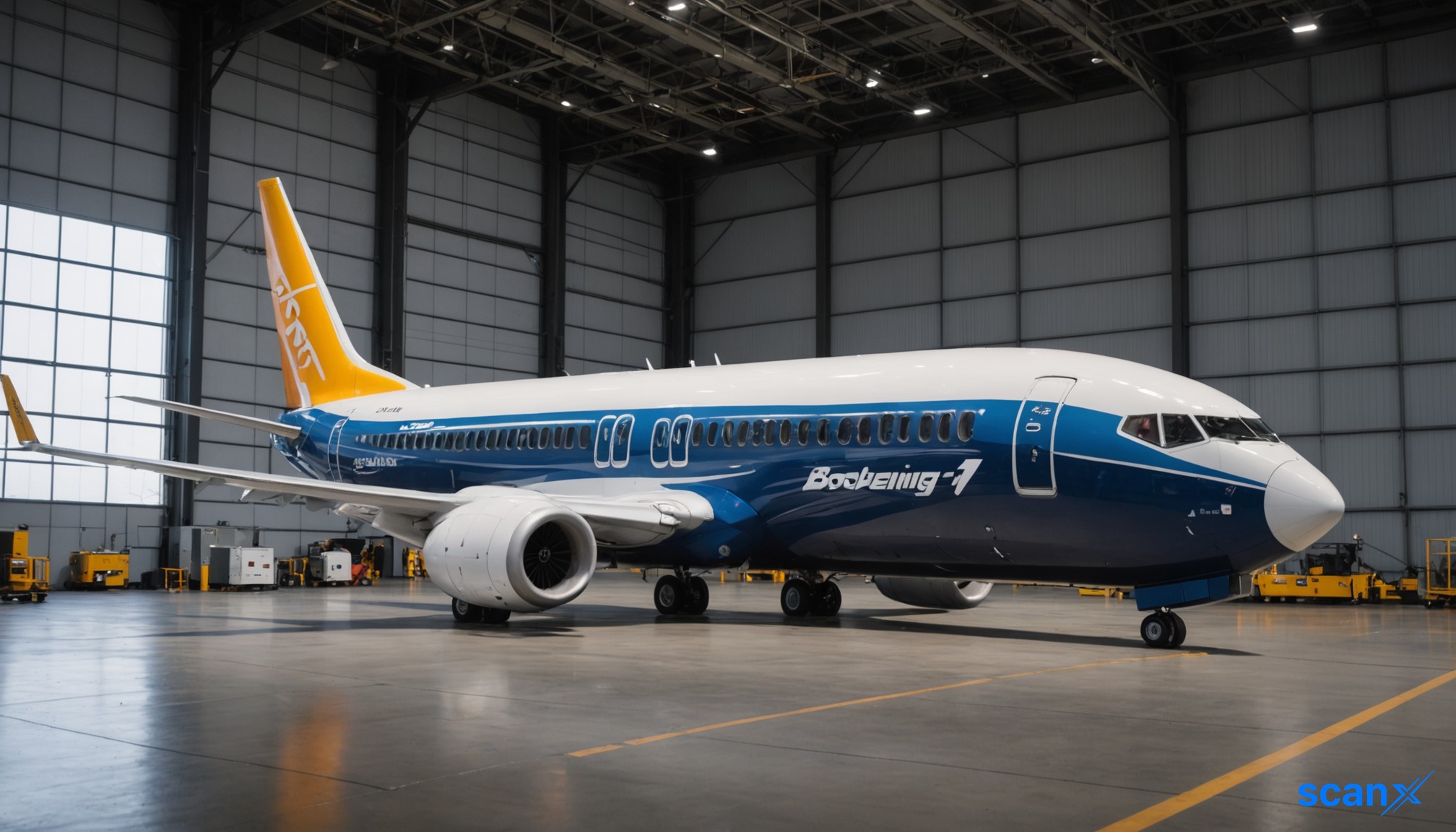

*this image is generated using AI for illustrative purposes only.
Boeing Co (NYSE: BA) shares traded lower on Thursday, falling 1.61% to $196.50, despite President Donald Trump highlighting new aircraft orders from Turkish Airlines and Biman Bangladesh Airlines. Broader market weakness and lingering execution concerns outweighed the positive demand headlines, with industrials down 0.61% and the S&P 500 slipping 0.26%.
The announcement follows a significant rally in Boeing shares, which rose 2.27% to $202.21 on Wednesday. This surge was driven by the Society of Professional Engineering Employees in Aerospace (SPEEA) leadership recommending that its 17,000 members accept Boeing’s four-year contract offer. This endorsement mitigates immediate operational risks, including potential strikes that could halt 777X certification testing and disrupt 737 MAX assembly lines.
Labor stability secures production continuity
SPEEA’s recommendation came after management presented an upgraded proposal on September 11, improving upon an earlier draft rejected by members on August 21. Voting began Thursday, September 24, and runs through Thursday, October 1, ahead of the current agreement’s expiration on October 6. Securing union endorsement ahead of the expiration eliminates a primary operational risk. Chief Executive Officer Kelly Ortberg had warned on September 16 that a strike would halt ongoing 777X flight certification testing and disrupt core 737 MAX assembly line throughput.
Order momentum strengthens backlog
Commercial demand accelerated with major announcements confirmed by both Boeing and President Trump. Turkish Airlines finalized a purchase of 100 firm 737-8 airplanes, with options for up to 50 more 737 MAX jets, marking the airline’s largest single-aisle order from Boeing. Deliveries are scheduled to span from 2033 to 2037.
Biman Bangladesh agreed to purchase 11 additional jets, comprising five 787-10 Dreamliners and six 737-8 aircraft. This expands upon a $3.7 billion fleet order originally signed on April 30. These new commitments follow Korean Air finalizing a 103-aircraft order across widebody and narrowbody lineups on September 16.
| Customer | Aircraft Type | Quantity | Status/Notes |
|---|---|---|---|
| Turkish Airlines | 737 MAX | Up to 150 | 100 firm, 50 options; deliveries 2033-2037 |
| Biman Bangladesh | 787-10 / 737-8 | 11 additional | Expands $3.7 billion fleet order |
| Korean Air | Widebody/Narrowbody | 103 | Finalized September 16 |
Political and economic context
In a post on Truth Social, Trump described the transactions as a "big day" for domestic manufacturing. He credited Commerce Secretary Howard Lutnick and the Department of Commerce for facilitating the purchases totaling 111 planes, with options for 50 more. Trump emphasized that these exports represent tens of billions of dollars in value and reinforce the strength of US enterprises through job creation.
The defense and space unit also successfully launched three O3b mPOWER satellites on September 13, following their factory delivery on September 2. With labor disruption threats mitigated and political support highlighted, management can now focus on executing its estimated $715 billion backlog. The company is also advancing Federal Aviation Administration (FAA) certification for the 737 MAX 10, following regulatory clearance for the MAX 7 granted in August 2026.
Technical setup remains soft
Despite positive company headlines, Boeing's technical indicators continue to point to downside pressure. Shares trade about 4% below the 20-day simple moving average of $205.51 and 11% below the 200-day average of $221.12, signaling weakness across both shorter- and longer-term trends. The 50-day moving average also remains below the 200-day average following a September death cross. Meanwhile, the MACD is below its signal line, with a negative histogram, indicating that bearish momentum has yet to reverse. Boeing would need to reclaim the $212-$216 resistance zone to strengthen the technical picture. Support sits near $187.50, with the 52-week low at $176.77.
Earnings and analyst outlook
Boeing's next estimated earnings report is scheduled for October 28. Wall Street expects a loss of 15 cents per share, compared with a $7.47 loss a year earlier. Revenue is projected at $24.99 billion, up from $23.27 billion.
Analysts maintain an average price target of $272, with forecasts ranging from $250 to $305. Jefferies maintained a Buy rating while lowering its price target to $265 on September 21. BofA Securities maintained a Buy rating with a $270 target on September 18, while Argus Research upgraded Boeing to Buy with a $265 target on August 11.
What the numbers show
The convergence of union endorsement, political endorsement, and order inflows highlights a shift from risk mitigation to execution capacity. The $715 billion backlog represents a substantial revenue pipeline, but its realization depends heavily on uninterrupted assembly line throughput. The rejection of the initial contract draft on August 21 versus the acceptance of the revised proposal on September 11 indicates that management successfully addressed specific member concerns, directly protecting the production rates required to service the newly announced Turkish Airlines and Korean Air orders. However, the divergence between strong fundamental news and negative technical indicators suggests investors are prioritizing near-term market sentiment over long-term backlog visibility.

How will the outcome of the SPEEA union vote scheduled to conclude on October 1 impact Boeing's ability to meet the aggressive production ramp-up required for the newly secured Turkish Airlines and Korean Air orders?
Given the technical death cross and bearish momentum, what specific catalysts beyond labor stability and new orders are needed for Boeing shares to reclaim the $212-$216 resistance zone before the October 28 earnings report?
To what extent does the political framing of these aircraft orders as a domestic manufacturing victory influence Boeing's negotiating leverage with the FAA regarding pending 737 MAX 10 certification?
 20
20







 Create Custom Screeners
  Access 200+ Pre-built Filters
  Use 50+ Readymade Screener





