

Boeing, RTX sign seven-year SM-3 missile production frameworks


Boeing and RTX have secured seven-year framework agreements with the U.S. Department of Defense to increase production of SM-3 Block IB and Block IIA interceptor components. The deals support the Pentagon’s strategy to scale the defense industrial base and stabilize supply chains. While financial terms remain undisclosed, the agreements follow recent awards to Raytheon and align with broader efforts to enhance U.S. sea-based missile defense capabilities.



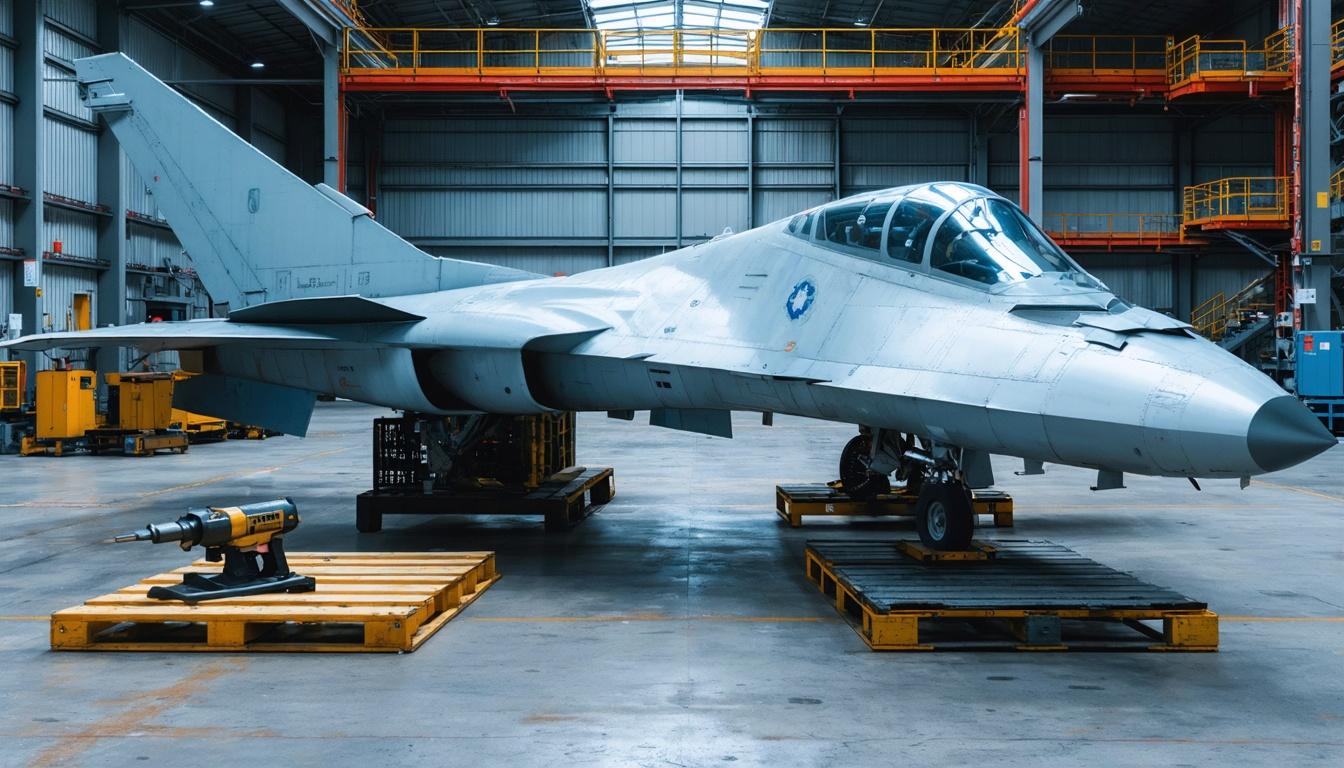
*this image is generated using AI for illustrative purposes only.
The Boeing Company (NYSE: BA) and Raytheon, a business of RTX Corp (NYSE: RTX), have signed seven-year framework agreements with the Department of Defense to expand production of critical hardware for SM-3 Block IB and Block IIA interceptors. The agreements aim to scale output of avionics and ejector assemblies used in these sea-based missile defense systems.
Financial terms for the framework agreements were not disclosed. However, the companies plan to ramp up component production ahead of a multi-year contract award currently under negotiation. This initiative follows a recent Missile Defense Agency award to Raytheon for SM-3 Block IIA production.
Strategic Context
The SM-3 program serves as the backbone of U.S. sea-based missile defense operations, supporting precise missile intercepts outside Earth’s atmosphere. The latest framework aligns with the Pentagon’s Acquisition Transformation Strategy, which is designed to streamline administrative overhead and expand the defense industrial base.
This move follows Boeing’s earlier agreement with the DoD and Lockheed Martin to expand production of PAC-3 Missile Segment Enhancement (MSE) seekers. Under Secretary of Defense for Acquisition and Sustainment Michael P. Duffey stated that these agreements ensure warfighters receive necessary munitions while stabilizing supply chains and placing the defense industrial base on a wartime footing.
Bob Ciesla, Vice President of Boeing Precision Engagement Systems, noted that the agreement provides a clear demand signal to build and deliver SM-3 interceptors at levels needed to counter threats. He described the SM-3 as an essential part of the layered air and missile defense architecture protecting the U.S. and its allies.
Market Performance
At the time of publication on Friday, BA shares were up 0.27% at $230.96, while RTX was up 0.95% at $221.84, according to Benzinga Pro data.
BA continues to trade above all major moving averages. It sits 3.7% above its 20-day SMA ($223.11) and 5.5% above its 200-day SMA ($219.23). An active Golden Cross, with the 50-day SMA above the 200-day SMA, reinforces an upward intermediate trend.
| Technical Metric | Value | Level | Status |
|---|---|---|---|
| Current Price | $230.96 | - | Up 0.27% |
| 20-day SMA | $223.11 | - | Price is 3.7% above |
| 200-day SMA | $219.23 | - | Price is 5.5% above |
| Resistance | $237.50 | - | Overhead stall zone |
| Support | $214.00 | - | Prior demand zone |
The MACD indicator shows constructive momentum, with the MACD line above its signal line and positive histogram bars signaling expanding buyer momentum.

How might the ramp-up in SM-3 production impact Boeing and RTX's supply chain constraints, particularly regarding raw material availability for avionics and ejector assemblies?
What are the potential implications for the defense industrial base if the Pentagon's Acquisition Transformation Strategy successfully streamlines administrative overhead for other major programs?
Could the stabilization of the SM-3 supply chain influence investor sentiment toward Boeing's commercial aviation recovery efforts by demonstrating improved operational efficiency?
 18
18














 Access 50+ Readymade Screeners
  Use 200+ Custom Filters
  Get Full Market Insights





