

Tesla Roadster reveal sparks SpaceX merger debate amid value accrual doubts


- Tesla shares rose 4.43% to $378.50 after unveiling the SpaceX-thruster-equipped Roadster
- Analysts debate merger likelihood, with Kalshi odds at 19% for near-term and 52% by May 2027
- Roadster contributes only $0.06 per share to 2029 earnings, representing 1.1% of consensus EPS
- Value accrual remains unclear due to undisclosed commercial terms between Tesla and SpaceX


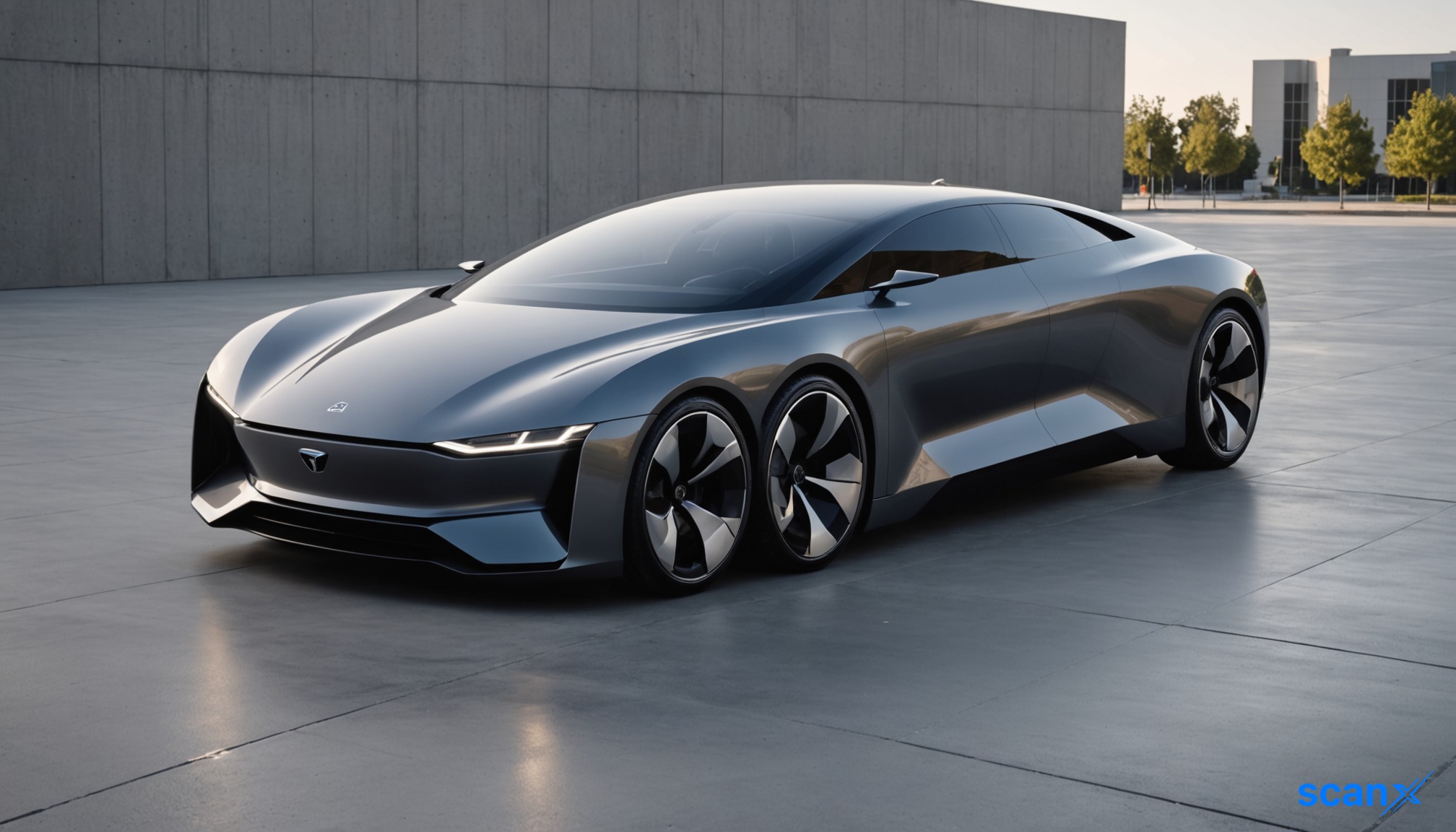
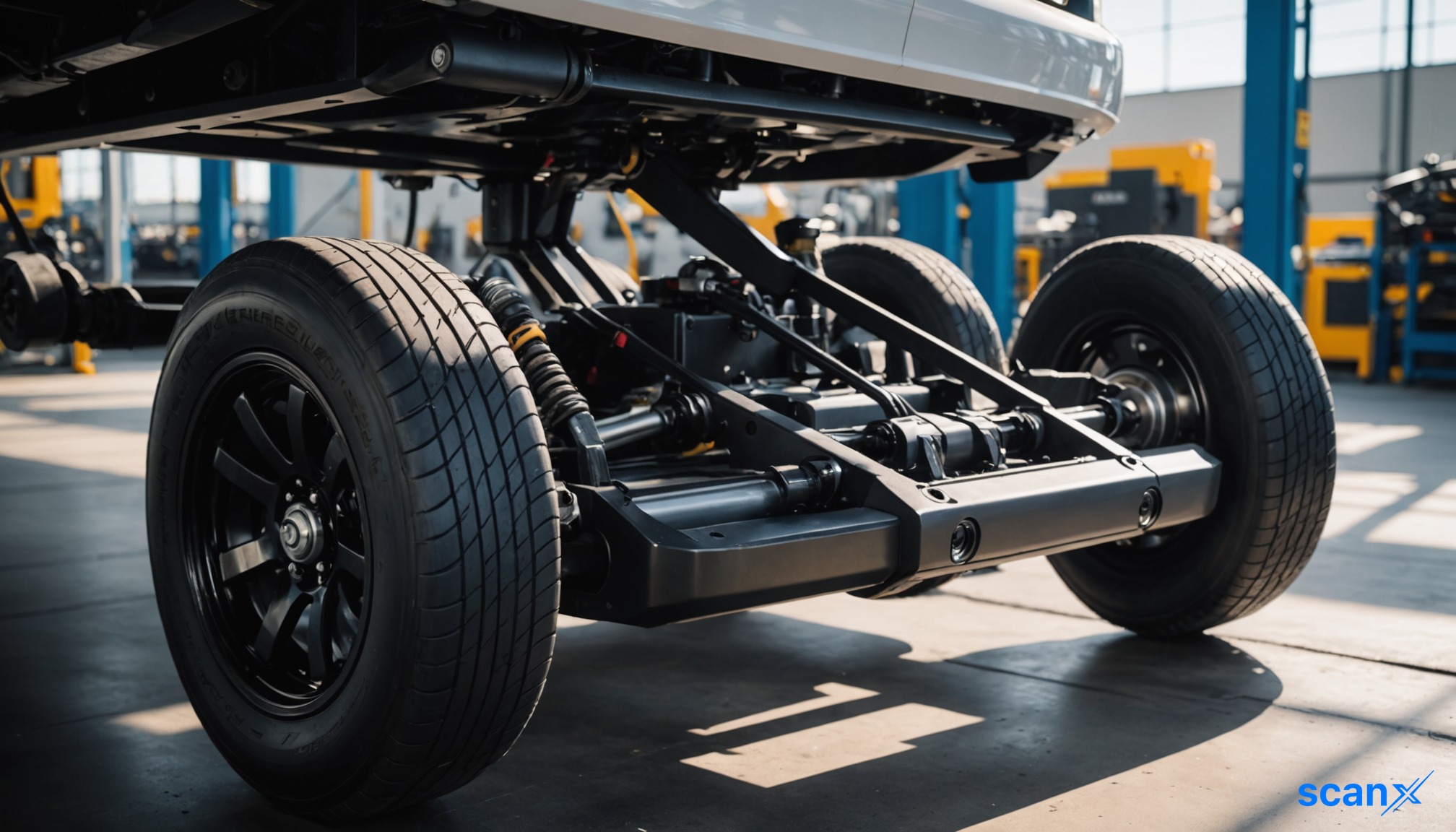
*this image is generated using AI for illustrative purposes only.
Tesla Inc shares climbed 4.43% to $378.50 on Friday following the unveiling of its next-generation Roadster. The vehicle, revealed at a SpaceX test site in McGregor, Texas, features cold-gas thrusters developed with Space Exploration Technologies Corp., prompting analysts to view the integration as a tangible step toward potential corporate consolidation.
However, the strategic reveal raises a critical question for investors: if the collaboration strengthens SpaceX’s technology story, how much of the resulting economic value actually belongs to Tesla? While the demonstration showcased engineering capabilities crossing corporate boundaries, the absence of disclosed commercial arrangements leaves the financial benefit ambiguous.
Analyst warnings on merger economics
Wedbush analyst Dan Ives stated that the Roadster's use of SpaceX propulsion and control hardware strengthens the argument for the two companies operating as a single engineering platform. Ives described the event as "impressive," noting that the hardware sits on a Tesla product, supporting his long-term view of unified operations. In September, Ives predicted an 80% chance that both Elon Musk-led enterprises would merge by 2027.
Future Fund Managing Partner Gary Black warned Tesla investors against hyping a potential merger with SpaceX, arguing that arbitrageurs could erase any shareholder premium. Black stated on X that since any deal would likely be stock-for-stock, the combined entity should trade at the lower stock’s multiple (here Tesla), meaning any premium paid for Tesla with SpaceX stock would be whittled away by arbitrageurs by the time the deal closes. He previously warned that such a merger could reduce Tesla’s valuation by 20%–25%, citing shareholder dilution and a potential conglomerate discount.
Product specifications and production timeline
During the livestreamed event, Tesla demonstrated the Roadster accelerating to 60 mph in under one second and performing aerial flips using integrated thrusters. Musk stated that certain versions can reach a top speed of more than 230 mph. Tesla said the thruster system generates four to five times the force the tires can, which enhances acceleration. The company listed reservation payments of $50,000 for the "Performance" version and $250,000 for the "Thrust" version, which includes acceleration thrusters. An invite-only "Rocket" variant is a single-seat model with a full flight system.
Production is set to begin in 2028, years after the original 2020 delivery target. Reuters reported that the vehicle offers over 300 miles of range, below the 620 miles promised in 2017. Musk has described the Roadster as a "small potato situation," indicating it is not a primary revenue driver. Morningstar analyst Seth Goldstein described the Roadster as Tesla’s new showcase vehicle for advanced engineering, but its niche status and distant production date make it a limited near-term earnings catalyst.
Financial impact and brand value
In a subsequent post, Black estimated that the SpaceX-powered Roadster would contribute just $0.06 per share to Tesla’s 2029 earnings, assuming 3,000 annual deliveries and $100,000 profit per vehicle. That represents approximately 1.1% of the $5.40 consensus adjusted earnings-per-share estimate for 2029. However, he argued that the vehicle’s flying capabilities, acceleration and handling could deliver a much larger "halo effect on the Tesla franchise and brand impact." Black maintained his cautious outlook, citing Tesla’s 230-times 2026 price-to-earnings multiple, downward earnings revisions through 2030 and growing competition in autonomous driving.
Investor Ross Gerber argued that a SpaceX acquisition of Tesla "has become obvious" following the Roadster unveiling, although he dismissed its thruster technology as "just for show." Deepwater Asset Management’s Gene Munster similarly interpreted the demonstration as evidence of Musk’s merger ambitions, stating, "It was an engineering flex with no commercial value beyond embarrassing traditional car makers."
Merger speculation and voting dynamics
The comments coincide with positive market reactions during Friday's pre-market trading, where Tesla shares had already risen 4.79% to $379.80. This follows Thursday's overnight trading where Tesla shares rose 3.44% to $374.92 following the initial unveiling. SpaceX shares gained 2.33% to $152.08.
Barclays analyst Dan Levy previously predicted a merger announcement could occur as early as December 2026. The proposed deal aims to vertically integrate AI technology across both entities. Levy noted that delays into October or early November could challenge approval processes, highlighting that 11% of outstanding votes during Tesla’s 2025 Annual General Meeting were broker non-votes, effectively counted as against votes.
Musk currently holds 19.9% voting power in Tesla, despite expressing a desire to hold 25%. In contrast, SpaceX utilizes a dual-class share structure where each Class B share carries ten times the voting rights of a Class A share. Musk retains approximately 85% of SpaceX’s voting rights following its initial public offering earlier this year. Critics argue that consolidating further voting power could undermine shareholder rights and lead to an erosion of governance standards.
Market reaction and prediction odds
Despite bullish analyst views, prediction markets remain skeptical of a near-term deal. Kalshi bettors assigned a 19% probability to a merger occurring soon, but raised this to 52% for a merger before May 2027 and 71% before 2028. Polymarket data showed a 24% chance of an announcement by the end of December 2026, rising to 63% by December 31, 2027.
| Platform | Merger Probability (By End 2026) | Merger Probability (By End 2027) |
|---|---|---|
| Kalshi | 19% (near-term) | 52% (by May 2027) |
| Polymarket | 24% | 63% |
Stocks reacted positively to the Roadster news during overnight trading on Thursday. This follows a decline in previous sessions where SpaceX shares fell 2.08% to $148.99 and Tesla shares declined 1.05% to $363.31 amid earlier merger rumors.
Precedent for consolidation
This is not the first consolidation within Musk’s corporate empire. In February 2026, SpaceX acquired his artificial intelligence startup xAI. The combined SpaceX-xAI entity was valued at $1.25 trillion post-merger. Musk has previously fueled speculation about a Tesla-SpaceX combination, citing deep collaboration between the companies across multiple areas. Reuters previously reported that Musk acknowledged growing operational overlap between the companies, although neither has announced a merger.
Upcoming earnings and analyst outlook
The Roadster event comes five days before Tesla reports third-quarter earnings after the market closes on October 21. Analysts expect earnings per share of 43 cents and revenue of $27.90 billion. Goldman Sachs said in a note this month that updates on Full Self-Driving, robotaxi and Optimus are likely to matter more to the stock than earnings per share. Investors should watch Tesla’s automotive margins, delivery trends and forward guidance for evidence of near-term progress, as sustained gains will depend on translating technology ambitions into financial performance.
What the numbers show
The divergence between Musk’s $100 trillion long-term valuation target for SpaceX and the current market capitalization highlights extreme growth expectations. While Baron cites Starlink’s potential at $15 trillion, Musk’s inclusion of orbital data centers suggests he views infrastructure beyond connectivity as the primary value driver. Meanwhile, the low probability assigned by prediction markets (19-24% for 2026) indicates investors view the complex voting structures and potential regulatory scrutiny as substantial barriers to a swift merger, despite the financial feasibility suggested by the previous SpaceX-xAI consolidation.
Crucially, the lack of disclosed licensing fees or intellectual-property ownership terms for the Roadster's thruster system creates uncertainty regarding value accrual. A shared engineering platform is not a merger; without clear commercial arrangements, investors cannot reliably determine whether Tesla captures the economic upside or if the collaboration primarily benefits SpaceX's broader technological narrative. Gary Black’s analysis adds a layer of skepticism regarding shareholder value, suggesting that even if a merger occurs, the structural mechanics of a stock-for-stock deal may negate immediate gains for Tesla holders due to multiple compression.

Will Tesla disclose specific licensing fees or IP ownership terms for the SpaceX thruster system before the 2028 production launch to clarify value accrual?
How might Tesla's Q3 earnings guidance on automotive margins and FSD progress influence investor sentiment regarding the merger speculation?
What regulatory hurdles could arise from merging SpaceX's dual-class voting structure with Tesla's current governance model given Musk's 19.9% voting power?







 Access Market Heat-map & Insights
 Create, Save & Share your Screener
 Use 200+ Screening Filters





