

Balu Forge acquires 18-ton ring rolling capacity for defence, aerospace


- Balu Forge acquires 18-ton ring rolling capacity for defence and aerospace sectors
- New line produces forged rings up to 6.7 metres in outer diameter
- Maximum single-product weight capability increases to 18,000 kg
- Production trials scheduled before end of 2026 at Belgaum campus

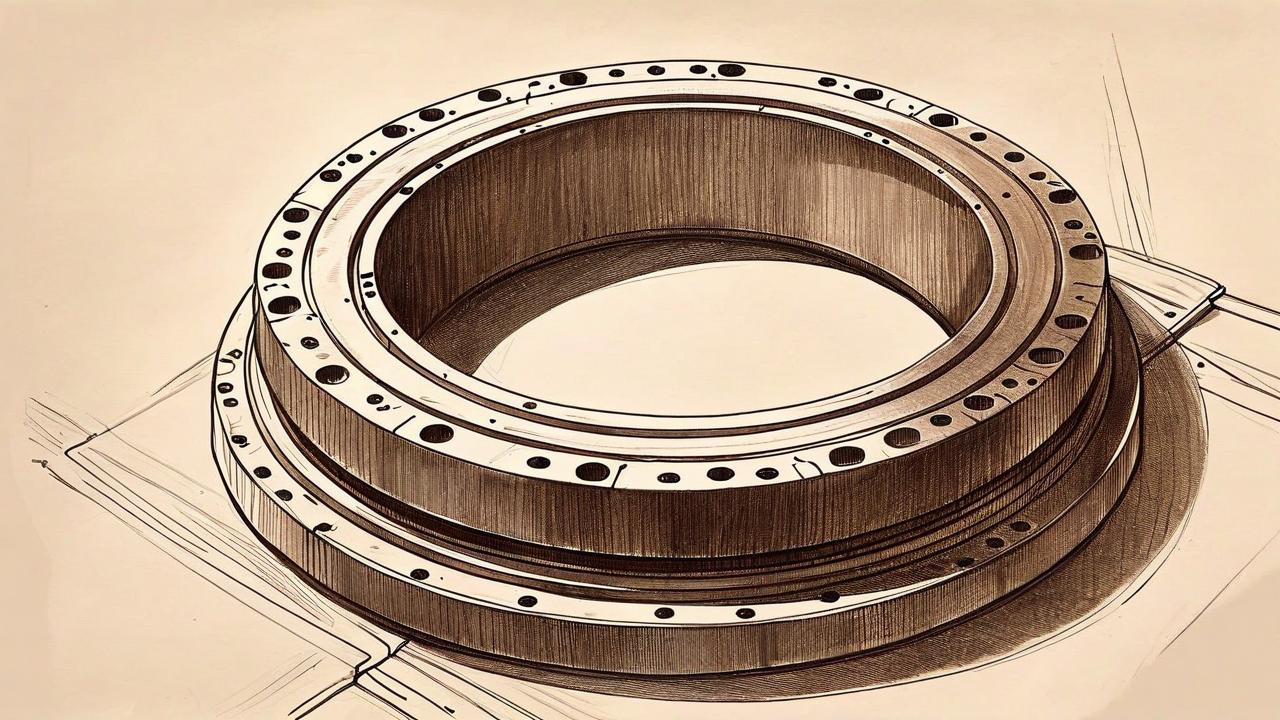

*this image is generated using AI for illustrative purposes only.
Balu Forge Industries has acquired a state-of-the-art ring rolling production line capable of producing forged rings with an outer diameter of up to 6.7 metres. The new equipment adds 18,000 kg (18 metric tons) of specialized heavy ring rolling capacity to the company’s operations.
The acquisition positions the Mumbai-based precision engineering firm to serve high-growth sectors including defence, aerospace, wind energy, nuclear power, oil and gas, mining, heavy engineering, and marine industries. Production trials for the new line are scheduled to commence before the end of 2026.
Strategic Capacity Expansion
The new production line is equipped to handle maximum ring weights of up to 18,000 kgs per product. This expansion allows Balu Forge to manufacture foundational components that were previously reliant on imports or limited domestic capabilities.
Trimaan Chandock, Executive Director, stated that the machine empowers the company to forge components of significant scale and complexity. He noted the move unlocks new frontiers in renewable energy, defence, and heavy industries.
Sector Applications
The expanded capacity supports diverse applications across critical infrastructure and industrial sectors:
- Wind Energy: Manufacturing mega-scale tower flanges, yaw rings, pitch bearings, and slewing rings for onshore and offshore wind turbines.
- Aerospace and Defence: Forging high-integrity structural rings, rocket motor casings, engine components, missile silos, jet engine casings, compressor drums, turbine shrouds, and bearing rings for actuation systems.
- Space Launch Vehicles: Producing high-strength structural rings, adapter flanges, and rocket motor casing segments.
- Nuclear and Power Generation: Creating seamless retaining rings, large generator components, and pressure vessel rings meeting stringent safety standards.
- Oil and Gas: Delivering subsea connectors, blowout preventers (BOPs), large industrial valves, and pipeline flanges for extreme deep-sea pressures.
- Heavy Machinery, Mining, and Marine: Supplying massive gear blanks, bearing races, excavator slewing rings, and marine propulsion shaft components.
- Heavy Railway & Mining Transporters: Manufacturing components for custom heavy-haul railway machinery, massive cranes, and specialized industrial tunnel-boring rail systems.
What the Numbers Show
The acquisition represents a significant shift in scale for Balu Forge. While the company’s existing portfolio ranges from 1 kg to 1,500 kg products up to 3 metres in length, this new line increases the maximum single-product weight capability by more than twelve times to 18,000 kg. This divergence highlights a strategic pivot towards ultra-large-scale manufacturing, targeting sectors where component size and metallurgical integrity are critical barriers to entry.
Operational Timeline
The ring rolling production line will begin production trials before the end of 2026. The facility is located within the company’s advanced manufacturing campus in Belgaum, Karnataka, which spans over 46 acres and includes hydraulic hammers, forging presses, in-house tool rooms, metallurgical labs, and CNC machining units.
Historical Stock Returns for Balu Forge Industries
| 1 Day | 5 Days | 1 Month | 6 Months | 1 Year | 5 Years |
|---|---|---|---|---|---|
| +0.89% | -1.79% | -3.51% | +1.17% | -23.31% | +74.48% |

How will the 18-month gap until production trials in late 2026 impact Balu Forge's ability to capture immediate market share from current importers?
What specific supply chain partnerships or raw material sourcing strategies has Balu Forge established to support the metallurgical requirements of 18-ton forged rings?
How does this capacity expansion align with India's broader 'Make in India' initiatives for defence and renewable energy self-reliance, and are there pending government contracts tied to this capability?
 20
20





 Access 50+ Readymade Screeners
  Use 200+ Custom Filters
  Get Full Market Insights





