AMD stock rises 3% as AI infrastructure spending signals support chip sector

scanx
Reviewed by
Anirudha BScanX News Team
Key Highlights

Advanced Micro Devices shares rose 3.04% to $488.73 on Wednesday, driven by positive AI infrastructure spending signals from CoreWeave and Super Micro Computer. While the stock has climbed over 179% in the past year, it currently trades at a P/E ratio of 121, indicating high sensitivity to growth expectations. Analysts maintain a Buy consensus with an average target of $591.39.


powered bylight_fuzz_icon
48108118

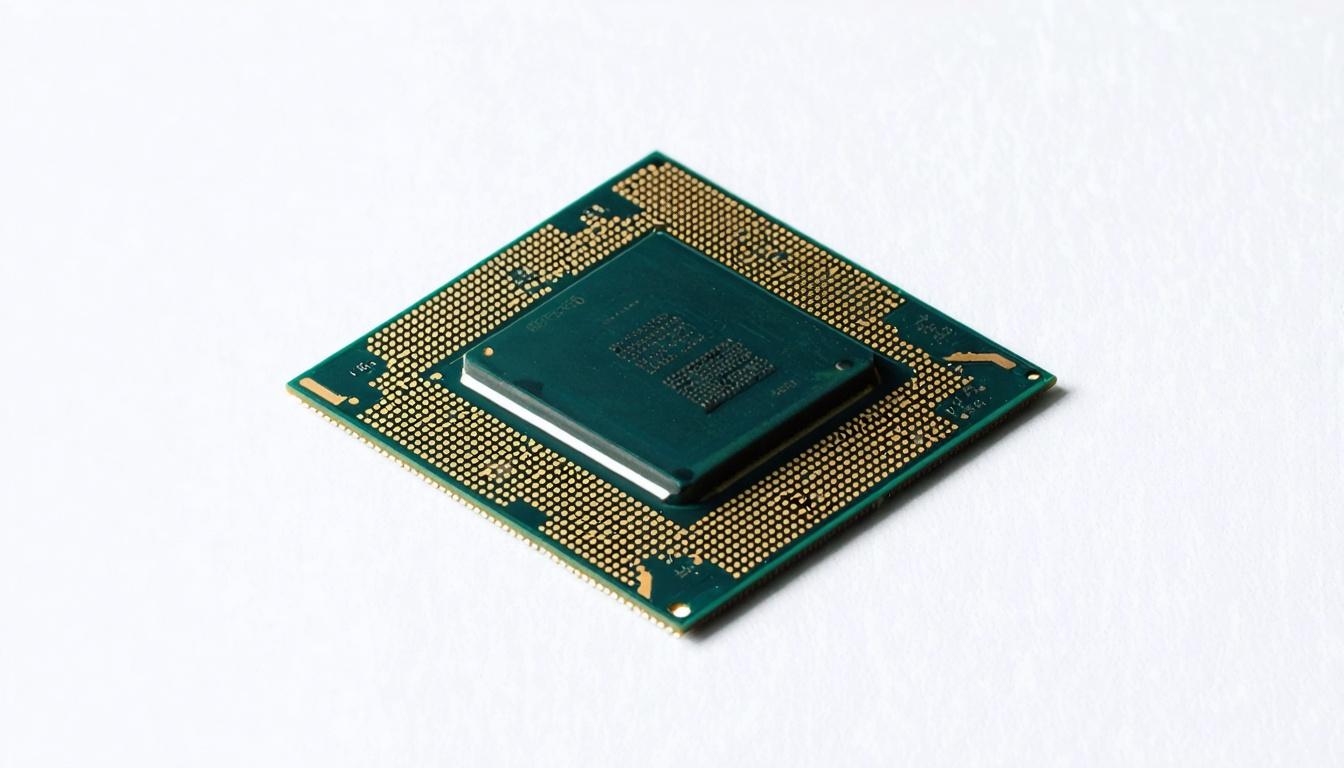
*this image is generated using AI for illustrative purposes only.

Advanced Micro Devices Inc. (NASDAQ: AMD) shares rose 3.04% to $488.73 on Wednesday, outperforming broader market indices as enthusiasm for artificial intelligence infrastructure spending continued to drive semiconductor stocks. The Nasdaq Composite rose 0.71%, while the S&P 500 gained 0.19% during the same period.

The upward movement in AMD stock was supported by fresh demand signals from key industry players. CoreWeave Inc. (NASDAQ: CRWV) and Super Micro Computer Inc. (NASDAQ: SMCI) provided positive read-throughs for AI chip suppliers. Additionally, Intel Corporation’s (NASDAQ: INTC) move to secure $20 billion in fresh capital reinforced the view that AI infrastructure spending remains robust.

Technical Position

AMD remains in a long-term uptrend but faces short-term technical pressure. The stock traded 15.4% above its 100-day simple moving average (SMA) and 51.7% above its 200-day SMA. However, it remained below shorter-term averages, sitting 1.3% below the 20-day SMA and 4.6% below the 50-day SMA.

The relative strength index (RSI) stood at 48.03, signaling neutral momentum. A bearish short-term signal is present as the 20-day SMA remains below the 50-day SMA. Key resistance sits near $530, while support is around $460. A move back above the short-term moving averages could strengthen the bullish setup.

Analyst Outlook

AMD carries a Buy consensus rating with an average price forecast of $591.39. Recent analyst actions reflect varied perspectives on the stock’s valuation and growth potential:

  • Argus Research: Raised price forecast to $625; maintained Buy rating.
  • Rosenblatt: Raised forecast to $700; maintained Buy rating.
  • JPMorgan: Increased forecast to $550; maintained Neutral rating.

What the Numbers Show

A divergence exists between AMD’s growth metrics and its valuation multiples. The company scores strongly on momentum (97.6), quality (93.92), and growth (94.02) in the Benzinga Edge rankings. However, its value score is just 4.65, reflecting a premium valuation. Trading at a price-to-earnings ratio of about 121 times, the stock is highly sensitive to changes in growth expectations, suggesting that current prices assume sustained high-growth execution in the AI sector.

Performance Context

Over the past 12 months, AMD stock has climbed more than 179%. This long-term performance underscores the market’s confidence in the company’s position within the expanding AI infrastructure landscape, despite short-term technical consolidation.

Disclaimer: This article is AI-generated using data from ViewTrade. ScanX is not liable for any inaccuracies.

How might Intel's $20 billion capital raise impact AMD's competitive positioning in the AI server market?

Could AMD's premium P/E ratio of 121x lead to increased volatility if AI infrastructure spending growth slows?

What specific catalysts are needed for AMD to break through the $530 resistance level and reverse its short-term bearish technical signals?

like19
dislike

AMD Bear ETFs Rally on Stock Slide Despite Earnings Beat

scanx
Reviewed by
Ritika DScanX News Team
Key Highlights

Advanced Micro Devices Inc. shares fell approximately 10% despite beating Q2 earnings estimates with $11.54 billion in revenue and $1.66 EPS. Inverse ETFs DAMD and AMDD surged 15% and 10% respectively, reflecting investor concern over doubled capital expenditures and delayed AI catalysts.

powered bylight_fuzz_icon
47506022

*this image is generated using AI for illustrative purposes only.

Inverse exchange-traded funds (ETFs) tracking Advanced Micro Devices Inc. (NASDAQ: AMD) rallied sharply on Wednesday, driven by a post-earnings decline in the chipmaker’s stock price. The Defiance Daily Target 2X Short AMD ETF (NYSE: DAMD) surged approximately 15%, making it one of the top-performing leveraged ETFs of the day. Simultaneously, the Direxion Daily AMD Bear 1X Shares (NASDAQ: AMDD) rose about 10%. These gains occurred as AMD shares tumbled roughly 10%, illustrating how inverse single-stock products can quickly capitalize on downside moves in high-beta technology stocks.

The market reaction came despite AMD reporting second-quarter results that exceeded Wall Street expectations. The company posted revenue of $11.54 billion and adjusted earnings per share of $1.66. Additionally, AMD provided third-quarter revenue guidance of about $13 billion, which also topped analyst estimates. The divergence between the strong financial report and the negative stock performance highlights the sensitivity of AI-related valuations to forward-looking catalysts rather than just historical performance.

Investor sentiment shifted negatively due to concerns regarding the near-term impact of AMD’s upcoming Helios AI platform and a significant increase in spending. Capital expenditures for the quarter reached $808 million, more than double the year-ago level. Market participants appeared to have priced in an even stronger outlook for artificial intelligence, leading to disappointment over the lack of immediate catalysts from the Helios platform.

What the Numbers Show

The data reveals a disconnect between operational performance and market valuation expectations. While revenue and earnings beats typically drive positive stock reactions, the sharp sell-off suggests that investors are prioritizing future growth trajectories and cost structures over current profitability. The doubling of capital expenditures to $808 million signals aggressive investment in infrastructure, which may weigh on near-term margins or free cash flow, prompting bearish positioning through leveraged ETFs.

Metric Value
Q2 Revenue $11.54 billion
Adjusted EPS $1.66 per share
Q3 Revenue Guidance About $13 billion
Capital Expenditures $808 million
DAMD Gain About 15%
AMDD Gain Around 10%

Analysts offered mixed perspectives on the selloff. Bank of America analyst Vivek Arya advised clients to "ignore the quarterly noise," arguing that the market reaction was short-sighted. Arya noted that Helios shipments are likely to accelerate in the fourth quarter and throughout 2027, suggesting that the long-term AI growth story remains intact despite the immediate volatility.

The trading activity underscores the growing role of single-stock inverse ETFs as tactical instruments for traders navigating earnings events. With high expectations for AI leaders, even positive earnings reports can trigger sharp reversals if they fail to meet elevated consensus forecasts. Investors should note that products like DAMD and AMDD are designed to track daily inverse performance, making them suitable primarily for short-term trading strategies rather than long-term investment positions.

Disclaimer: This article is AI-generated using data from ViewTrade. ScanX is not liable for any inaccuracies.

How might AMD's doubled capital expenditures impact its free cash flow and margin compression in the near term compared to competitors like NVIDIA?

What specific performance metrics or shipment volumes from the Helios AI platform will be required in Q4 to reverse the current bearish sentiment?

Could the sharp rise in inverse ETF trading volume signal a broader shift in institutional risk appetite toward high-beta AI stocks despite strong earnings?

like15
dislike

More News on Advanced Micro Devices Inc