

Global oil demand rebounds as Hormuz flows resume


The IEA reports a recovery in global oil demand from May lows, with June supply reaching 98.8 million barrels per day, though output remains below pre-war levels. The agency lowered its 2026 demand growth forecast to 1.0 million barrels per day amid ongoing Iran conflict risks. The IMF projects a gradual reopening of the Strait of Hormuz by mid-July and highlights economic resilience driven by AI advancements, forecasting global growth of 3% in 2026.


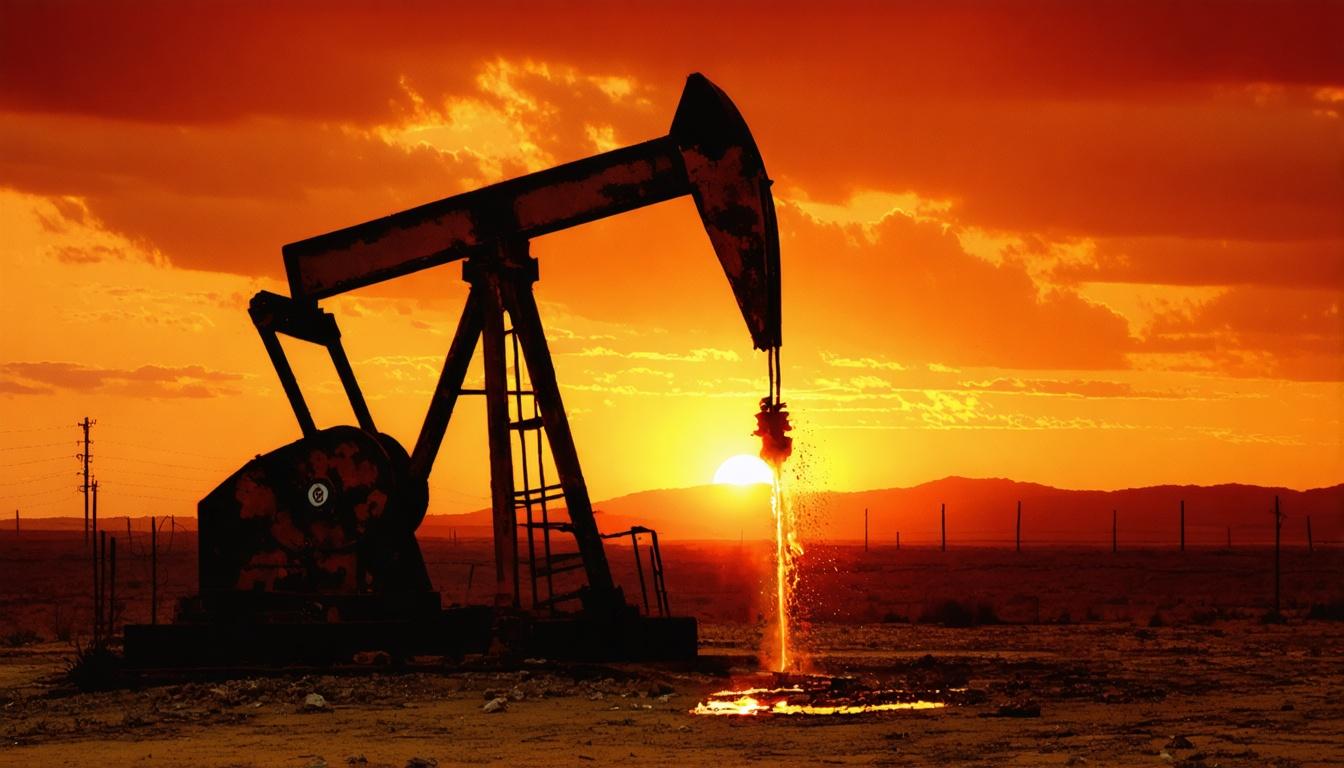
*this image is generated using AI for illustrative purposes only.
Global oil demand has started to recover as shipments through the Strait of Hormuz partially resumed in June, though renewed fighting between the US and Iran has added uncertainty to the outlook, the International Energy Agency (IEA) said. Oil consumption has rebounded from a low of 97.9 million barrels a day in May, with the agency stating a recovery "is underway." By October, demand is projected to rise by more than 8 million barrels a day from the May low, placing it above 2025 levels for the first time since February.
IEA Revises Demand and Supply Forecasts
The IEA reported that global oil supply rebounded by a sharp 4.1 million barrels a day to 98.8 million barrels a day in June. Despite this recovery, world output remains 9.4 million barrels a day below pre-war levels. The agency cut its forecast for the year’s average oil demand growth to 1.0 million barrels a day, down from a previous estimate of around 1.1 million barrels a day due to the Iran conflict.
| Metric | Details |
|---|---|
| June Oil Supply | 98.8 million barrels per day |
| May Oil Demand Low | 97.9 million barrels per day |
| 2026 Demand Growth Forecast | 1.0 million barrels per day |
Geopolitical Risks and Economic Resilience
The International Monetary Fund (IMF) expects the reopening of the Strait of Hormuz to begin in mid-July, with conditions broadly returning to the pre-war state of affairs by March 2027. Oil flows have reached around 14 million barrels a day, including volumes bypassing the Strait, which is still below pre-war levels of 20 million barrels per day. The IMF noted that the global economy has weathered the war in the Middle East "better than feared," supported by inventory drawdowns, expanded production outside the Persian Gulf, and renewable energy adoption.
AI and Growth Outlook
Global growth in Q1 slowed to 3.0% on a quarter-over-quarter annualized basis, better than the 2.7% forecast by the IMF in April. The IMF projects global growth of 3% in 2026 and 3.4% in 2027. The fund attributed the economic resilience to an "ongoing positive technology shock" from advances in artificial intelligence (AI), which has provided a counterweight to war-related weakness. US GDP increased at an annualized rate of 2.1% in Q1 2026, supported by technology-related business investment.

How might a sustained escalation in US-Iran military conflict alter the IEA's current demand recovery trajectory?
Can non-Persian Gulf producers maintain expanded output levels to offset the Strait of Hormuz bottleneck until 2027?
Will the rapid adoption of AI-driven efficiency measures accelerate the peak in global oil demand despite current consumption rebounds?
 17
17







 Access 50+ Readymade Screeners
  Use 200+ Custom Filters
  Get Full Market Insights





