

Copper surges to record highs as US tariff fears tighten supply


Copper prices reach record levels as traders front-run potential U.S. import tariffs starting at 15% in 2027. Supply constraints from sulfur shortages and Codelco's expansion pause tighten the market. Glencore Plc leverages the rally with an 86% EBITDA jump to $10.1 billion, aiming for 1 million tons of annual production by 2028.

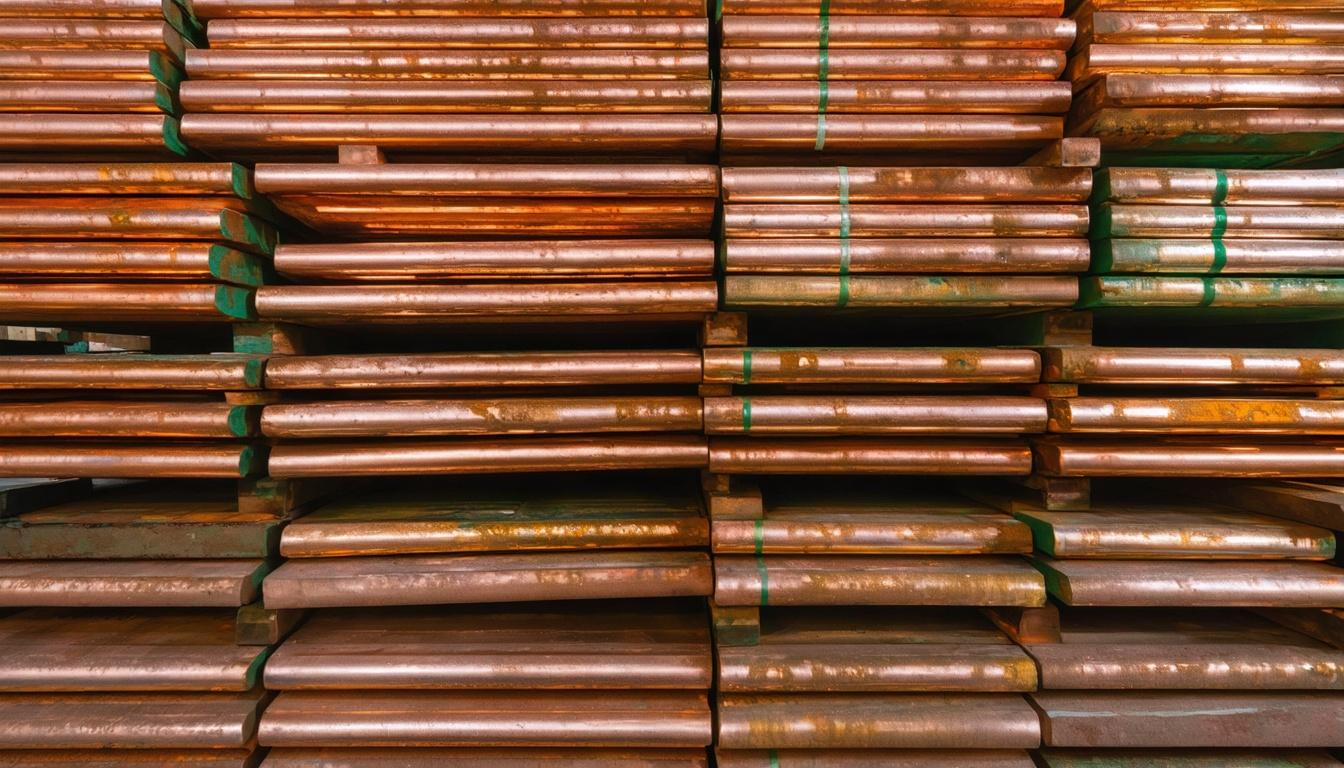

*this image is generated using AI for illustrative purposes only.
Copper prices have surged to new all-time highs in New York as traders accelerate shipments amid fears of impending import tariffs. The COMEX contract for September delivery closed at $6.7180 per pound, while the London market moved above $14,000 a ton. The spread between the two markets remains above $300, highlighting the magnet effect of the U.S. market on global flows.
The price rally is driven by uncertainty over U.S. trade policy. The Commerce Department missed a June deadline to recommend whether to impose phased duties on refined copper imports. These duties could begin at 15% in 2027 and rise to 30% in 2028. Despite the missed deadline, traders have acted on the prospect, with more than 200,000 tons arriving at U.S. ports in July, according to Bloomberg.
Supply Constraints Tighten Market
Supply disruptions are compounding the demand surge. The closure of the Strait of Hormuz cut seaborne sulfur shipments from the Gulf, while China’s export ban further restricted access. Together, these disruptions have removed roughly a quarter of global acid supply. This shortage cripples the solvent extraction-electrowinning (SX-EW) process, which accounts for more than 15% of world copper output. Operations in Chile and the Democratic Republic of Congo face increasingly tight inventory positions.
Chilean state producer Codelco has added to concerns by pausing the Andes Norte expansion at El Teniente following seismic findings. These operational halts reduce near-term output expectations from one of the world’s largest producers.
China’s Refining Dominance
The market dynamics highlight a strategic imbalance in global processing capacity. China mines only about 8% of global copper but controls about 60% of smelting and refining capacity. Phillip Mackey, a Canadian Mining Hall of Fame alumnus, noted that China produces about 12 to 13 million tons of refined metal annually. "We’re mining the copper and then shipping it to China to be smelted and refined and then bringing it back," Mackey told The Northern Miner. "It doesn’t make sense in the long term."
Mackey attributed China’s advantage to state-backed financing and industrial scale built over 25 years. In contrast, the U.S. smelting fleet shrank from about 12 facilities to two due to high capital costs and environmental permitting challenges.
Glencore Reports Strong Growth
Glencore Plc is capitalizing on these conditions with strong financial performance. The firm reported an 86% increase in adjusted EBITDA to $10.1 billion for the half-year period. Copper output rose by 15%, supporting the company’s target of reaching 1 million tons of annualized copper production by the end of 2028. Glencore is also pursuing a secondary listing on the Australian Stock Exchange (ASX) in October to access Australia’s pension market.
| Metric | Value |
|---|---|
| COMEX Copper Price | $6.7180 per pound |
| LME Copper Price | Above $14,000 per ton |
| Glencore Adjusted EBITDA | $10.1 billion |
| Glencore EBITDA Growth | 86% |
| Global SX-EW Output Share | More than 15% |
What the Numbers Show
The divergence between mining and refining capacity creates a structural vulnerability for Western markets. While copper prices rise, the lack of domestic smelting infrastructure in the U.S. means that even mined metal often relies on foreign processing. This dependency, combined with supply shocks in sulfur and acid, suggests that price volatility may persist until domestic processing capacity expands or trade policies stabilize.

How might the potential imposition of 15-30% copper import tariffs accelerate U.S. domestic smelting investments despite high capital and permitting hurdles?
What impact will the sustained shortage of sulfur and acid have on the viability of SX-EW operations in Chile and the DRC over the next 12 months?
Could Glencore's planned ASX listing signal a broader trend of mining majors diversifying capital sources to fund expansion amid geopolitical trade uncertainties?
 20
20





 Access Market Heat-map & Insights
  Create, Save & Share your Screener
  Use 200+ Screening Filters





