

NVIDIA Vera Rubin platform delivers 7 exaflops for scientific AI


NVIDIA announced the NVIDIA Vera Rubin platform at ISC High Performance 2026, designed to deliver world-class supercomputers for science by combining native double-precision (FP64) performance, NVIDIA CUDA-X libraries and the full-stack capabilities of the NVIDIA AI platform. The Vera Rubin system provides more than 7 exaflops of AI for science, 5 petaflops of native FP64 support and extreme memory bandwidth with up to 144 GPUs per rack. Leading supercomputing centers like the Leibniz Supercomputing Centre and Los Alamos National Laboratory are adopting the platform for next-generation systems, with global manufacturers making NVIDIA Vera Rubin NVL4-based systems available in Q4.


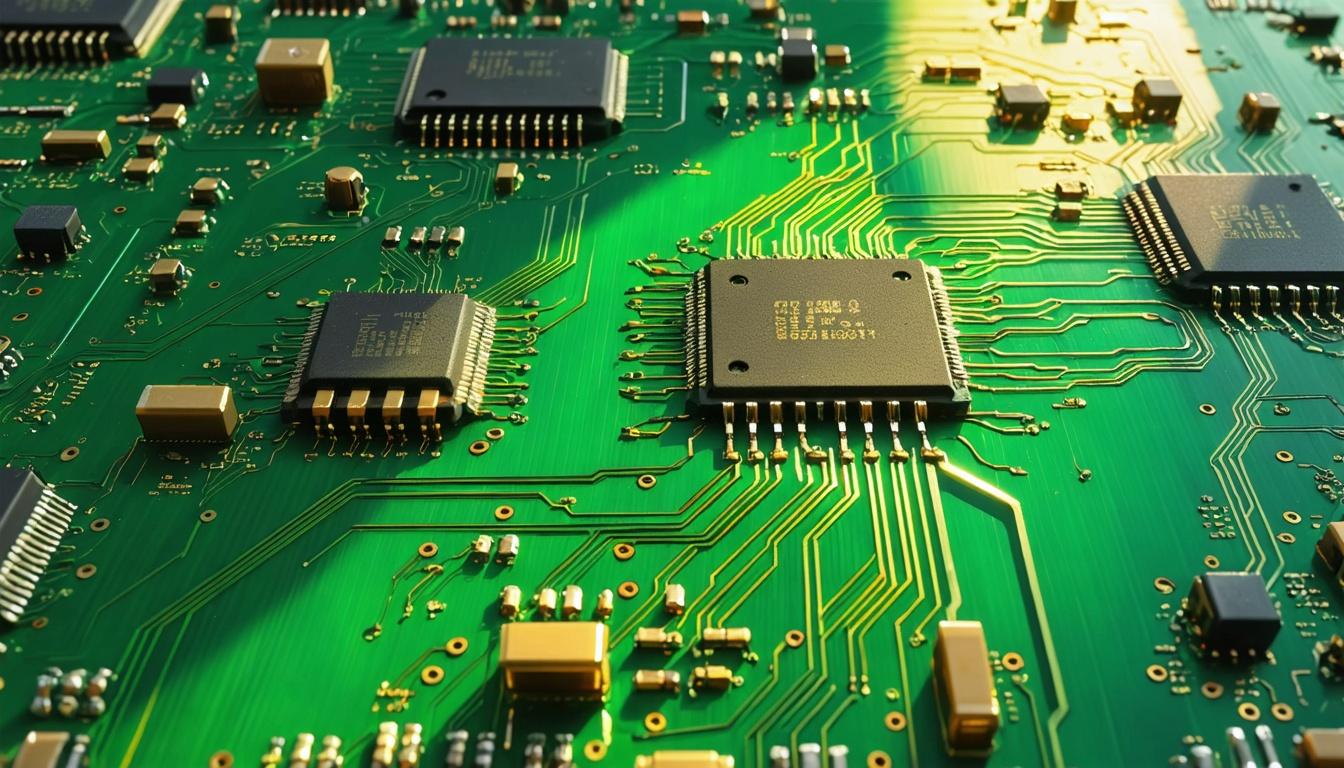
*this image is generated using AI for illustrative purposes only.
NVIDIA announced the NVIDIA Vera Rubin platform at ISC High Performance 2026, designed to deliver world-class supercomputers for science by combining native double-precision (FP64) performance, NVIDIA CUDA-X libraries and the full-stack capabilities of the NVIDIA AI platform. The platform is built to unite high-precision simulation, AI and data analytics, specifically targeting the era of agents to advance scientific discovery in fields such as climate modeling, computational fluid dynamics, quantum chemistry and energy exploration.
The Vera Rubin system provides more than 7 exaflops of AI for science, 5 petaflops of native FP64 support and extreme memory bandwidth with up to 144 GPUs per rack. This configuration allows the system to deliver performance on par with the TOP500 list of the world’s most powerful supercomputers, enabling research centers and industrial enterprises to run larger models, improve fidelity and shorten time to discovery.
Platform Architecture
The NVIDIA Vera Rubin platform combines NVIDIA Rubin GPUs and NVIDIA Vera CPUs connected via high-speed NVIDIA NVLink-C2C, NVIDIA ConnectX-9 SuperNICs and NVIDIA BlueField-4 DPUs in a direct liquid-cooled architecture. For scientific computing, the platform provides native FP64 capabilities to accelerate simulations requiring the highest accuracy, alongside the AI performance needed for surrogate models, scientific foundation models and AI-assisted analysis.
Global Adoption and Systems
Leading supercomputing centers are adopting the platform to build next-generation systems. The Leibniz Supercomputing Centre (LRZ) will utilize the platform for its Blue Lion system, scheduled to come online in 2027, delivering approximately 30x the computing power of LRZ’s current system. The National Energy Research Scientific Computing Center will deploy Doudna, a Dell Technologies system powered by NVIDIA Vera Rubin, for large-scale HPC workloads and AI training. Los Alamos National Laboratory has selected NVIDIA Vera Rubin for its Mission, Vision and Veritas systems, with Veritas specifically designed for agents to advance scientific discovery.
Manufacturer Availability
Global system manufacturers including Bull, Dell Technologies, GIGABYTE, HPE and Supermicro are bringing NVIDIA Vera Rubin NVL4 to market through direct liquid-cooled AI and HPC racks. These systems are designed to help research institutions, national labs and enterprises deploy rack-scale accelerated computing. NVIDIA Vera Rubin NVL4-based systems are expected to be available from global system manufacturers in Q4 this year.
| Metric | Specification |
|---|---|
| AI Performance | More than 7 exaflops |
| FP64 Support | 5 petaflops |
| GPUs per Rack | Up to 144 |
| Cooling Architecture | Direct liquid-cooled |
| Availability | Q4 this year |

How will the availability of the Vera Rubin platform in Q4 this year impact the competitive landscape of the supercomputing market?
What are the potential challenges in integrating the Vera Rubin platform into existing scientific computing workflows?
How might the platform's capabilities accelerate breakthroughs in quantum chemistry and energy exploration?
 17
17






 Create Custom Screeners
  Access 200+ Pre-built Filters
  Use 50+ Readymade Screener





