Nokia, Nvidia test AI-RAN with eight global telecom operators

scanx
Reviewed by
Ritika DScanX News Team
Key Highlights
  • Nokia and Nvidia are testing AI-RAN with eight global operators including A1 Group and stc
  • Trials span Europe, Asia-Pacific, and the Middle East using Nvidia’s Aerial RAN Computer
  • Platform shows more than 20% spectral-efficiency gains with targets for 2x efficiency over time
  • Pilots begin later this year with commercial availability expected in 2027
powered bylight_fuzz_icon
51112311

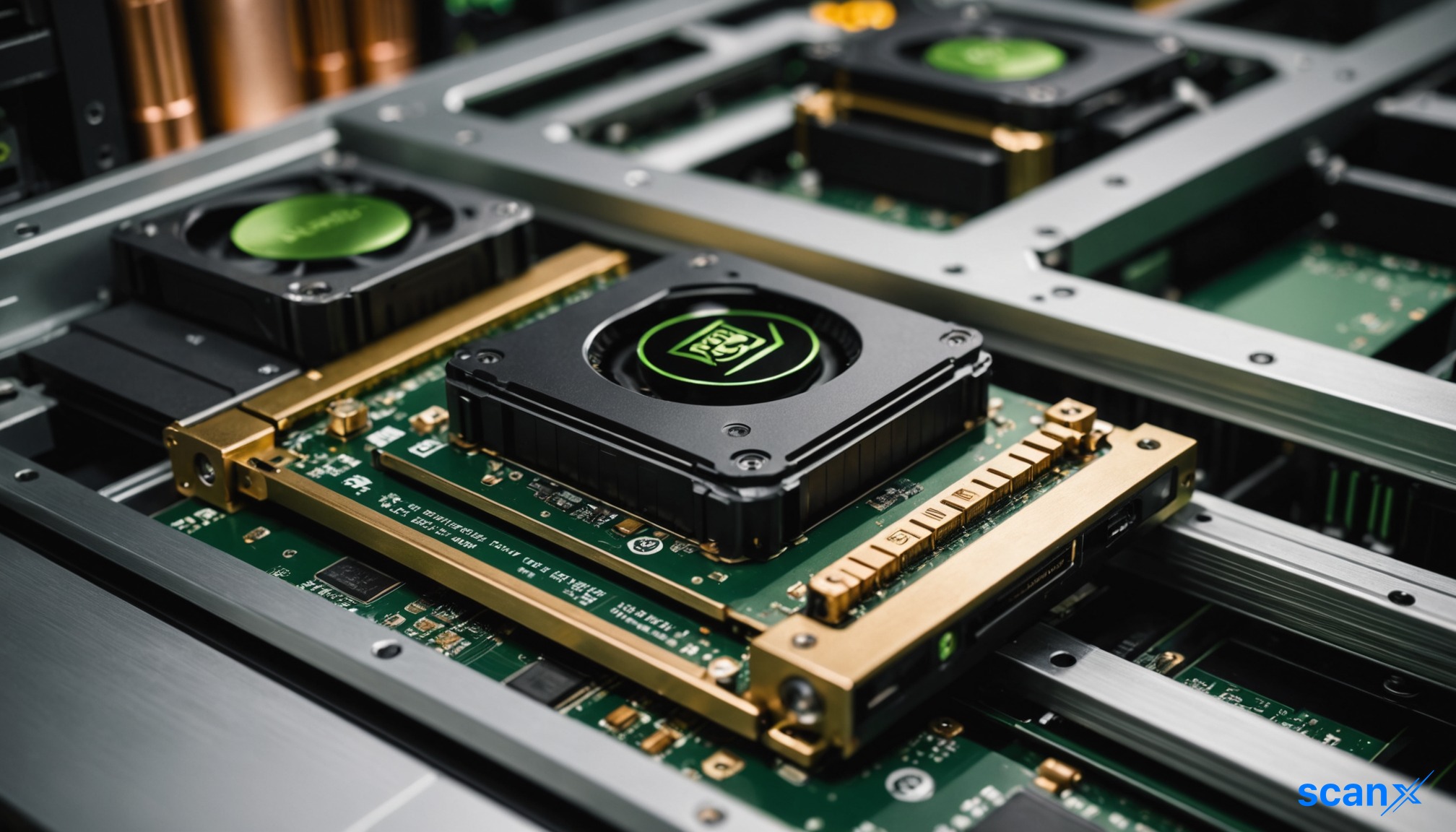
*this image is generated using AI for illustrative purposes only.

Nokia Corp (NYSE: NOK) and Nvidia Corp (NASDAQ: NVDA) are advancing AI-native radio access network trials with eight global telecom operators. The partnership aims to integrate accelerated computing into wireless infrastructure.

AI Moves Into RAN

Nokia announced Wednesday that A1 Group, Chunghwa Telecom, du, e&, Mobily, stc, TPG Telecom, and Zain Saudi are conducting proofs of concept and live field trials. These trials utilize Nokia’s AI-native radio access network platform powered by Nvidia’s Aerial RAN Computer across Europe, Asia-Pacific, and the Middle East.

The technology uses AI to improve wireless network efficiency. Nokia reports its AI-RAN platform has demonstrated more than 20% spectral-efficiency gains. Advanced AI models target more than 2x efficiency over time. Higher spectral efficiency allows operators to move more data through existing spectrum without adding hardware.

Operator Region Status
A1 Group Europe Advancing trials
Chunghwa Telecom Asia-Pacific Advancing trials
du Middle East Advancing trials
e& Middle East Advancing trials
Mobily Middle East Advancing trials
stc Middle East Advancing trials
TPG Telecom Asia-Pacific Advancing trials
Zain Saudi Middle East Advancing trials

Nvidia CEO Jensen Huang described the radio access network as "the next AI infrastructure." He framed the shift as moving from using AI to optimize networks toward making the network itself an AI computing platform.

Nokia Wants AI at the Edge

Nokia expects its AI-native RAN platform pilots to begin later this year. The company targets commercial availability in 2027. Nokia views this technology as a pathway from 5G and 5G-Advanced toward AI-native 6G.

The strategy turns Nokia’s existing network footprint into a software-driven growth opportunity by combining anyRAN software with Nvidia accelerated computing to run AI models at radio-network timescales.

What the Numbers Show

The disclosed efficiency metrics highlight a divergence between current performance and long-term targets. While the platform has already demonstrated more than 20% spectral-efficiency gains, the advanced AI models aim for more than 2x (or 100%+) efficiency over time. This gap suggests the initial commercial value proposition relies on immediate capacity gains, while the broader strategic shift toward making the network an AI computing platform depends on achieving these higher efficiency thresholds in future deployments.

Nvidia’s AI Footprint Expands

Nvidia has built its AI dominance around data-center computing. AI-RAN opens another potential layer of demand within the telecommunications network. Nokia provides radio expertise and operator relationships, while Nvidia supplies accelerated computing and AI software.

The commercial opportunity remains developing. Operator trials must demonstrate that additional computing produces enough network capacity and economic value to justify large-scale deployment. As AI workloads spread from centralized data centers to the network edge, Nokia positions its radio business within Nvidia’s expanding AI infrastructure ecosystem.

Disclaimer: This article is AI-generated using data from ViewTrade. ScanX is not liable for any inaccuracies.

How might the 2027 commercial availability timeline for AI-native RAN impact the competitive landscape between Nokia and traditional infrastructure rivals like Ericsson?

What specific economic thresholds must operators meet to justify the capital expenditure of integrating Nvidia's accelerated computing into existing radio access networks?

Could the shift toward AI-native RAN accelerate the transition to 6G standards, or will it primarily serve as an optimization layer for 5G-Advanced deployments?

like16
dislike

NVIDIA CEO says AI spending flywheel is accelerating rapidly

scanx
Reviewed by
Anirudha BScanX News Team
Key Highlights
  • Jensen Huang states AI factory ROI is roughly one year with $50B-$60B build costs
  • GPU rental prices for Grace Blackwell systems rose from $5 to $16 per hour
  • Token generation rate increased 25-fold in less than a year
  • Open models now account for nearly 70% of generated tokens, up from 30%
  • Testing is expected to become a third major category of AI infrastructure demand
powered bylight_fuzz_icon
51098467

*this image is generated using AI for illustrative purposes only.

NVIDIA Corp. (NASDAQ: NVDA) CEO Jensen Huang stated that demand for artificial intelligence computing is accelerating as companies race to build new infrastructure. He described the current cycle as a flywheel that is "really, really flying."

Speaking with CNBC’s Jim Cramer at Dreamforce in San Francisco, Huang highlighted the rapid construction of NVIDIA-powered "AI factories" over the past six months.

AI Factory Economics

Huang estimated that a 1-gigawatt NVIDIA AI factory costs about $50 billion to $60 billion to build. He said this infrastructure can generate about $50 billion in annual rental revenue. This implies a return on invested capital of roughly one year under current market conditions.

He noted that NVIDIA infrastructure can remain useful for more than five or six years. Meanwhile, AI usage continues to climb. The rate of token generation has increased 25-fold in less than a year. Open models now account for nearly 70% of generated tokens, up from about 30%.

New Demand Drivers

Huang pushed back against concerns that AI safety efforts could derail industry growth. He said thousands of companies worldwide are working on AI safety, security and guardrails.

He expects testing to become a third major category of AI infrastructure alongside training and inference. Large testing environments will require additional data centers, creating another source of compute demand.

Rental Price Surge

Huang pointed to rising rental prices as evidence of tight demand. NVIDIA Grace Blackwell systems can now rent for about $16 per GPU hour, compared with roughly $5 under some contracts signed a year ago.

As older contracts expire, cloud providers are raising prices. This boosts revenue forecasts and returns on invested capital, prompting customers to buy more equipment and build more infrastructure.

What the Numbers Show

The tripling of GPU rental prices from $5 to $16 per hour directly supports Huang’s claim of an accelerating spending cycle. Higher rental costs improve the return on invested capital for existing infrastructure, which in turn incentivizes further capital expenditure on new data centers. This creates a self-reinforcing loop where higher utilization rates drive higher revenues, which justify additional infrastructure builds.

Stock Performance

NVIDIA stock rose in Wednesday premarket trading as technology stocks gained alongside U.S. equity futures. Nasdaq futures rose 0.39%, while S&P 500 futures gained 0.16%.

NVIDIA is trading 2.6% below its 20-day simple moving average of $218.81. The stock is roughly in line with its 50-day SMA of $213.24. It trades 7.7% above its 200-day SMA of $197.79. The 20-day SMA remains above the 50-day average, while the 50-day remains above the 200-day.

Momentum is neutral. NVIDIA’s relative strength index stands at 45.60. Resistance sits near $214, close to the 50-day SMA. Support is at $190. The stock’s 52-week range is $164.27 to $236.54.

Analyst Outlook

NVIDIA carries a Buy consensus rating with an average price forecast of $348.22. Piper Sandler initiated coverage with an Overweight rating and a $300 price forecast on Sept. 10. Rosenblatt maintained a Buy rating and $390 forecast on Sept. 4. Needham also maintained a Buy rating and $300 forecast that day.

ETF Exposure

NVIDIA accounts for 9.94% of the Xtrackers Net Zero Pathway Paris Aligned U.S. Equity ETF (NYSE: USNZ). It holds 9.79% of the First Trust Innovation Leaders ETF (NYSE: ILDR) and 9.73% of the Franklin Focused Dynamic Growth ETF (NASDAQ: FFOG).

Large inflows or outflows from these funds can translate into additional buying or selling of NVIDIA shares.

Disclaimer: This article is AI-generated using data from ViewTrade. ScanX is not liable for any inaccuracies.

How might the rapid escalation of GPU rental prices from $5 to $16 per hour impact the long-term profitability margins of cloud service providers and enterprise AI adopters?

Could the shift toward open-source models accounting for 70% of token generation alter NVIDIA's competitive landscape by reducing dependency on proprietary, high-cost infrastructure?

What are the potential risks if the 'flywheel' effect reverses due to a slowdown in AI application adoption or stricter regulatory guardrails on AI safety?

like20
dislike

More News on NVIDIA Corp