

Nvidia CEO says AI marks start of new industrial revolution


- AI marks the beginning of a new industrial revolution
- Shift extends beyond software into machines and infrastructure
- Every company will build brains for their products
- Transformation enables creation of new technologies

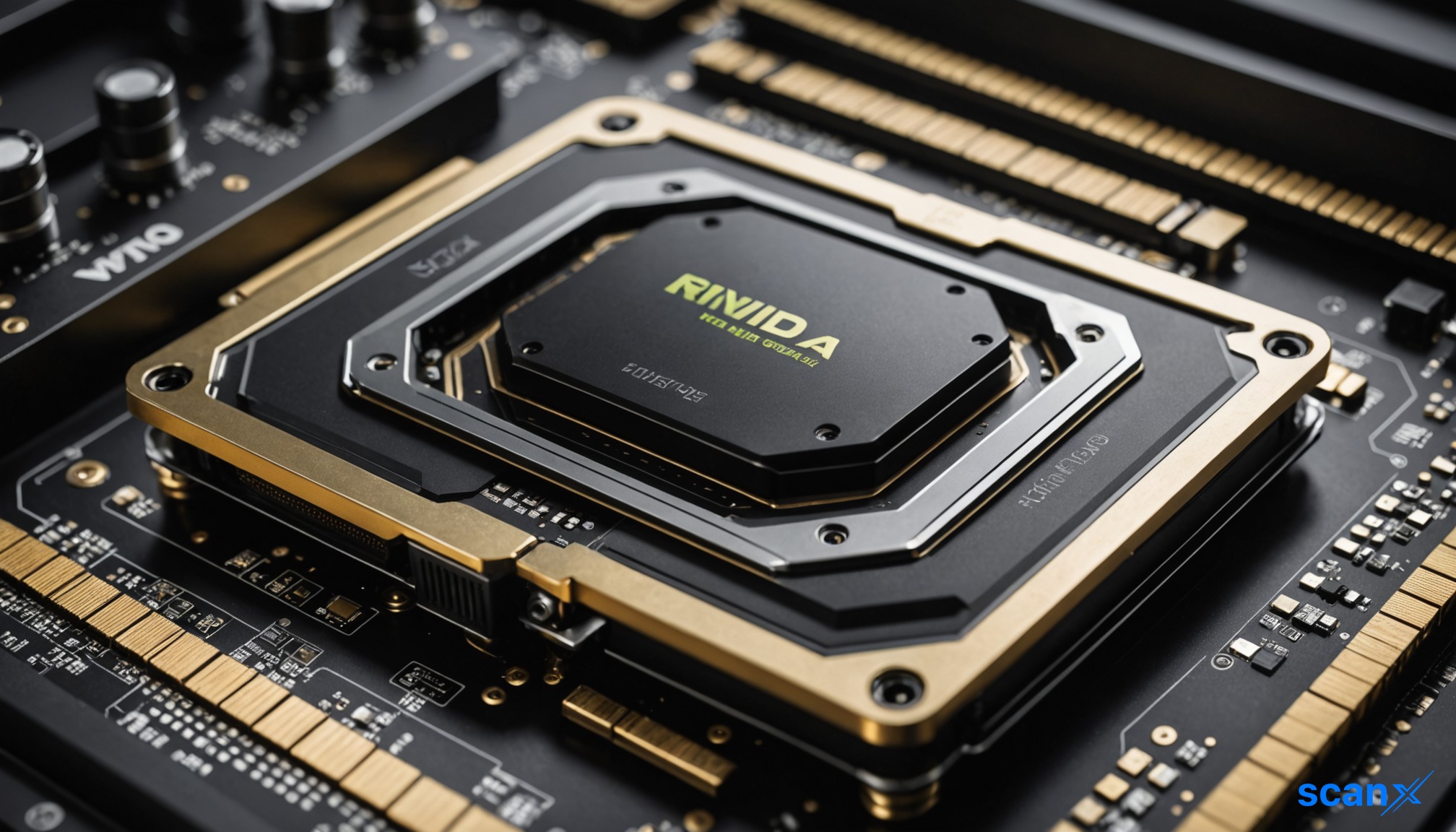

*this image is generated using AI for illustrative purposes only.
Nvidia CEO Jensen Huang has stated that artificial intelligence marks the beginning of a new industrial revolution. He emphasized that this shift extends beyond software into machines and infrastructure, transforming everything we build and enabling the creation of new technologies.
Beyond software to physical infrastructure
Huang's remarks underscore a sweeping shift in how businesses across industries are expected to operate. According to Huang, the transition toward AI is not limited to technology firms but extends to every company, regardless of sector. The new data clarifies that this revolution is not merely digital; it fundamentally alters physical production and infrastructure development.
Central to his statement is the idea that companies will embed intelligence directly into the products they manufacture and deliver. This points to a future where AI-driven decision-making and software architecture become foundational components of product development, now explicitly linked to the broader concept of an industrial revolution.
Key highlights from Huang's statement
- AI marks the beginning of a new industrial revolution
- The shift extends beyond software into machines and infrastructure
- Everything will be completely software-driven and AI-driven
- Every company will build brains as part of their core operations
- These brains will be embedded into the products companies ship to customers

How might traditional manufacturing sectors adapt their supply chains to accommodate the integration of AI 'brains' into physical products?
What regulatory frameworks are likely to emerge to address safety and liability concerns for AI-driven infrastructure and machinery?
Which specific semiconductor or hardware components outside of Nvidia's current portfolio will see increased demand as AI moves into edge devices?
 20




 Access 50+ Readymade Screeners
 Use 200+ Custom Filters
 Get Full Market Insights





