

NVIDIA runs record 104-qubit fault-tolerant quantum simulation on JUPITER


- NVIDIA achieved a record 104-qubit fault-tolerant quantum simulation on JUPITER
- Magic state cultivation approach validated requires 90% fewer physical qubits
- Simulation ran on 8,192 GPUs, reducing computation time from weeks to days
- Work models realistic noise, advancing beyond prior 50-qubit noiseless studies

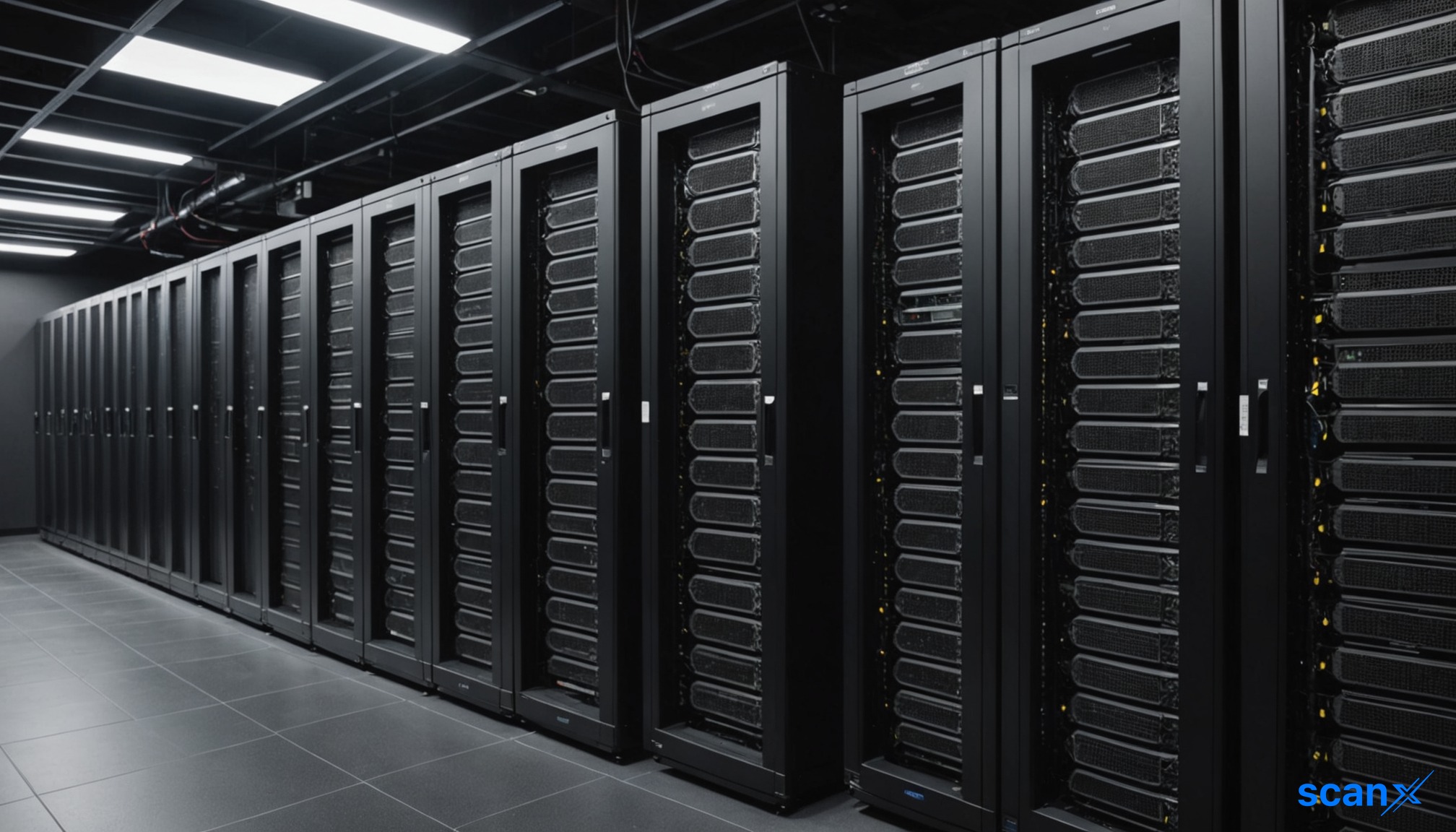

*this image is generated using AI for illustrative purposes only.
NVIDIA announced a record-breaking 104-qubit simulation of a fault-tolerant quantum computing system on JUPITER, Europe’s first exascale supercomputer. This marks the largest comprehensive simulation of its kind to date, modeling realistic quantum processor performance under noise conditions.
The research validates magic state cultivation, a leading approach to fault tolerance that requires 90% fewer physical qubits than previous methods. By simulating this process with high fidelity, NVIDIA provides actionable insights into error impacts, potentially shortening the development timeline for viable quantum hardware by years.
Scaling from development to exascale
The simulation was executed using a system of NVIDIA GH200 GPUs at the Jülich Supercomputing Centre. The project utilized the NVIDIA Accelerated Quantum Research Center (NVAQC) as a development platform, scaling tests from four GPUs to hundreds before deploying on JUPITER’s 8,192 GPUs. This staged approach reduced what would have been a weekslong simulation effort to days.
Earlier research from Jülich had simulated 50 qubits under ideal, noiseless conditions. The new work advances this by incorporating realistic hardware noise, allowing researchers to predict the performance of future designs before building physical hardware.
Technical infrastructure and software
The simulations leveraged NVIDIA cuQuantum software for optimized performance and scale, alongside the NVIDIA CUDA-Q platform’s fault-tolerant logical layer to express the magic-state circuit. This combination enabled the detailed modeling necessary for such large-scale fault-tolerance analysis.
| Component | Specification | Role in Simulation |
|---|---|---|
| Supercomputer | JUPITER (Jülich) | Exascale computing capacity |
| GPU System | NVIDIA GH200 | Primary execution hardware |
| Qubit Count | 104 | Record comprehensive scale |
| Software | cuQuantum, CUDA-Q | Optimization and logical layer |
What the numbers show
The divergence between the previous 50-qubit noiseless benchmark and the current 104-qubit noisy simulation highlights a critical shift in research priorities. While earlier models focused on theoretical limits, the current work prioritizes practical error correction. The validation of an approach requiring 90% fewer qubits suggests that resource efficiency, rather than raw qubit count alone, is becoming the primary bottleneck for scalable fault-tolerant systems. This data allows researchers to refine designs computationally, reducing reliance on costly hardware trial and error.

How will the validation of magic state cultivation's 90% qubit efficiency reduction impact the capital expenditure projections for major quantum hardware startups?
Will the success of this simulation accelerate the adoption of NVIDIA's CUDA-Q platform as an industry standard for fault-tolerant quantum algorithm development?
What specific regulatory or competitive responses might arise from European research institutions leveraging JUPITER to challenge US-based quantum computing initiatives?
 15








 Access 50+ Readymade Screeners
 Use 200+ Custom Filters
 Get Full Market Insights





