

Himax to showcase automotive display and 3D sensing tech at SID symposium


- Himax Technologies will exhibit automotive display ICs and 3D sensing tech at the SID symposium in Detroit on September 15-16, 2026
- Key showcases include TDDI with high-speed eDP interface and single-chip local dimming solutions to reduce system cost and power
- The company will demonstrate SLiM 3D sensing modules capable of head orientation tracking at up to 180 Hz report rate
- Himax holds 2,555 granted patents and 318 pending approvals globally as of June 30, 2026

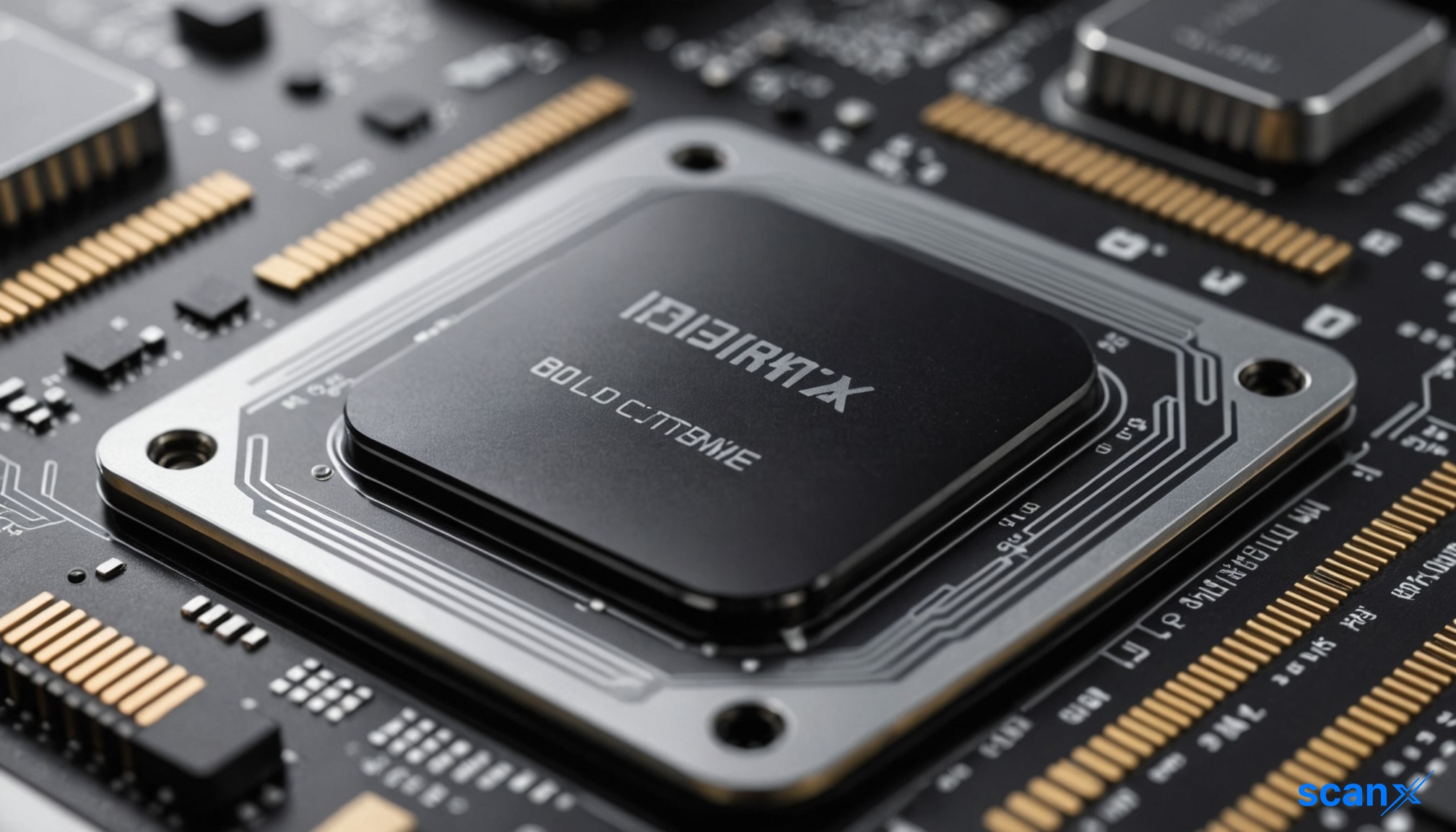

*this image is generated using AI for illustrative purposes only.
Himax Technologies Inc (NASDAQ: HIMX) will exhibit its automotive display driver portfolio and advanced 3D sensing solutions at the Society for Information Display (SID) Vehicle Displays and Interfaces Symposium. The event takes place September 15-16, 2026, in Detroit.
The fabless semiconductor supplier aims to demonstrate how its integrated circuits support evolving smart vehicle interiors. The company highlights trends toward larger displays, greater numbers of screens, and diverse configurations such as pillar-to-pillar designs.
Automotive Display Innovations
Himax is presenting several key technologies designed to reduce system costs and power consumption while enhancing safety.
| Technology | Key Feature | Benefit |
|---|---|---|
| Automotive TDDI with eDP | Integrates touch, display driver, and high-speed interface | Reduces need for bridge ICs; lowers cost and power |
| Single-Chip Local Dimming TDDI | Integrates local dimming into TDDI | Higher contrast; ideal for smaller displays |
| OLED/LCD TDDI with Knob-on-Display | Supports physical controls on display | Enhances driving safety by reducing distraction |
| User-Aware Touch Control | Distinguishes driver vs passenger touch | Prevents unintended cross-zone touches |
| Multi-Output Tcon | Supports up to 8K x 1K resolution; six LVDS outputs | Enables ultra-wide, free-form displays with HDR |
The company states that its highly integrated designs simplify panel architecture. By removing the need for additional SerDes components for signal transmission, Himax claims lower system complexity for next-generation smart car cabins.
3D Sensing Demonstrations
Beyond display drivers, Himax will showcase live demonstrations of its 3D sensing capabilities. These technologies target both automotive human-machine interfaces (HMI) and consumer electronics applications.
- Glasses-Free 3D Total Solution: Converts stereo input into real-time output with reduced crosstalk. Targeted at notebooks and tablets.
- SLiM 3D Sensing Module: Provides head orientation tracking at up to 180 Hz report rate. Helps HMI systems identify user focus zones.
- 3D Eye and Hand Tracking: Offers continuous spatial positioning with ultralow latency for virtual content interaction.
- Micro/Nano-Pattern Manufacturing: Himax IGI Precision Ltd will demonstrate diffusers and replicated components for complex 3D structures.
What the Numbers Show
Himax holds 2,555 granted patents and has 318 pending approvals worldwide as of June 30, 2026. This intellectual property base underpins its position as a global market share leader in automotive display technology, according to the company.
Company Profile
Headquartered in Tainan, Taiwan, Himax employs approximately 2,200 people across offices in Taiwan, China, Korea, and the US. The company supplies display driver ICs and timing controllers for TVs, monitors, mobile phones, and industrial displays. It also develops WiseEye ultralow power AI sensing technology for consumer electronics and AIoT applications.

How might Himax's TDDI integration strategy impact the competitive landscape against traditional display driver suppliers in the automotive sector?
What are the projected adoption timelines for pillar-to-pillar displays among major OEMs, and how does this affect Himax's revenue forecast for 2027?
Could the SLiM 3D sensing module's 180 Hz report rate become a new industry standard for driver monitoring systems, or will regulatory requirements dictate slower reporting rates?
 19
19











 Access 50+ Readymade Screeners
  Use 200+ Custom Filters
  Get Full Market Insights





