

Nifty Records Worst Fall in Seven Months as Trade Uncertainty Weighs on Markets


Nifty recorded its worst single-day fall in seven months, declining 1.38% to 25,232.50 amid trade uncertainty and institutional selling. India VIX surged 7.63% while both DIIs and FIIs turned net sellers, offloading ₹3,665 crore and ₹2,938 crore respectively. Markets await key events including the US Fed meeting, India-EU summit, and Union Budget for direction.

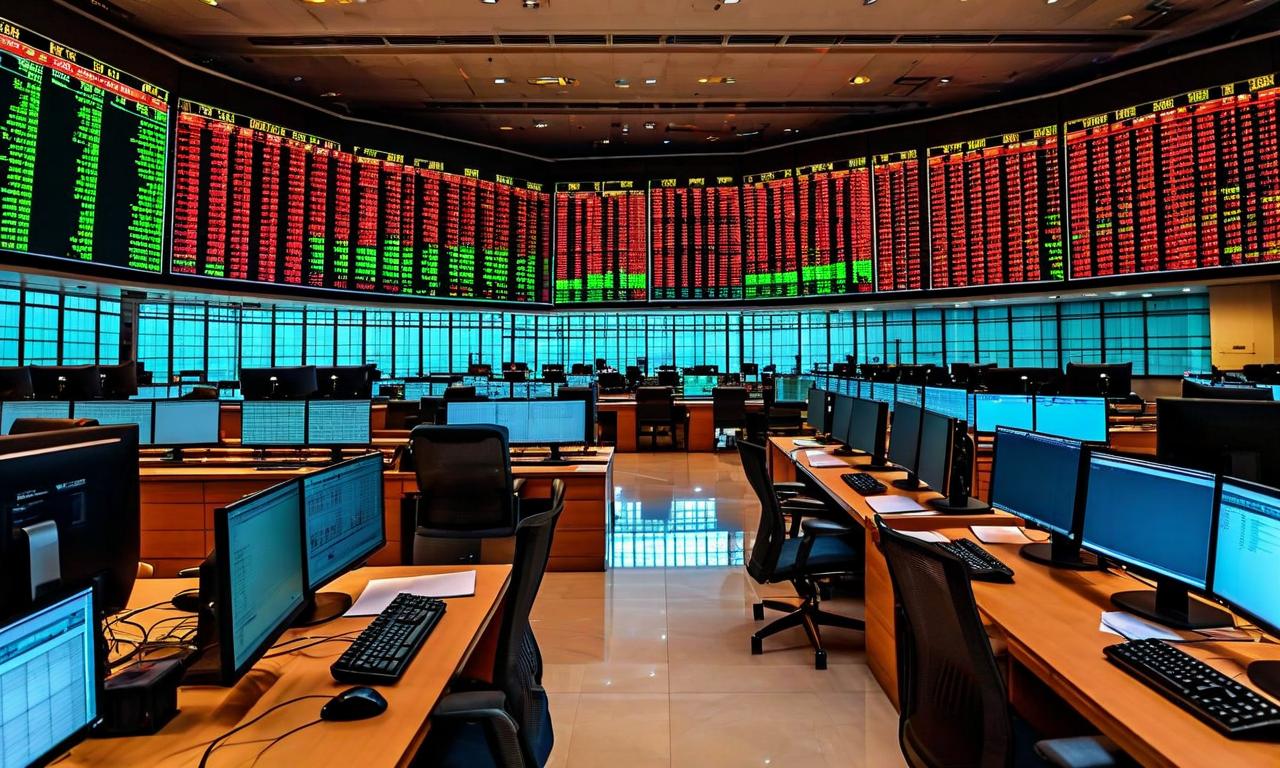

*this image is generated using AI for illustrative purposes only.
Indian equity markets experienced their worst single-day decline in seven months as concerns over global trade developments and upcoming policy events weighed heavily on investor sentiment. The benchmark Nifty fell below critical technical levels while volatility indicators surged, pointing to continued uncertainty in the near term.
Market Performance and Technical Indicators
The Nifty closed at 25,232.50, down 353 points or 1.38%, marking its lowest level since May 13, 2025. The Sensex declined 1,065 points or 1.28% to close at 82,180.47. Market volatility spiked significantly, with India VIX rising 7.63% to 12.73, indicating heightened fear among market participants.
| Index | Closing Level | Daily Change | Change (%) |
|---|---|---|---|
| Nifty 50 | 25,232.50 | -353 points | -1.38% |
| Sensex | 82,180.47 | -1,065 points | -1.28% |
| India VIX | 12.73 | +0.90 points | +7.63% |
The selloff was broad-based, with 47 out of 50 Nifty stocks declining. The worst performers included Adani Enterprises, Bajaj Finance, Jio Finance, Eternal, and Coal India. The Nifty's close below its 50-day simple moving average suggests the beginning of a potential downtrend.
Institutional Activity and Currency Movement
Both domestic and foreign institutional investors turned net sellers during the session. Domestic institutional investors sold shares worth ₹3,665 crore, while foreign institutional investors offloaded ₹2,938 crore worth of equities, according to provisional data.
| Investor Category | Net Activity | Amount (₹ crore) |
|---|---|---|
| DIIs | Net Sold | 3,665 |
| FIIs | Net Sold | 2,938 |
The Indian rupee weakened 0.07% to touch a new low of 97.9 against the US dollar, reflecting the broader risk-off sentiment among investors.
Broader Market Impact
Mid and small-cap segments witnessed even steeper declines. The Nifty Midcap index plunged 2.62%, while the Nifty Smallcap index fell 2.60%. The midcap index now trades 5.8% below its record high of 22,650 achieved on January 7.
Since the beginning of the year, the Nifty has been forming lower highs and lower lows, indicating negative sentiment. The index has declined 4.32% from its recent peak of 26,373 on January 5, and is down 3.53% year-to-date.
Upcoming Events and Market Outlook
Market participants are closely watching several key events that could influence near-term direction. Alok Singh, Chief Investment Officer at Bank of India Mutual Fund, noted that "sentiment could remain cautious over the next few weeks until clarity emerges on the European trade deal, with markets facing a busy period ahead."
| Event | Date | Significance |
|---|---|---|
| US Fed Meeting | January 27-28 | Interest rate decision |
| India-EU Summit | January 27 | Trade agreement discussions |
| Union Budget | February 1 | Fiscal policy announcements |
At the World Economic Forum in Davos, European Commission President Ursula von der Leyen indicated that India and the European Union are on the verge of a "historic trade agreement," adding to market anticipation.
Earnings and Valuation Metrics
Quarterly earnings have been disappointing, with nine Nifty companies that have reported results showing net profit growth of just 1.50% and revenue growth of 2.16% compared to the previous year. The Nifty 50 currently trades at a 12-month forward earnings multiple of 19.89x, compared to its three-year average of 19.36x.
Investors sought refuge in precious metals, with gold and silver on the MCX spot market rising 2.38% and 5.38% respectively. Foreign portfolio investors have sold shares worth ₹27,504 crore so far this year, following massive outflows of ₹1.6 trillion in 2025.
 18
18







 Create Custom Screeners
  Access 200+ Pre-built Filters
  Use 50+ Readymade Screener





