

Nifty Breaches 25,600 Mark as Heavyweight Stocks Decline After Q3 Results


Indian equity markets closed lower on Monday with Nifty falling 109 points to 25,586 and Sensex declining 324 points to 83,246. Heavyweight stocks Reliance Industries and ICICI Bank were major drags after Q3 results, while Wipro dropped 4% on weak guidance. More than 30 Nifty stocks declined with market breadth at 1:3, though some stocks like InterGlobe Aviation and Hindustan Zinc posted gains.


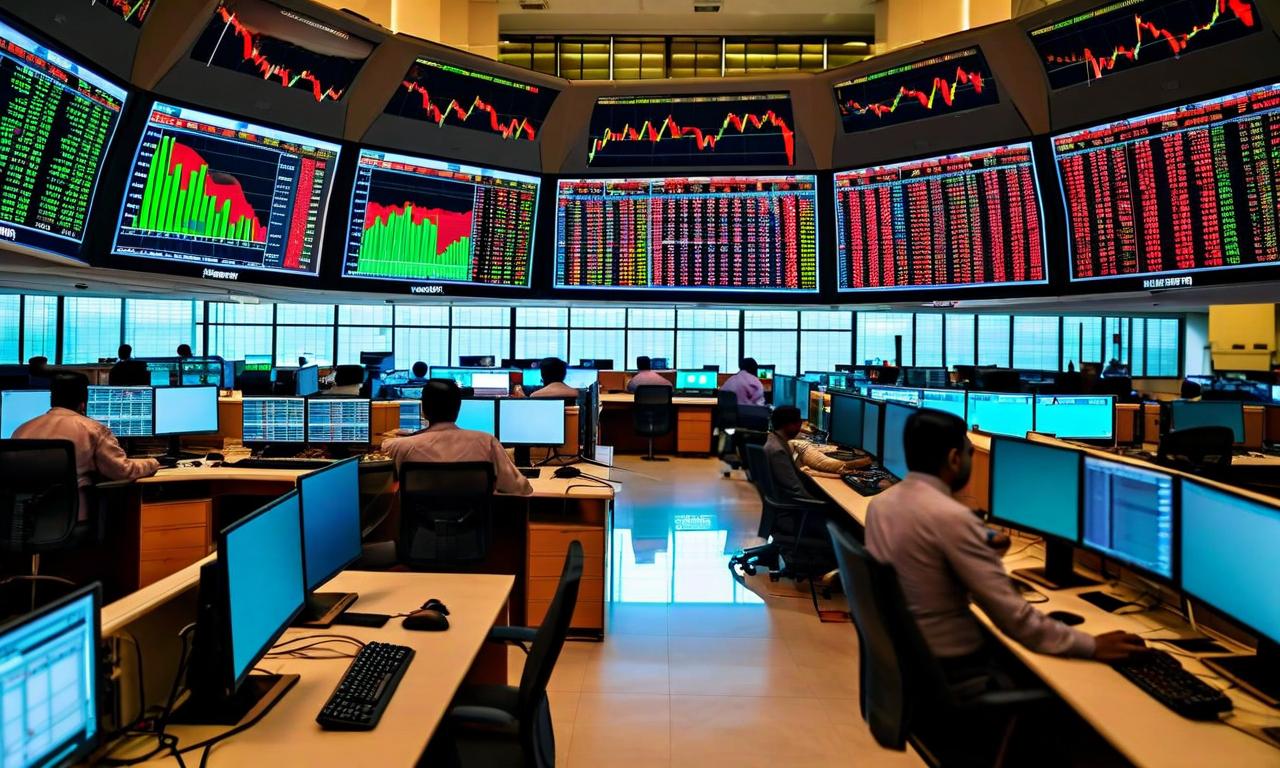
*this image is generated using AI for illustrative purposes only.
Indian equity benchmarks experienced significant selling pressure on Monday as heavyweight stocks declined following a fresh round of Q3 earnings announcements. The market sentiment turned risk-off as investors reacted negatively to quarterly results from major index constituents, pushing the Nifty below the psychologically important 25,600 level.
Market Performance Overview
The benchmark indices closed with substantial losses across the board. The broader market indices also remained under pressure, reflecting widespread weakness in investor sentiment.
| Index | Closing Level | Points Change |
|---|---|---|
| Sensex | 83,246 | -324 points |
| Nifty | 25,586 | -109 points |
| Nifty Midcap | 59,648 | -220 points |
| Nifty Bank | 59,891 | -204 points |
Major Drags on Benchmark Performance
Reliance Industries and ICICI Bank emerged as the biggest drags on the benchmarks following their December-quarter results. The market's reaction to these earnings highlighted investor concerns about the performance of these heavyweight stocks.
| Stock | Performance | Reason |
|---|---|---|
| Reliance Industries | -3% (approx.) | December-quarter results |
| ICICI Bank | -2% (approx.) | December-quarter results |
| Wipro | -4% | Weaker-than-expected March quarter guidance |
Wipro stood out as the top Nifty loser, declining 4% after the IT major issued guidance that fell short of market expectations for the March quarter. This development added to the overall negative sentiment in the technology sector.
Sectoral Performance and Market Breadth
The market witnessed broad-based selling with more than 30 Nifty constituents ending in negative territory. This widespread decline underscored the risk-off sentiment that dominated trading sessions. Sectoral performance remained broadly weak, with most indices closing lower except for FMCG and auto stocks, which managed to buck the negative trend.
Market breadth remained heavily skewed towards declines, with the NSE advance-decline ratio standing at 1:3, indicating that for every stock that gained, three stocks declined.
Notable Gainers Despite Market Weakness
Despite the overall negative sentiment, several stocks managed to post gains. InterGlobe Aviation emerged as the top Nifty gainer, rising 4% even after the DGCA imposed a penalty related to December flight disruptions.
| Stock | Performance | Catalyst |
|---|---|---|
| InterGlobe Aviation | +4% | Top Nifty gainer despite DGCA penalty |
| Hindustan Zinc | +3% | Q3 results and positive brokerage note |
| Federal Bank | +4% (approx.) | Strong quarterly earnings |
| Polycab | +4% (approx.) | Strong quarterly earnings |
Midcap Movements and Sector-Specific Developments
In the midcap segment, JSW Infrastructure surged 6% following its quarterly results, demonstrating that strong earnings could still drive individual stock performance despite broader market weakness. However, MRPL dropped over 5% after announcing a halt in Russian crude imports, reflecting sector-specific challenges.
Punjab National Bank experienced volatility, slipping nearly 6% from intraday highs after its Q3 numbers disappointed market expectations, highlighting the mixed nature of earnings results across the banking sector.
 15
15














 Access Market Heat-map & Insights
  Create, Save & Share your Screener
  Use 200+ Screening Filters





