Indian Stock Market Declines Amid Global Trade Tensions and Budget Uncertainty

1 min read     Updated on 25 Jan 2026, 08:12 AM
scanx
Reviewed by
Radhika SScanX News Team
Overview

Indian stock markets ended Friday in negative territory with Sensex falling 770 points to 81,537.70 and Nifty 50 declining 241 points to 25,048.65. The week was marked by cautious trading due to global trade tensions, sustained foreign investor selling, and uncertainty ahead of Union Budget 2026. Despite previous session gains of around half a percent, profit booking activities led to the Friday decline.
30854570

*this image is generated using AI for illustrative purposes only.

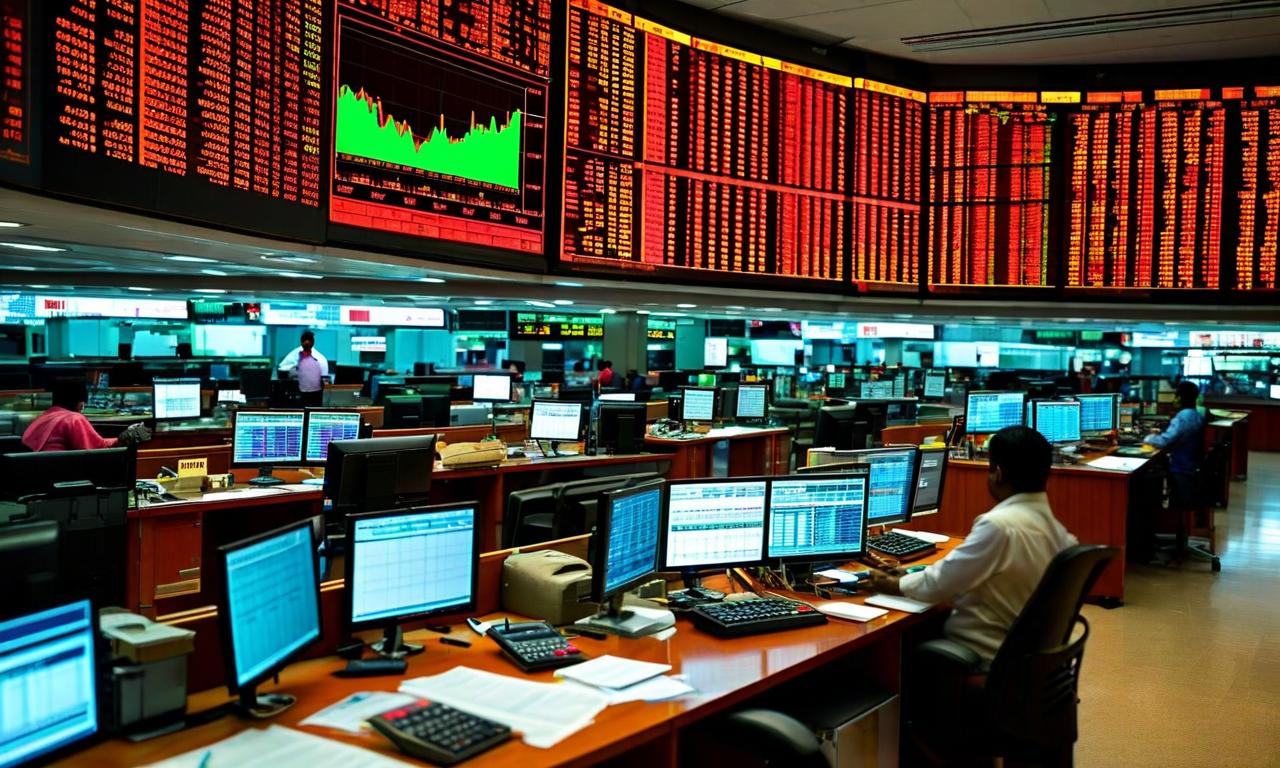
The Indian stock market concluded a volatile week on a negative note, with both benchmark indices reversing earlier gains amid a confluence of domestic and international factors. Market participants remained cautious throughout the trading period, responding to various economic and geopolitical developments.

Market Performance Overview

Friday's trading session saw a sharp reversal in market sentiment, with both major indices posting significant declines after the previous day's recovery.

Index Closing Level Points Change Percentage Change
Sensex 81,537.70 -770 -0.94%
Nifty 50 25,048.65 -241 -0.95%

Key Market Drivers

Several factors contributed to the market's cautious stance and Friday's decline:

  • Global Trade Tensions: Renewed concerns over international trade relationships created uncertainty among investors
  • Foreign Investor Selling: Sustained outflows from foreign institutional investors continued to pressure market sentiment
  • Profit Booking: Despite previous session gains of approximately half a percent, investors chose to book profits
  • Budget Uncertainty: Market participants remained cautious ahead of the Union Budget 2026

Weekly Market Sentiment

The overall trading week was characterized by choppy and cautious behavior across market segments. Mixed Q3 earnings results and ongoing geopolitical concerns further contributed to the dampened market sentiment. The market's inability to sustain the previous session's gains highlighted the prevailing uncertainty among investors.

The combination of domestic policy anticipation and global economic factors continues to influence trading patterns, with market participants closely monitoring developments that could impact future performance.

like16
dislike

Indian Stocks Face Valuation Challenge Over Tariff Concerns

3 min read     Updated on 24 Jan 2026, 06:04 PM
scanx
Reviewed by
Shriram SScanX News Team
Overview

Indian equity markets significantly underperformed in 2025, with MSCI India gaining just 2.5% versus 28% for emerging markets, primarily due to elevated valuations and slowing earnings rather than tariff concerns. Indian stocks trade at 25.2 times trailing earnings compared to 16.2 times for emerging markets as of October 2025, while corporate profit growth slowed in FY25 and early FY26. Other emerging markets like Taiwan and China delivered stronger returns despite similar trade pressures, indicating domestic fundamentals are the key challenge for Indian equities.

30803653

*this image is generated using AI for illustrative purposes only.

Indian equity markets have delivered disappointing returns in 2025, significantly underperforming emerging market peers despite widespread attribution of the weakness to U.S. tariff concerns. However, market data reveals that domestic factors, particularly elevated valuations and slowing earnings growth, present more substantial challenges than external trade pressures.

Performance Gap Widens with Emerging Markets

The performance divergence between Indian stocks and global emerging markets has reached notable proportions. In calendar year 2025, the MSCI India index posted modest returns of around 2.5% in U.S. dollar terms, while the broader MSCI Emerging Markets index surged nearly 28% over the same period, marking one of the widest performance gaps in decades.

Market Index 2025 Performance Period
MSCI India 2.5% Calendar Year 2025
MSCI Emerging Markets 28% Calendar Year 2025
Taiwan TAIEX 35% Past One Year
China SSE Composite 28% Past One Year
India Sensex 7% Past One Year

This underperformance extends to local indices, where Taiwan's TAIEX gained around 35% over the past year and China's SSE Composite Index rose about 28%, while India's Sensex grew by just 7%. The divergence is particularly striking given that these markets have faced comparable tariff and trade-related pressures.

Valuation Premium Remains Elevated

A critical factor behind India's weaker performance lies in expensive valuations relative to emerging market peers. As of October 2025, Indian equities continue trading at significant premiums, with the MSCI India index valued at around 25.2 times trailing earnings compared to approximately 16.2 times for the MSCI Emerging Markets index.

Valuation Metric MSCI India MSCI Emerging Markets
Trailing P/E Ratio (October 2025) 25.2x 16.2x
Valuation Premium Elevated Baseline

This valuation gap reduces the margin of safety for investors and amplifies sensitivity to any negative developments. The premium has also influenced capital flows, with analysts noting inconsistent foreign portfolio investment into Indian equities as global funds seek better risk-reward ratios in cheaper markets.

Earnings Growth Momentum Slows

Corporate earnings performance has added pressure to the valuation challenge. Profit growth for major Indian companies slowed materially in FY25 and early FY26, reducing the earnings upgrades that traditionally support higher equity valuations. This deceleration occurred just as markets were already elevated from years of strong performance.

In contrast, other emerging markets have benefited from sector-specific tailwinds. Taiwan's technology sector has gained significantly from global semiconductor demand, while Mexico has enjoyed nearshoring investment flows that boosted investor sentiment. These earnings differentials help explain the outperformance of these markets despite challenging global conditions.

Limited Tariff Impact on Fundamentals

While U.S. tariffs introduced in mid-2025 disrupted trade flows and triggered short-term volatility in export-sensitive sectors like pharmaceuticals, textiles, and jewelry, the direct macroeconomic impact remains limited. India's exports to the United States account for a relatively small share of GDP compared to China's much larger trade exposure.

Moody's Ratings warned that higher U.S. tariffs could hamper India's manufacturing push and project a modest drag on GDP growth. However, the stronger performance of other emerging markets facing similar trade pressures suggests that tariff concerns alone cannot explain India's relative underperformance.

Market Outlook Challenges

The combination of high valuations and slowing earnings growth leaves Indian markets vulnerable to disappointments. Post-Covid easy liquidity conditions that fueled sustained rallies have normalized, with markets now demanding stronger corporate earnings to justify elevated multiples. The Reserve Bank of India's relatively higher interest rates compared to some global peers have also made equities less attractive relative to other asset classes.

Until corporate earnings demonstrate clear and sustained recovery or valuations adjust to more comfortable levels, Indian equities are likely to remain sensitive to both global developments and domestic challenges, with fundamentals rather than tariff headlines driving performance.

like20
dislike

More News on Indian Stock Market