Evolution of Union Budget in India: Key Milestones from Independence to GST Era


India's Union Budget has evolved from a basic financial statement in 1947 to a comprehensive reform instrument over eight decades. Starting with R.K. Shanmukham Chetty's first budget of ₹171.00 crore revenues and ₹197.00 crore expenditure, key milestones include the 1991-92 liberalisation budget, GST implementation in 2017-18, and recent digital governance initiatives. Budget 2026, scheduled for February 1, will continue focusing on capital expenditure, tax simplification, and trust-based governance.

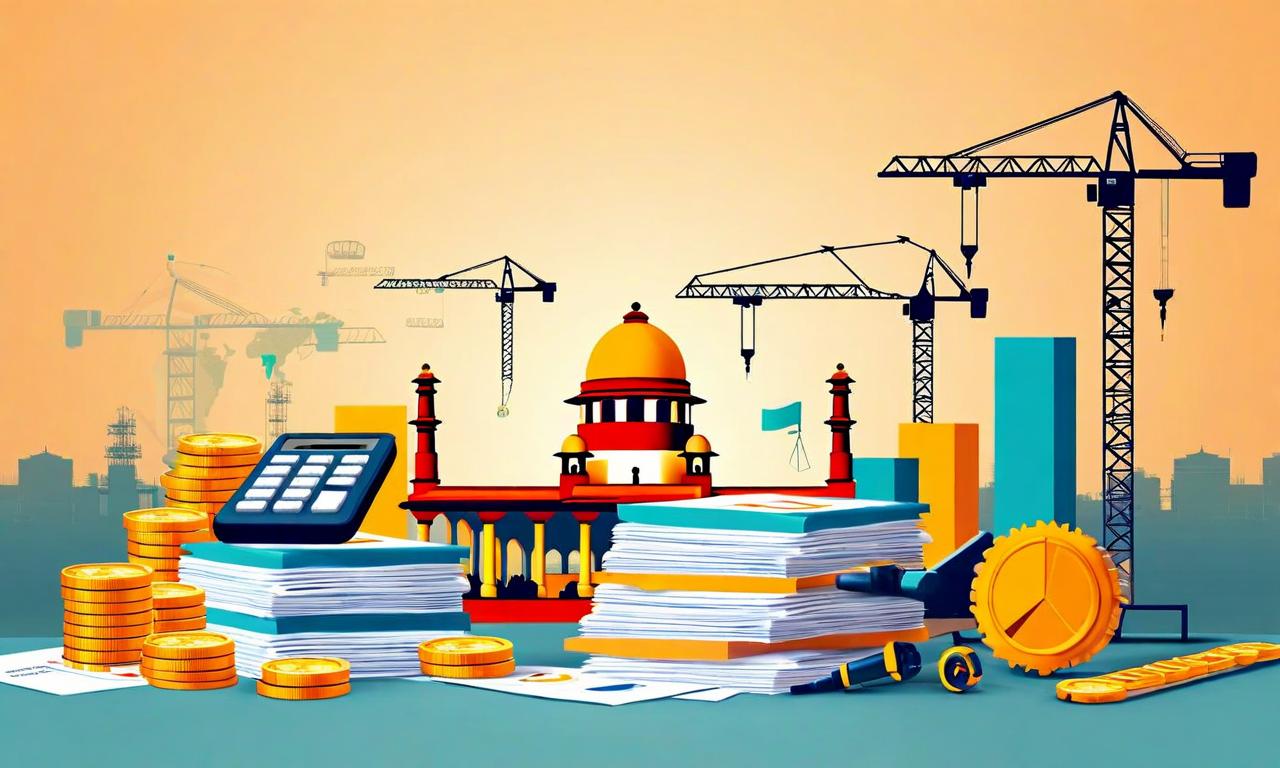
*this image is generated using AI for illustrative purposes only.
India's Union Budget has transformed from a simple revenue and expenditure statement into a powerful tool for economic reform, crisis management, and institutional change over nearly eight decades. This evolution reflects the nation's journey through wars, economic crises, liberalisation, technological advancement, and governance reforms.
Foundation Years: Building a New Nation
Independent India's first Budget was presented by R.K. Shanmukham Chetty on November 26, 1947. The inaugural budget reflected the priorities of a nascent nation facing immediate challenges.
| Parameter: | Amount |
|---|---|
| Estimated Revenues: | ₹171.00 crore |
| Estimated Expenditure: | ₹197.00 crore |
| Defence Allocation: | Nearly 50% of total spending |
This budget established the foundation for security, administration, and economic stabilisation as core governmental priorities.
Crisis and Reform Milestones
The 1973-74 Budget, presented by Yashwantrao B. Chavan, earned the notorious label 'Black Budget' due to economic stress, high inflation, and global oil shocks. With a fiscal deficit of ₹550.00 crore—considered substantial for that period—it highlighted the limitations of a tightly controlled economic system.
A significant shift occurred in 1983-84 when Finance Minister Pranab Mukherjee introduced performance-based federalism, allocating central grants to states based on performance rather than population or negotiation. This marked an early attempt to link public spending with accountability measures.
The Liberalisation Era
The most transformative moment came with the 1991-92 Budget presented by Manmohan Singh during a severe balance-of-payments crisis. This epochal budget marked India's decisive turn towards Liberalisation, Privatisation, and Globalisation (LPG). Key reforms included:
- Dismantling of industrial licensing
- Easing of trade controls
- Welcoming foreign investment
- Initiating public sector reform
The 1997-98 'Dream Budget' by P. Chidambaram applied Laffer Curve logic to reduce personal and corporate tax rates while explicitly recognising information technology as a growth engine, catalysing India's IT boom.
Institutional Strengthening and Digital Foundations
The 2003-04 Budget introduced the Fiscal Responsibility and Budget Management (FRBM) framework under Jaswant Singh, legally binding future governments to deficit and debt targets. This shift from discretionary to rules-based budgeting enhanced fiscal transparency through mandatory policy statements.
Pranab Mukherjee's post-global financial crisis budgets (2009-12) supported the Aadhaar rollout and early direct benefit transfer pilots, establishing the groundwork for the JAM (Jan Dhan–Aadhaar–Mobile) architecture that would later transform governance delivery.
Modern Era: GST and Beyond
The 2017-18 Budget under Arun Jaitley preceded the Goods and Services Tax rollout, creating the GST Council as a landmark institution for consensus-driven federal decision-making. This represented a significant advancement in cooperative federalism.
Recent budgets have emphasised infrastructure development and tax reform. The 2020-21 Budget introduced the National Infrastructure Pipeline and an alternative personal income tax regime. The 2021-22 'once-in-a-century' Budget prioritised capital expenditure, healthcare, and asset monetisation over short-term consumption stimulus during the pandemic response.
Current Trajectory
The 2025-26 Budget deepened tax reform by raising the no-tax income threshold under the new regime and announcing a new Income Tax Bill. It revised TDS/TCS thresholds and proposed regulatory decriminalisation through Jan Vishwas Bill 2.0, signalling a shift toward trust-based governance.
The Union Budget 2026 is scheduled for presentation on February 1, continuing the post-2017 tradition. The upcoming budget is expected to build on recent themes of capital expenditure, tax simplification, and trust-based governance while addressing emerging challenges including global uncertainty, climate financing, and job creation.
 15
15