As Finance Minister Nirmala Sitharaman prepares to present the Union Budget 2026-27 on February 1, industry leaders across multiple sectors are calling for a strategic shift toward policies that drive long-term growth, investment, and inclusion. From real estate to startups, fashion, sports, and green tech, experts believe a pragmatic, growth-oriented approach will drive long-term economic confidence and strengthen India's global competitiveness.
Real Estate and Urban Infrastructure Drive Growth Agenda
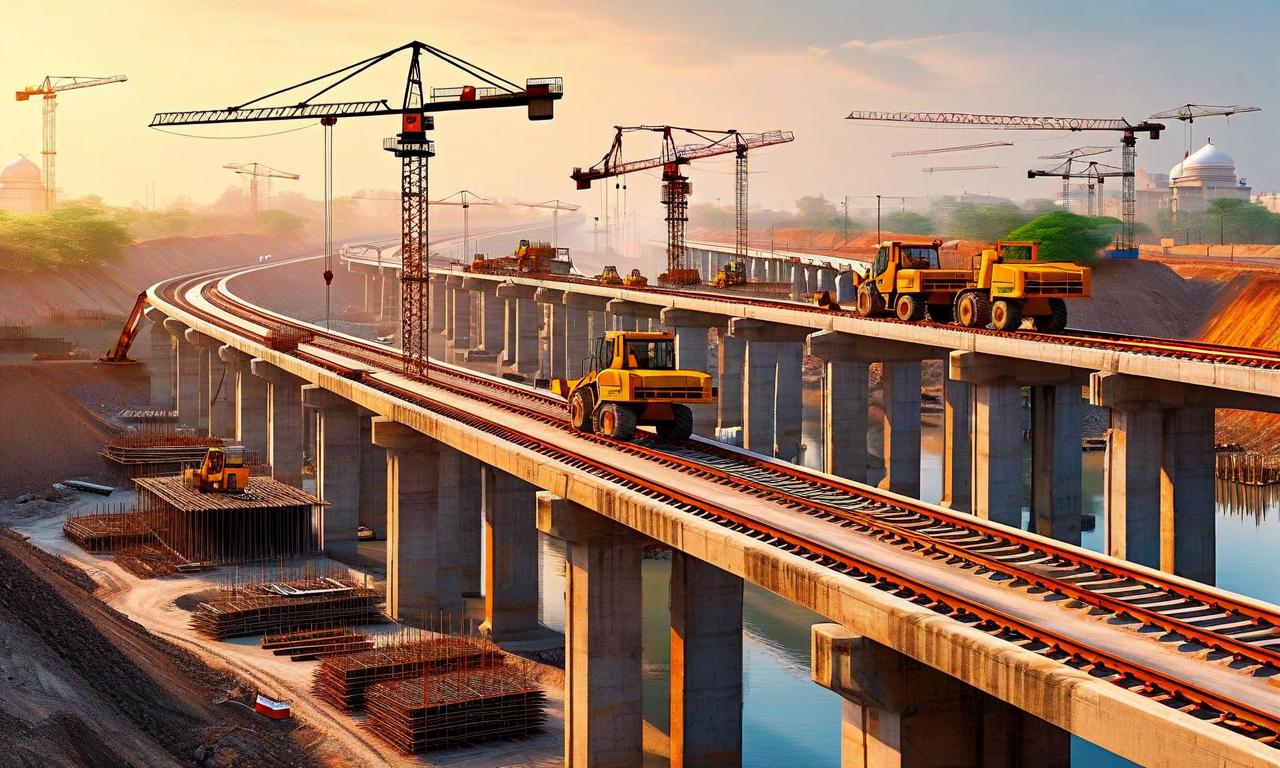
Agadish Prasad Naik, CMD of DN Group, emphasizes that urban infrastructure investments are key to reigniting India's growth engine. "Increased spending on roads, metro rail, regional transit, and last-mile connectivity can unlock housing demand in Tier-2 and Tier-3 cities while promoting balanced regional development," he notes. Naik stresses that faster regulatory reviews and time-bound approvals will reduce project delays, lower execution risks, and boost buyer confidence.
Aditya B. Yamsanwar, Director at TOA, noted the growing resilience of Indian cities. "Recent urban infrastructure allocations and the transition of SEZs into more flexible, services-led ecosystems have pushed Indian cities into a more infrastructure-ready phase, supporting Grade-A office absorption and enabling non-traditional business districts to gain traction."
| Infrastructure Priority: |
Focus Areas |
| Urban Development: |
Metro rail, regional transit, last-mile connectivity |
| Regulatory Reforms: |
Time-bound approvals, faster reviews |
| Regional Balance: |
Tier-2/Tier-3 city development |
| Job Creation: |
Infrastructure-led employment generation |
Financial Markets Seek Stability Over Spectacle
Ajay Kumar Yadav, Group CEO & CIO at Wise Finserv, cautions that investors are looking for reassurance rather than dramatic announcements. "Global uncertainty, foreign outflows, and subdued corporate earnings mean stability matters more than spectacle," he says. Yadav suggests targeted fiscal incentives linked to job creation, incremental investment, and manufacturing to revive private capex while maintaining fiscal discipline.
Sanjaya Mariwala, Executive Chairman of OmniActive Health Technologies, reinforced this sentiment, arguing that frequent changes create hidden costs for businesses. "Industry needs multi-year frameworks with clear progress reporting. Predictability backed by accountability will sustain long-term economic momentum," he emphasized.
Technology Innovation and Startup Ecosystem Support
Startup investors are pressing for procedural clarity to sustain investor confidence. Rathnakar Samavedam of Hyderabad Angels Fund calls for a Legacy Settlement Window to resolve pending Angel Tax disputes and a fast-track loss-booking mechanism. Kalyan Sivalenka from haf.vc stresses that extending tax holidays for startups and doubling down on the ₹10,000.00-crore Fund of Funds could help India emerge as a "Deep-Tech Powerhouse."
Raviteja Chivukula, CEO of Perceptyne Robots, highlights the need to transform India from a technology consumer to a technology builder. "High-capex sectors like robotics, semiconductors, advanced manufacturing, and AI need targeted capital subsidies and stronger corporate R&D incentives to accelerate scale-up," he said.
| Startup Support Measures: |
Key Requirements |
| Tax Reforms: |
Angel Tax dispute resolution, ESOP deferrals |
| Funding: |
₹10,000.00 cr Fund of Funds expansion |
| Deep-Tech: |
Capital subsidies, R&D incentives |
| Foreign Investment: |
Capital gains tax rationalization |
Retail, Fashion, and Sports Sectors Eye Growth Opportunities
Vishal Mehra, Co-founder of Stylox Fashion, sees the Budget as a turning point for homegrown apparel brands. "Simplified GST rates, especially for the mid-price segment, will help structured brands compete with unorganised players and imports," he explains. Mehra also calls for support for sustainable manufacturing and incentives for local sourcing.
Arjun Gupta, Founder & CEO of KragBuzz Sports, highlights India's sportswear market potential, projected to reach USD 21.25 billion. "We expect Budget support for modern sports facilities in smaller cities and incentives for domestic manufacturers to expand responsibly and offer high-quality, affordable products," he says.
Green Technology and Sustainability Focus
Shubham Vishvakarma, Founder of Metastable Materials, sees an opportunity for Budget 2026 to strengthen India's battery recycling ecosystem. "Recognising high-quality recycling outcomes and supporting downstream industries to produce battery precursors domestically can turn recycling into a dependable source of critical minerals for India's battery ecosystem," he explains.
Nitin Chitkara, CEO of MMCM, called for sustainability to be central to economic policy. "True superpower status will not be defined only by financial growth, but also by clean air, clean water, and resource efficiency," he said, advocating for GST rationalization on recycled materials and incentives for traceable recycling.
| Green Tech Priorities: |
Implementation Areas |
| Battery Recycling: |
Domestic precursor production, quality recognition |
| Circular Economy: |
GST rationalization, recycling incentives |
| EV Infrastructure: |
Charging networks, tax benefits |
| Resource Efficiency: |
Clean technology adoption |
Healthcare and Agriculture Technology Integration
Prashant Krishnan, CEO of TI Medical, flagged that India's public health spending remains under 2.00% of GDP, below the 2.50% target of the National Health Policy. Abhineet Kumar, CEO & Founder of Rocket Health, warns that untreated mental health conditions cost the country billions in lost productivity.
Amit Maheshwari, Founding Investor at KhetiBuddy, urges the Budget to prioritise climate-smart agriculture and farm-level traceability. "Integrating Agri ERP and SaaS platforms with AgriStack can boost productivity, traceability, and access to sustainable finance while reducing post-harvest wastage," he says.
Industry Consensus: Targeted Reforms for Sustainable Growth
Across all sectors, the message remains consistent: Budget 2026 should focus on targeted reforms, fiscal predictability, and sector-specific support that translates policy signals into measurable long-term economic outcomes. The emphasis is on building sustainable growth infrastructure through technology adoption, sustainability measures, and streamlined compliance frameworks that align with the Viksit Bharat 2047 vision.