Budget 2026-27 Must Address Customs Bottlenecks to Unlock India's FTA Potential


Budget 2026-27 faces the critical challenge of reforming India's customs administration to unlock the potential of free trade agreements. Current compliance-heavy systems, particularly around rules of origin and quality control orders, have created uncertainty that deters businesses from using preferential trade routes, with many companies treating FTA benefits as contingent rather than assured.
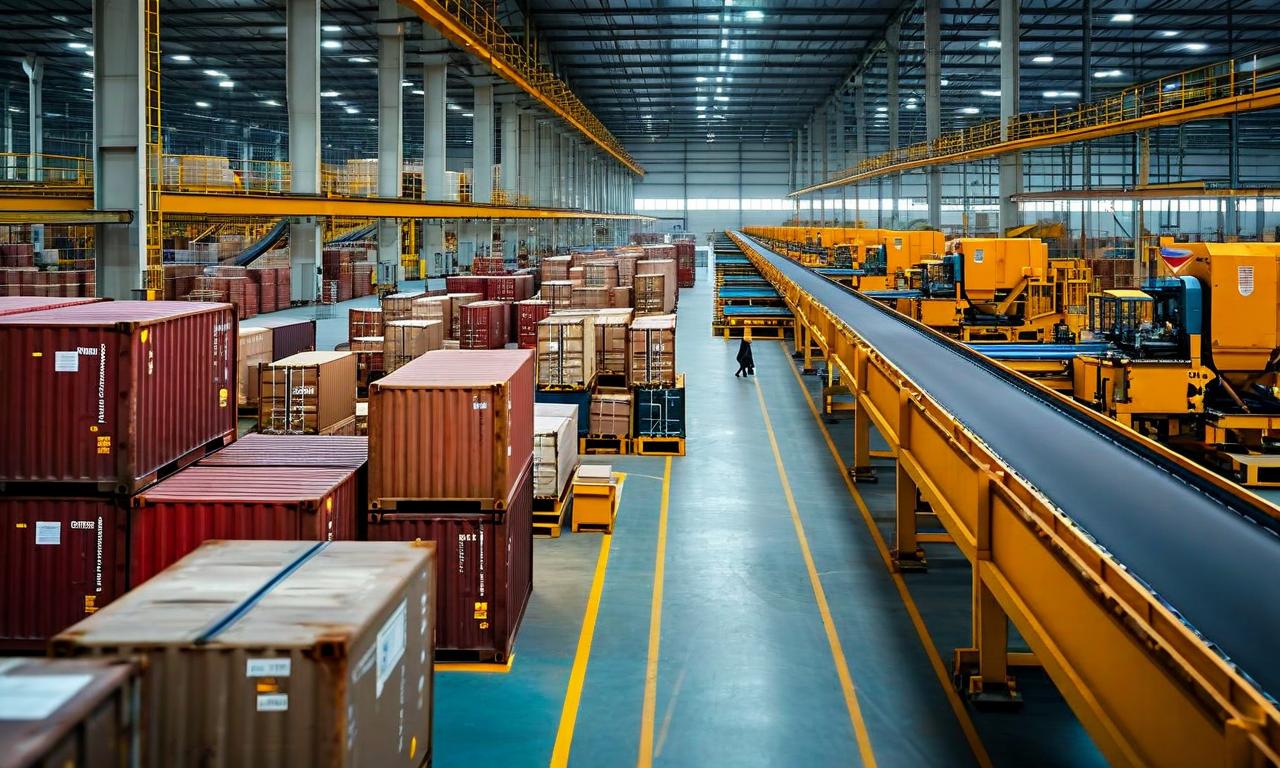
*this image is generated using AI for illustrative purposes only.
As India approaches Budget 2026-27, the trade policy landscape has fundamentally shifted. The focus is no longer on whether to pursue free trade agreements but whether India's domestic trade infrastructure can effectively deliver the market access these agreements promise. In an era of geopolitical fragmentation and supply-chain reconfiguration, FTA effectiveness depends more on how goods are processed at ports than on negotiated tariff schedules.
Customs Administration: Where Policy Meets Reality
The customs administration serves as the critical interface between FTA commitments and economic outcomes. This is where treaty obligations translate into domestic law and where commercial certainty is either strengthened or undermined. While FTAs create preferential tariff entitlements, customs law operationalizes them through complex statutory provisions, rules, notifications, and verification procedures.
Over time, this interface has become increasingly compliance-heavy, prioritizing risk containment over trade facilitation. Budget 2026-27 presents an opportunity to rebalance this approach while maintaining necessary safeguards.
Rules of Origin: The Compliance Challenge
Rules of origin (RoO) represent the core friction point in India's FTA implementation. While inherently technical to ensure only genuinely originating goods receive preferential treatment, India's post-2020 framework has transformed RoO into high-stakes compliance exercises.
| Challenge Area: | Impact |
|---|---|
| Documentation Requirements: | Detailed disclosures on value addition, sourcing, and production processes |
| Global Value Chain Complexity: | Components crossing borders multiple times create visibility gaps |
| Retrospective Assessments: | Benefits denied months or years after import |
| Timeline Uncertainty: | Extended verification periods and provisional assessments |
For companies embedded in global value chains, such granular visibility requirements are neither commercially realistic nor contractually guaranteed. Many businesses now treat FTA benefits as contingent rather than assured, adjusting pricing models to absorb potential future duties.
MSME Impact and Utilization Constraints
Micro, Small, and Medium Enterprises face particularly acute challenges. Lacking negotiating leverage with foreign suppliers, MSMEs often find compliance risks prohibitive, leading them to avoid preferential routes entirely. This compliance burden directly impacts FTA utilization rates across India's existing agreements.
Budget 2026-27 could address these issues through:
- Clearer verification thresholds and parameters for regional value content
- Limiting inquiries to defined risk scenarios
- Restoring finality to origin determinations within reasonable timeframes
- Streamlined documentation requirements for smaller enterprises
Quality Control Orders: Additional Bottlenecks
Regulatory constraints extend beyond origin verification. Quality Control Orders (QCOs), designed to enforce product standards, often lack sufficient alignment with India's trade commitments or partner countries' compliance capacities. Mechanical implementation of QCOs without considering trade agreement obligations creates additional barriers to FTA effectiveness.
Strategic Trade-offs and Economic Impact
The cumulative effect of these practical constraints creates a widening gap between trade policy intentions and actual outcomes. India's recent FTAs with advanced economies aim to attract investment and integrate Indian firms into global value chains, yet such integration requires predictable border processes.
| Policy Approach: | Short-term Impact | Long-term Consequences |
|---|---|---|
| Defensive Administration: | Revenue protection | Reduced supply chain participation |
| Risk-based Facilitation: | Calibrated enforcement | Enhanced scale and investment |
Excessively defensive customs administration may safeguard revenue short-term but discourages participation in complex supply chains that drive productivity gains. Conversely, a calibrated, risk-based approach preserves enforcement while enabling scale, specialization, and investment.
The Path Forward
Signing FTAs alone does not generate economic momentum. Real economic dividends materialize when companies reallocate capital, reconfigure supply chains, and upgrade production facilities to exploit new comparative advantages. This requires domestic adjustment capacity and the ability for labor, land, and capital to move toward sectors benefiting from openness.
India's uneven experience with past FTAs highlights these constraints. Low usage rates and imbalanced trade outcomes often reflect situations where companies find it costly and risky to adjust to new trade regimes, preferring the certainty of normal tariffs over compliance-heavy preferential routes.
For Budget 2026-27, the imperative is clear: if India wants FTAs to deliver genuine economic value, trade diplomacy must be supported by domestic reforms that simplify origin rules, improve border predictability, and enable firms to integrate into global value chains with confidence. The next phase of global trade competitiveness will be shaped less by agreement signatories and more by whose borders facilitate confident trade flows.
 17
17