Arunachal Pradesh Seeks Central Support for Infrastructure Projects at Pre-Budget Consultation

2 min read     Updated on 11 Jan 2026, 12:41 PM
scanx
Reviewed by
Radhika SScanX News Team
Overview

Arunachal Pradesh Deputy CM Chowna Mein requested central support for key infrastructure projects during the pre-budget consultation for Union Budget 2026-27. The state highlighted its strong fiscal discipline under the FRBM Act 2006 while seeking support for water supply augmentation in urban areas and the strategic Rupai-Wakro railway line, which has received Defence Ministry clearance.

29661082

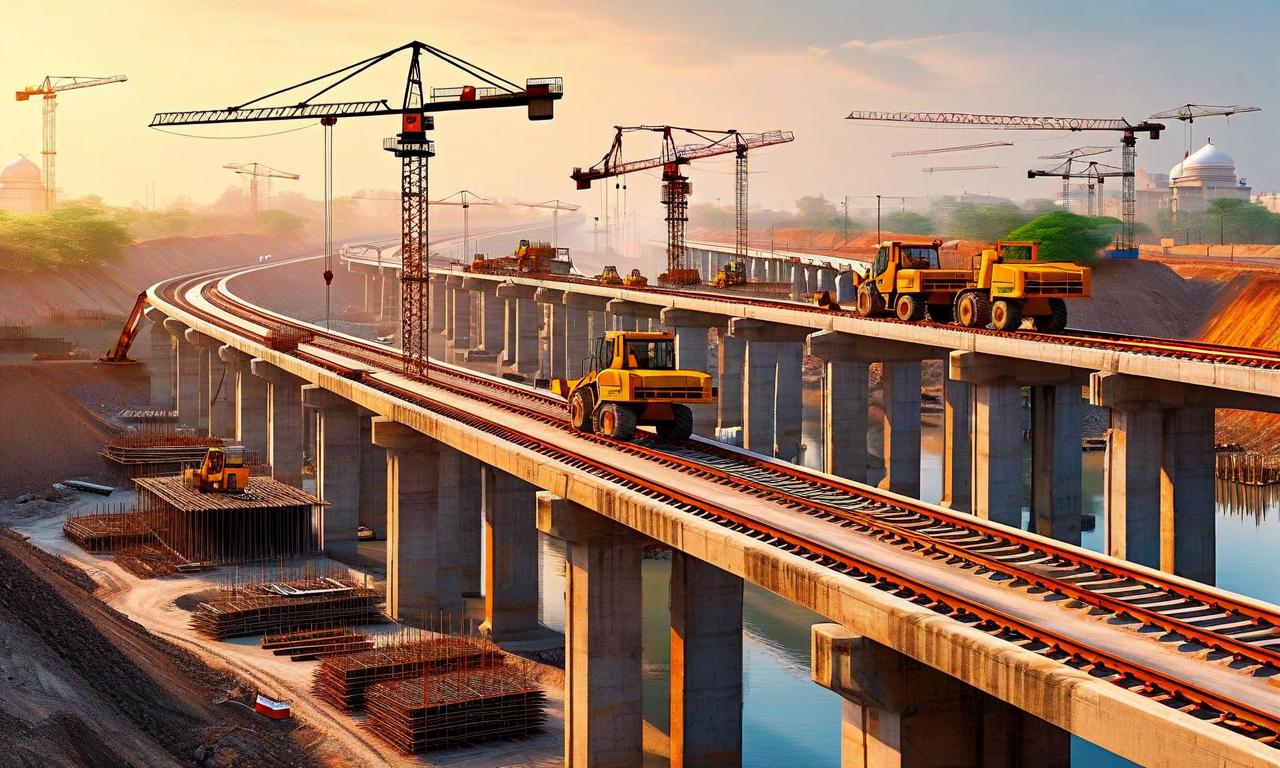
*this image is generated using AI for illustrative purposes only.

Arunachal Pradesh Deputy Chief Minister Chowna Mein has presented the state's infrastructure priorities to the Centre during the pre-budget consultation for Union Budget 2026-27, emphasizing the state's commitment to fiscal discipline while seeking support for critical development projects.

Pre-Budget Consultation Details

The high-level meeting was chaired by Union Finance and Corporate Affairs Minister Nirmala Sitharaman in New Delhi on Saturday. The consultation brought together governors, chief ministers, deputy chief ministers, and finance ministers of states and union territories, along with senior finance ministry officials to discuss priorities, fiscal challenges, and policy inputs for the forthcoming Union Budget.

State's Fiscal Performance

During the consultation, Mein highlighted Arunachal Pradesh's strong fiscal management record despite facing remoteness and long-standing developmental challenges. The state has demonstrated steady progress in recent years while maintaining strict fiscal discipline in accordance with the Arunachal Pradesh Fiscal Responsibility and Budget Management Act, 2006.

Performance Indicator Status
Fiscal Discipline Strict adherence to FRBM Act 2006
Committed Liabilities Meeting all obligations on time
Development Progress Steady advancement despite challenges

Priority Infrastructure Projects

The Deputy Chief Minister presented several key infrastructure requirements to the Centre, focusing on projects critical for the state's development and strategic importance.

Water Supply and Urban Infrastructure

Mein emphasized the urgent need for augmentation of water supply and drainage systems in Itanagar and other urban areas across the state. This infrastructure development is essential for supporting the growing urban population and improving quality of life.

Strategic Railway Connectivity

A major highlight of the state's presentation was the strategic Rupai to Wakro Parashuram Kund railway line project. Mein outlined the multiple benefits this railway project would deliver:

  • Significantly improved connectivity for the region
  • Strengthened border infrastructure
  • Enhanced religious tourism opportunities in Arunachal Pradesh

The Deputy Chief Minister noted that the railway project has already received clearance from the Ministry of Defence, indicating progress in the approval process.

Development Challenges and Support Requirements

Mein drew attention to the state's limited access to externally aided projects, which constrains development opportunities. He emphasized the critical need for continued central support to bridge resource gaps and maintain the current development momentum across various sectors.

The state government's approach focuses on maintaining fiscal prudence while ensuring close coordination with the Centre to accelerate inclusive and sustainable development throughout Arunachal Pradesh.

Government's Commitment

Reiterating the state's development philosophy, Mein assured that Arunachal Pradesh remains committed to responsible fiscal management and collaborative governance. The state continues to prioritize sustainable development initiatives while working closely with central authorities to address infrastructure deficits and development challenges.

like17
dislike

CII Proposes ₹10 Lakh Crore Privatisation Strategy for Budget 2026-27

2 min read     Updated on 11 Jan 2026, 12:11 PM
scanx
Reviewed by
Shriram SScanX News Team
Overview

CII has proposed a comprehensive privatisation strategy for Budget 2026-27, featuring a four-point approach including demand-driven privatisation and institutional framework enhancement. The plan could unlock ₹10.00 lakh crore through calibrated disinvestment of 78 listed PSEs, with ₹4.60 lakh crore mobilisable from 55 PSEs initially and ₹5.40 lakh crore from 23 PSEs subsequently, supporting capital expenditure and fiscal consolidation goals.

29659318

*this image is generated using AI for illustrative purposes only.

The Confederation of Indian Industry has urged the government to implement a calibrated privatisation strategy in the Union Budget 2026-27 to sustain capital expenditure and achieve key development goals amid global economic uncertainty. The industry body emphasizes that resource mobilisation through privatisation should target sectors where private participation can enhance efficiency, introduce advanced technology, and boost global competitiveness.

Strategic Privatisation Framework

CII Director General Chandrajit Banerjee highlighted that India's growth momentum is increasingly driven by private enterprise and innovation. "A forward-looking privatisation policy, aligned with the vision of Viksit Bharat, will enable the government to focus on its core functions while empowering the private sector to accelerate industrial transformation and job creation," Banerjee stated.

The confederation has called for faster implementation of the government's Strategic Disinvestment Policy, which aims to exit all public sector enterprises in non-strategic sectors while maintaining limited presence in strategic areas.

Four-Point Implementation Strategy

CII has proposed a comprehensive approach to strengthen and accelerate the privatisation process:

Demand-Driven Approach

The industry body recommends shifting from the current government-led selection process to a demand-driven model. Instead of selecting enterprises for sale and subsequently seeking investor interest, CII suggests first assessing investor appetite across a wider pool of enterprises, then prioritising those attracting stronger interest and appropriate valuations. This approach would enable smoother execution, better price discovery, and help identify procedural bottlenecks through structured investor feedback.

Three-Year Privatisation Pipeline

CII proposes announcing a rolling three-year privatisation pipeline to provide visibility on enterprises likely to be privatised during this period. Greater clarity and longer planning horizons would deepen investor engagement, support realistic valuations, and accelerate the overall process.

Institutional Framework Enhancement

The confederation recommends establishing a dedicated mechanism comprising three components:

  • Ministerial Board: Strategic direction
  • Advisory Board: Industry and legal experts for independent benchmarking
  • Professional Management Team: Execution, due diligence, market engagement, and regulatory coordination

This structure would track market developments, stakeholder feedback, and post-privatisation outcomes for continuous improvement.

Financial Impact Analysis

Recognising the complexity of complete privatisation, CII suggests a calibrated disinvestment approach with a three-year roadmap. The strategy involves gradually reducing government stakes in listed PSEs to 51%, allowing the government to remain the single largest shareholder while unlocking significant market value.

Phase Target PSEs Government Holding Potential Value
Phase 1 (Years 1-2) 55 PSEs 75% or less ₹4.60 lakh crore
Phase 2 23 PSEs Above 75% ₹5.40 lakh crore
Total 78 PSEs Reduced to 51% ₹10.00 lakh crore

According to CII's analysis, this calibrated reduction could unlock close to ₹10.00 lakh crore across 78 listed PSEs. The stake could subsequently be further reduced to between 33% and 26% over time.

Strategic Benefits

"A calibrated reduction of the government's stake in listed PSEs to 51% and even lower is a pragmatic step that balances strategic control with value creation. Unlocking nearly ₹10.00 lakh crore of productive capital would provide vital resources to accelerate physical and social infrastructure development and support fiscal consolidation," Banerjee explained.

CII emphasizes that these measures would enhance investor confidence, ensure predictability and transparency, and maximise value realisation for the government. By focusing on governance, regulation, and enabling infrastructure while allowing competitive markets to drive efficiency, strategic privatisation can free up public resources for priority areas including health, education, and green infrastructure. The Union Budget for 2026-27 will be presented on February 1 as per convention.

like16
dislike
More News on Union Budget 2026-27
Explore Other Articles