

SpaceX valuation divides Wall Street amid AI growth debate


SpaceX faces a split in Wall Street sentiment as analysts clash over its rich valuation and AI potential. Bears like CFRA see downside to $115 due to stretched multiples, while bulls like New Street Research see upside to $330 based on massive AI revenue projections. The average analyst target is $178.33.

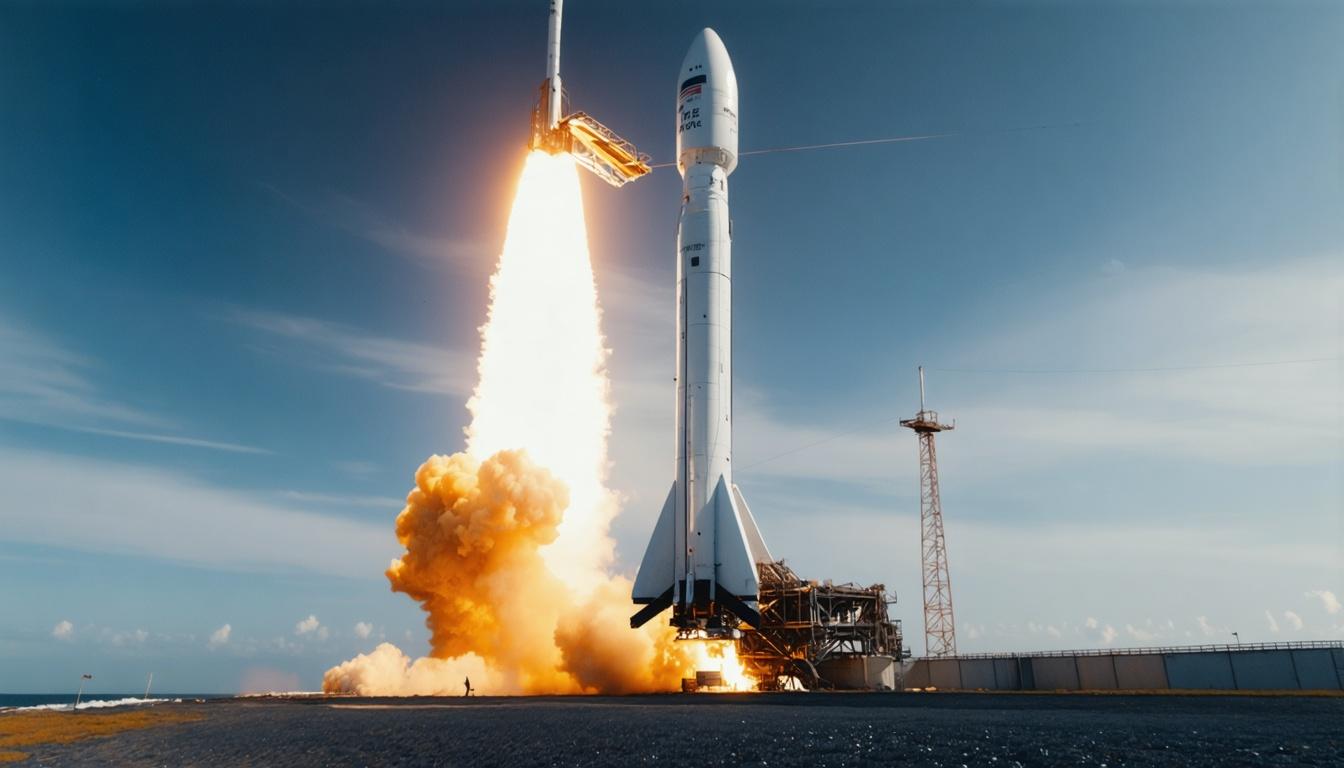

*this image is generated using AI for illustrative purposes only.
SpaceX has shifted from a Wall Street favorite to a highly debated stock in less than two weeks, with analyst opinions spanning from hard Sell ratings to optimistic AI projections. Valuation has emerged as the central fault line, as investors weigh the company's current cash engine against its future orbital-compute ambitions. The stock recently experienced a $400 billion drawdown, prompting a reassessment of its premium multiple.
Bearish Outlook
CFRA’s Keith Snyder initiated coverage with a Sell rating and a $115 price target, implying substantial downside from recent IPO levels. He argues that investors are pre-paying for AI and orbital-compute businesses that are still in early stages, while Starlink remains the primary cash generator. Snyder’s sum-of-the-parts valuation suggests a fair value near $1.2 trillion, contrasting sharply with a market cap that briefly touched $2.75 trillion. He views SpaceX as a world-class franchise burdened by an over-extended multiple and heavy capital expenditure.
Susquehanna’s Mehdi Minervino adopted a more cautious stance, setting a $170 price target and advising investors to wait for a better entry point. Although he models revenue and EBITDA compound annual growth rates exceeding 80% through 2028, he fears the market has already priced in much of this growth trajectory.
Bullish Projections
On the bullish side, New Street Research’s Pierre Ferragu set a base-case target of $165 with a bull case of $330 if SpaceX successfully captures its largest opportunities. He projects 2030 revenue to reach approximately $195 billion, driven by a $127 billion AI segment. Ferragu values the platform using growth-stock peers such as Tesla Inc., Palantir Technologies Inc., and Cloudflare Inc., arguing that SpaceX’s optionality in space, data, and defense remains under-appreciated.
Oppenheimer’s Tim Horan also maintains an optimistic view with an Outperform rating and a $250 target. His thesis relies on a $25 trillion AI total addressable market and SpaceX’s vertically integrated stack spanning satellites, chips, and data. However, Horan acknowledges the significant execution risks involved in expanding simultaneously into launch, broadband, compute, and AI.
Analyst Consensus
The divergence in analyst ratings highlights the uncertainty surrounding SpaceX’s valuation. The following table summarizes the key price targets and ratings mentioned in the report:
| Analyst Firm | Analyst Name | Rating | Price Target ($) |
|---|---|---|---|
| CFRA | Keith Snyder | Sell | 115 |
| Susquehanna | Mehdi Minervino | Neutral | 170 |
| New Street Research | Pierre Ferragu | Buy | 165 (Base) / 330 (Bull) |
| Oppenheimer | Tim Horan | Outperform | 250 |
Overall, the average price target on the Street is $178.33. While there is consensus that SpaceX possesses unique assets, the primary disagreement centers on how much of that future growth is already reflected in the current stock price. SpaceX shares were down 1.86% at $153.19 during premarket trading.

What specific milestones in SpaceX's orbital-compute and AI segments are required to justify the current premium valuation?
How will the anticipated heavy capital expenditures impact Starlink's ability to sustain its role as the primary cash generator?
Could the divergence in analyst ratings trigger increased volatility in the stock leading up to the next earnings report?
 17
17











 Access 50+ Readymade Screeners
  Use 200+ Custom Filters
  Get Full Market Insights





