Judge rules Trump's $100,000 H-1B fee unlawful tax

1 min read     Updated on 09 Jun 2026, 07:30 AM
scanx
Reviewed by
Radhika SScanX News Team
AI Summary

A federal judge ruled that President Trump's $100,000 H-1B visa fee was an unlawful tax, blocking its imposition. The White House announced it will appeal the decision, while major tech companies like Amazon and Meta, which rely heavily on the visa program, face reduced cost burdens following the ruling.


powered bylight_fuzz_icon
42493169

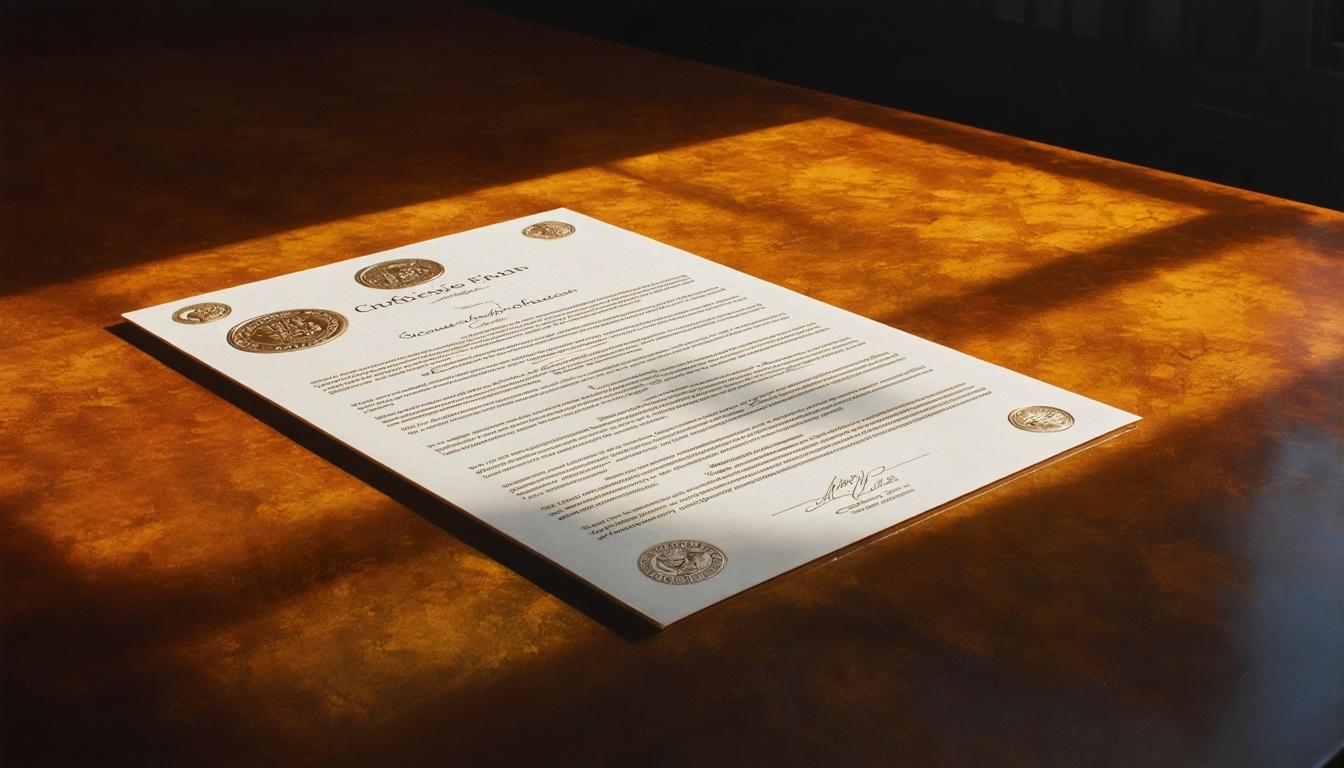
*this image is generated using AI for illustrative purposes only.

A federal judge in Boston struck down President Donald Trump's proposed $100,000 H-1B visa fee, ruling that the payment was an unauthorized tax rather than a lawful penalty. The decision removes a significant potential cost burden for major technology employers that rely heavily on skilled foreign talent, though the White House has announced its intent to appeal the ruling.

Federal Judge Blocks Trump's H-1B Visa Fee

U.S. District Judge Leo Sorokin ruled on Monday that the Trump administration lacked the authority to impose the massive fee on certain new H-1B visa applications. In his ruling, Sorokin stated that the substance and application of the $100,000 payment revealed it to be a tax, regardless of what the payment was called, and that Congress had never authorized such a charge.

The administration had argued the fee was a lawful penalty intended to curb overreliance on foreign labor and protect American workers. However, the court determined that immigration law did not grant the president unilateral power to create such a charge. White House spokeswoman Taylor Rogers pushed back against the ruling, stating that President Trump has clear legal authority to restrict the entry of any class of aliens he determines is not in America's best interests.

Big Tech's Heavy Dependence on H-1B Workers

The ruling arrives as major technology companies continue to dominate H-1B hiring. According to an analysis by the National Foundation for American Policy using U.S. Citizenship and Immigration Services data, Amazon.com, Inc. led all companies with 4,644 approved new H-1B petitions for initial employment in fiscal 2025.

Company Approved New H-1B Petitions (FY25)
Amazon.com, Inc. 4,644
Meta Platforms, Inc. 1,555
Microsoft Corp 1,394
Alphabet Inc. (Google) 1,050

The H-1B program allocates 65,000 visas annually, plus another 20,000 for workers with advanced degrees.

Broader Immigration Fight Continues

Trump introduced the fee through a September proclamation, arguing companies had exploited the program to replace American workers with lower-cost labor. California Attorney General Rob Bonta, who led a coalition of Democratic attorneys general challenging the policy, praised the ruling, calling the fee an attack on America's ability to attract and retain high-skilled talent. The administration is expected to appeal the decision.

How will the White House's anticipated appeal impact the short-term hiring strategies of major tech companies currently relying on H-1B workers?

Could this judicial ruling prompt Congress to draft new legislation explicitly defining the limits of presidential authority over immigration fees?

What alternative administrative measures might the Trump administration pursue to curb reliance on foreign labor if this fee remains blocked?

like20
dislike

Employment Trends Index fell in May to 107.01

2 min read     Updated on 08 Jun 2026, 09:47 PM
scanx
Reviewed by
Radhika SScanX News Team
AI Summary

The Conference Board Employment Trends Index decreased to 107.01 in May from 107.88 in April, with five of eight components contributing negatively. Payroll employment rose by 172,000 in May. The index remains up 2.1 points from six months ago.

powered bylight_fuzz_icon
42481044

*this image is generated using AI for illustrative purposes only.

The Conference Board Employment Trends Index (ETI) decreased to 107.01 in May, down from an upwardly revised 107.88 in April. The ETI serves as a leading composite index for payroll employment, where increases suggest employment growth and decreases indicate potential declines. Despite the monthly dip, the index remains up 2.1 points compared to six months ago, signaling continued resilience in the labor market.

May's payroll employment rose by 172,000, yet the forward-looking ETI declined slightly. Five of the eight components contributed negatively to the index, highlighting potential downside risks. The primary drag came from the share of small firms reporting jobs are 'not able to be filled right now', which dropped to 29% in May from 34% in April, marking the lowest level since May 2020.

Job Openings increased sharply to above 7.6 million in April, driven by an idiosyncratic movement in the professional and business service industry that is not expected to continue. Initial claims for unemployment insurance rose to 214,800 in May, up from a historically low level in April but still lower than one year ago. Real manufacturing and trade sales and industrial production recorded little change, contributing marginally to the decline.

Positive contributions included a decrease in the share of involuntary part-time workers to 17.4% in May from 17.9% in April. The share of consumers reporting 'jobs are hard to get' declined for a second consecutive month to 18.6% in May from 19.4% in April. Employment in the temporary help services industry rose again, contributing positively to the ETI for all five months of 2026, though the magnitude was smaller in May.

The negative contributions to May's ETI came from the Percentage of Firms with Positions Not Able to Fill Right Now, Job Openings, Initial Claims for Unemployment Insurance, Real Manufacturing and Trade Sales, and Industrial Production. Positive contributions came from the Ratio of Involuntarily Part-time to All Part-time Workers, the Percentage of Respondents Who Say They Find 'Jobs Hard to Get', and the Number of Employees Hired by the Temporary-Help Industry.

ETI Components and Data Sources

The eight leading indicators aggregated into the ETI include:

  • Percentage of Respondents Who Say They Find "Jobs Hard to Get" (The Conference Board Consumer Confidence Survey®)
  • Initial Claims for Unemployment Insurance (U.S. Department of Labor)
  • Percentage of Firms with Positions Not Able to Fill Right Now (National Federation of Independent Business Research Foundation)
  • Number of Employees Hired by the Temporary-Help Industry (U.S. Bureau of Labor Statistics)
  • Ratio of Involuntarily Part-time to All Part-time Workers (BLS)
  • Job Openings (BLS)
  • Industrial Production (Federal Reserve Board)
  • Real Manufacturing and Trade Sales (U.S. Bureau of Economic Analysis)

Publication Schedule

Index Release Date (10 AM ET) Data for the Month
Monday, June 8, 2026 May
Monday, July 6, 2026 June
Monday, August 10, 2026 July
Tuesday, September 8, 2026 August

Will the sharp drop in small firms reporting 'jobs not able to be filled' signal a broader cooling in labor demand in the coming months?

How might the Federal Reserve interpret the divergence between rising payroll employment and the declining forward-looking ETI?

Is the recent uptick in initial unemployment claims a temporary fluctuation or the start of a sustained trend toward higher layoffs?

like17
dislike

More News on United States